Oil dives almost 5% as Trump signals restraint
Updated 52 minutes ago

Ship-breaking scrap from Gadani, Shershah's used machinery market fills gap left by costly imports
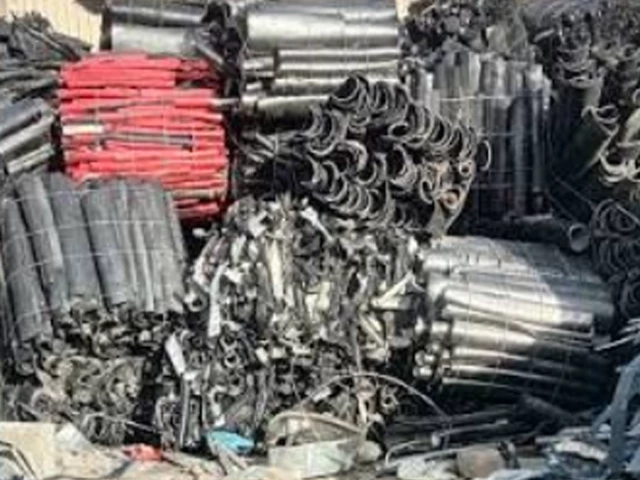
As currency depreciation, import restrictions and steep tariffs push up the cost of new industrial equipment, Shershah's "Kabari Market" has become an important source of affordable machinery and spare parts for factories in Karachi and other parts of the country.
Crucial to this supply line is the market's direct integration with the country's ship-breaking supply chain, where salvaged machinery harvested from decommissioned ocean vessels at Gadani provides a steady stream of heavy-duty marine refrigeration compressors, industrial cooling units, generators and high-capacity valves. These components are re-engineered in Shershah's workshops to power cold storage facilities, food processing plants, textile mills and plastic extrusion units.
For small- and mid-sized plant operators on tight capital budgets, this marketplace means the difference between maintaining production lines and costly downtime.
"If an industrial unit in Karachi's industrial areas needs a brand-new imported cold storage compressor or a 50-horsepower motor today, it can cost millions of rupees and take weeks to clear customs," says Waleed Shaikh, manager at a food manufacturing factory.
Despite consistent demand, workshop operators in Shershah face their own operational cost pressures, with raw material entering the market, imported scrap metal, ship-breaking salvage and decommissioned plant machinery, subject to sharp price volatility driven by haulage charges and local duties.
From scrap to machinery
"In our shop, we source high-grade used units often salvaged from ship-breakers or overseas industrial lots, rewind the copper coils, replace the seals and bearings, and deliver them fully tested at a fraction of the cost. We are not just dealing in scrap. We are keeping essential industrial and cooling plants operational when new imports are out of reach," dealer Waheed Khan said.
"Our entire business depends on the cost of raw scrap lots and ship-breaking yields," explains another scrap trader, who also works as an agent. "When duties on iron scrap rise or local transport rates jump, acquiring heavy compressor blocks and machinery lots becomes expensive immediately. On top of that, operating power-intensive testing equipment under commercial electricity tariffs squeezes our margins. We have to absorb these cost increases because our customers operate on limited budgets."
Self-taught lathe operators, copper winders and machinists work without formal engineering credentials, yet possess diagnostic and machining skills learnt over decades of work.
"You cannot learn this trade from a textbook," notes master machinist Asghar. "Every piece of heavy refrigeration equipment or motor that arrives from a decommissioned ship or a closed factory has unique wear and mechanical faults. Our job is to modify and ensure a unit built 30 years ago can integrate seamlessly into a modern commercial setup," he said.
Shershah trades in a wide range of equipment, including motors, pumps, generators, compressors and machinery for cold storage, blast-freezing and textile units. While some buyers purchase complete machines, smaller industrial units often source specific parts from the market to repair existing equipment and avoid costly replacements.
"Even a small component can stop a production line if it is unavailable when needed. Keeping essential spares helps us resume work without waiting for a replacement," said Karim Memon of a home textile industry.
Spare parts matter particularly where a missing component can interrupt production even if the rest of the machinery remains operational.
Reconditioned alternative
Industry insiders point out that Shershah functions as a critical shock absorber for Pakistan's commercial sector. By recirculating heavy industrial equipment and providing low-cost, reconditioned alternatives, the market prevents widespread operational halts across manufacturing and cold-chain supply networks.
For industrial buyers, the market offers an alternative when machinery breaks down or a component needs replacement.
"Depending on the fault, we may need a complete machine or just a small part. Our technicians decide what needs replacement, and the market provides a range of options," said Jameel Hussain, who runs a lace-embroidery unit.
Industrial units do not, however, send their machinery to Shershah for repairs. Many have their own technicians sourcing the required components from the market.
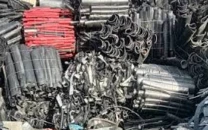
The scrap import trade supplies a wide range of industries, with imported machinery, equipment and components refurbished where necessary and sold to buyers across different sectors. Shershah has numerous large godowns and warehouses where bulk consignments are stored, sorted and inspected. The market also stocks parts from major machine components to minor items such as needles, screws and other small fittings.
Until formal credit and capital equipment imports become viable for small and medium enterprises, Karachi's industrial output will remain closely linked to the industry's extensive pool of used machinery and spare parts.








This material may not be published, broadcast, rewritten, redistributed or derived from. Unless otherwise stated, all content is copyrighted © 2026 The Express Tribune.







COMMENTS
Comments are moderated and generally will be posted if they are on-topic and not abusive.
For more information, please see our Comments FAQ