Hina Altaf shares uncomfortable experience during flight, calls out man for repeatedly staring at her
Updated 1 hour ago

Khan got candid about the backlash surrounding Hamna, passionately defending her character’s controversial decisions
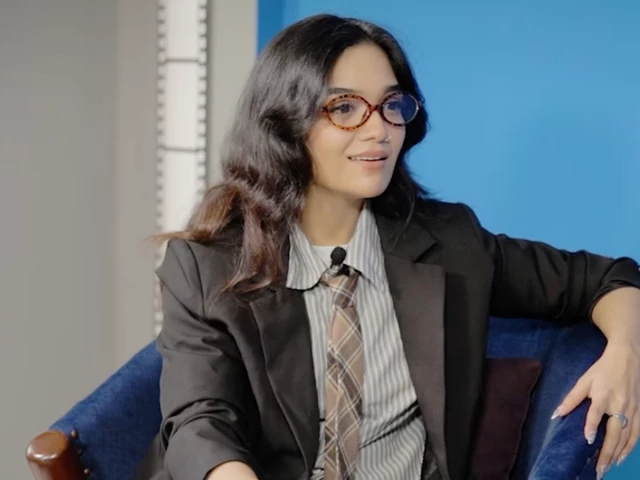
Humna may have found herself at the centre of public criticism in Dar-e-Nijaat, but the actress playing her is not backing down. From questioning why her character is being criticised for contacting Abu Bakar to challenging viewers over Zaryab's own decisions, Romaisa Khan has a rather different perspective on the drama's complicated relationships.
In a recent conversation with Fuschia Magazine, the actress discussed the growing audience reaction to Dar-e-Nijaat, her understanding of Humna's motivations, working with the drama's cast and director, and the personal experiences that have shaped her outlook on life. She also addressed the backlash surrounding Humna's interactions with Abu Bakar, making it clear that she remains firmly on her character's side.
“I am a full Humna supporter,” she said.
Khan particularly questioned the criticism Humna has received for continuing to message Abu Bakar despite being married to Zamil. Referring to the character's circumstances, she pointed out that Abu Bakar had previously left Humna at a madrassa, making her subsequent attempts to contact him a subject worth examining rather than immediately condemning.
“People are hating me and saying, ‘Don't message Abu Bakar.’ And I was like, he left me at the madrassa. If he doesn't, why shouldn't I?”
She jokingly added that Humna was now left alone at home, with her husband not even calling her.
“Now I'm home alone, my husband doesn't call me!”
However, Khans's strongest argument was directed at what she sees as an inconsistency in how viewers judge the show's female characters. Comparing Humna's actions with Zaryab's decisions, she asked why one character's pursuit of a relationship attracted a different response from the audience.
“Did Zaryab not message Zamil to get a divorce and come see him? How can this be?”
The actress revealed that she had even become annoyed with people questioning her character's decision to contact Abu Bakar on her way to the interview. She recalled responding to the criticism with a rather playful, “Ignore it!”
While the exchange was humorous, her larger point concerned the double standards applied to women in romantic relationships. Khan argued that a woman making an unconventional romantic decision is often labelled desperate or inappropriate, whereas a man making a similar gesture might be considered romantic.
She admitted that some of Humna's actions were difficult for her to personally relate to. However, she approaches the character by trying to understand the circumstances behind her behaviour rather than judging her through her own values.
For Khan, Humna's choices are closely connected to her lack of a supportive family environment. She described her as someone who seeks protection and security outside her immediate household because she does not necessarily have that support within it.
"She is somebody who doesn’t have a supportive family. When you don’t have protection inside, you get it from outside the family", she said.
The actress also pointed towards Humna's distinctive appearance, including her kajal, churiyan and individual style, as part of what makes her character stand out. She sees her as a bold woman who is attempting to establish a life for herself.
"They had a moodboard. This drama was researched a lot with many details. It felt like I was doing a movie. The small small details.There is no credit from me", she said.
Khan further suggested that Humna may have viewed her marriage to Zamil, the prospect of a larger home and the possibility of moving to America as a chance to secure the future she wanted. However, she did not believe that Humna necessarily entered the marriage simply to move away from Abu Bakar.
Her understanding of the character also extends to the complicated emotional space she occupies between the two men. When asked whether Humna was still in love with Abu Bakar, Romaisa refused to reveal the direction of the storyline.
“I can't tell you if she is still in love with him.”
She explained that Humna may initially have experienced an infatuation, but Abu Bakar's kindness could still hold significance for her, particularly when compared with the circumstances of her present marriage.
“Of course she had an infatuation, but now the type of man she has got, of course she will remember how kind Abu Bakar was.”
Romaisa maintained that viewers would have to wait to discover what Humna actually feels.
Although much of the criticism has been directed towards Humna, Romaisa believes Abu Bakar's character also deserves scrutiny. She argued that viewers often admire his kindness, religious values and selflessness without considering how his inability to stand up for himself affects those around him.
“See, this drama shows us that every character has flaws, even Abu Bakar.”
She described him as a people pleaser who allows others to walk over him. His tendency to prioritise other people's expectations, she suggested, is not necessarily a quality that should be celebrated without question.
Khan also questioned why Abu Bakar feels almost fictional compared with the other characters.
“Abu Bakar is very fictional. I ask myself, why is it? Just because he is kind, religious, respectful and doesn't share bad things. So he is fictional.”
She pointed out that audiences are often drawn to male characters who sacrifice their own happiness for others. However, she believes this can sometimes obscure the unhealthy aspects of such behaviour.
“If someone is doing wrong with you and you stay silent, that's also not in Islam.”
Khan also brought up Abu Bakar's marriage, suggesting that his decision to marry for his mother's sake raises further questions about his own desires and emotional needs. She even wondered whether he may have had feelings for Zaryab, although she did not claim to know the answer.
Her argument was not that Abu Bakar is a bad person, but that his kindness does not automatically make him faultless. In a drama where every character has complicated motivations, she believes he should be examined with the same attention as Humna.
She also questioned whether Abu Bakar deserves to experience love and happiness himself, asking whether viewers had considered that he, too, deserves love from Zaryab.
"Don’t you all think Abu Bakr also deserves love from Zaryab?", she asked.
Away from the serious discussion surrounding the characters, Romaisa has also been having fun with the audience's fascination with the drama.
In an Instagram reel, she jokingly presented herself as someone who knew exactly what was going to happen next, declaring, “I am in the drama and I know the tea.”
She then launched into an exaggerated imaginary account of the show's future. In her version, Zaryab travels to Turkey, meets Ertugrul and discovers that he is Zamil's cousin. Abu Bakar receives hate before delivering motivational speeches, while Zamil discovers that Khushbakht Aunty is actually his mother, who has undergone surgery.
“So actually Zaryab goes to Turkey and meets Ertugal and realises he is Zamil’s cousin. Abu Bakr gets hurt and starts doing motivational speeches. At first row is Zamil who discovers Khusbhat aunty was actually his mom. She had surgery done. Humna gets tired of all this and starts real estate work. The end,” she said in a joking light.
Romaisa ended her imaginary storyline by declaring that this would be the end of the drama, before asking, “Am I stupid that I'll give you guys spoilers?”
Discussing her casting in Dar-e-Nijaat, Khana said she had been looking for an opportunity to return to the screen with a role that would leave an impact.
What attracted her was the unusual construction of Humna's character. She described her as a mystery who appears, disappears and eventually returns, with something constantly unfolding around her.
“What I liked about it was the starting process of her character. She is a mystery and then disappears and returns. There is always something happening with her, even with her messy presence. It is very fascinating to me.”
Romaisa said she had previously played more formal and intense characters and wanted to explore something different. Humna offered that opportunity, particularly because the character's presence and emotional journey were not immediately obvious.
Interestingly, she also admitted that she had underestimated the scale of the production when she first started shooting.
Her first experience on set involved a scene in which she had almost no dialogue, apart from saying 'Assalamualaikum'. She later discovered that the scene was actually among the last ones in the drama.
It was only when she returned home and reflected on the shoot that she realised how much attention had gone into the production.
“I was thinking the way they are shooting is so beautiful, and they are capturing every single expression.”
She described the experience as being similar to working on a film, particularly because of the research and attention to detail involved.
Khan also wanted to establish that Humna was a girl from the interior region of Sindh who understood Urdu, without making her speech sound like an unrealistic combination of languages.
“I didn't want to make it too unrealistic where it combines languages. I wanted it to be subtle, to show she is a girl who knows Urdu but is from the interior side.”
She spent an entire night speaking to her Sindhi fans to understand the accent better. She also took inspiration from a friend named Reshma, whose accent she eventually incorporated into her performance.
“I had a good friend named Reshma, and she had an accent which I basically copied.”
The preparation impressed the director, who appreciated her efforts when she delivered her first line the following day.
Romaisa said encouragement from directors is particularly important to her because it motivates her to improve.
“I love directors who appreciate you. It motivates you to do better.”
While much of the conversation revolved around her work, Romaisa also opened up about a deeply personal experience that she said had affected her mental health for years.
The actress revealed that 2024 was a particularly difficult period, during which she found herself questioning why she was unhappy and why she no longer enjoyed her life.
“I had to figure out why this is happening and why I am unhappy, and why I don't like my life.”
She eventually decided to take a break from projects and focus on understanding her emotions. During this period, she continued creating content, explaining that making content out of her misery had become a way of coping.
A significant part of this emotional journey was connected to losing her father when she was just 17.
Romaisa said she had spoken about her father before but had rarely discussed how she actually felt after his death. She recalled being in shock when it happened and not crying immediately.
By the third day, she had returned to university without telling anyone what she was going through.
“I didn't get closure.”
She said that after three or four days, she began regretting not having cried or allowed herself to process the loss. The emotions eventually returned in ways she had not anticipated.
"People don’t ask because they are being sympathetic. I wish someone talked to me. I didn’t get closure. When it happened I didn’t cry, I was in shock. On the 3rd day, I went to university and told nobody how I am feeling”, she said.
She also spoke about feeling jealous when she saw her friends with their fathers at weddings, an emotion she found difficult to understand and sometimes felt guilty about experiencing.
“I felt selfish because I started to feel jealousy when I saw my friends with their dads at weddings.”
Khan explained that people often avoid asking about someone's grief because they do not want to make them uncomfortable. However, she believes that this silence can sometimes make it harder for someone to process their feelings.
“People don't ask because they are being sympathetic. I wish someone talked to me.”
Her comments highlighted the importance of allowing people to speak about loss, even when the conversation is uncomfortable. Rather than assuming that someone would prefer not to discuss their grief, she wishes people would simply ask how they are doing.
Reflecting on her mental health journey, Romaisa also discussed the importance of being mindful of the people one surrounds oneself with.
She said she has gradually learned that the world does not revolve around an individual and that constantly focusing on what others say can become emotionally exhausting.
“If people are saying things about you, you need to focus on your mental health", she said.
She believes that one's social environment has a significant influence on one's emotional state, particularly when surrounded by people who are continuously unhappy.
“If you are hanging with seven others, you are the eighth one.”
For Khan, surrounding oneself with positive people is an important part of maintaining emotional balance and learning to navigate difficult periods.
Khan also shared her thoughts on marriage, emphasising the importance of communication and mutual understanding between partners.
She clarified that she was not suggesting every expectation needed to be formally written into the Nikah Nama. Instead, she believes couples should discuss their expectations before marriage and ensure that both individuals feel heard.
“Both sides' wishes should be respected.”
The actor stressed that these conversations should not stop once a couple gets married. In her view, maintaining an open dialogue is essential, even when the subjects are difficult to discuss.
“I'm saying just talk and keep talking. There are difficult conversations you need to get out of the way.”
From challenging the audience's perception of Humna to speaking about grief and the importance of communication in relationships, Khan's conversation offered a glimpse into the actress beyond her on-screen character.
For now, she remains firmly in Humna's corner, even as the character continues to divide viewers. And if her playful Instagram predictions are anything to go by, Khan is just as entertained by the audience's theories about Dar-e-Nijaat as the viewers themselves.







This material may not be published, broadcast, rewritten, redistributed or derived from. Unless otherwise stated, all content is copyrighted © 2026 The Express Tribune.




COMMENTS
Comments are moderated and generally will be posted if they are on-topic and not abusive.
For more information, please see our Comments FAQ