Medical students secure LHC relief
Updated 27 minutes ago

New LPG mechanism aims to rein in high prices
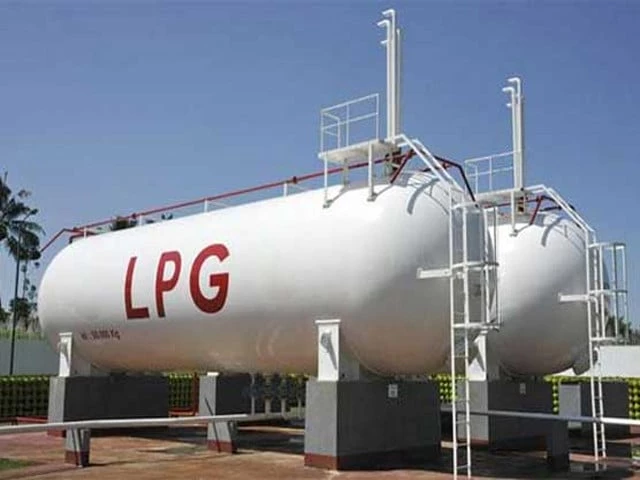
The government on Saturday moved to overhaul the distribution of liquefied petroleum gas (LPG) through a transparent auction mechanism, seeking to address supply constraints, improve market access and curb unfair pricing as consumers across the country continue to pay more than the officially notified rate.
The first meeting of the LPG Committee, chaired by Petroleum Secretary, was held on Saturday to operationalise the new framework, under which indigenous producers will allocate 10 per cent of their LPG production to state-owned marketing companies for supply to hard areas, while the remaining 90 per cent will be offered through transparent auctions held in the presence of the media.
The development comes amid mounting complaints about the non-availability of LPG at the government-notified price, with retailers and consumers attributing the widening price gap to expensive supplies, market constraints and weak enforcement.
LPG is currently being sold for up to Rs600 per kilogramme in Lahore and between Rs500 and Rs540 per kg in Karachi, against the November rate of Rs294.08 per kg fixed by the Oil and Gas Regulatory Authority (Ogra).
Federal Minister for Petroleum Ali Pervaiz Malik emphasised the government's commitment to addressing public concerns over LPG availability and unfair pricing, saying the initiative was in the public interest, particularly to ease the difficulties of consumers unable to access the commodity at affordable rates.
He said the new mechanism would strengthen supply-chain resilience, improve energy infrastructure and ensure equitable distribution of indigenous LPG while protecting vulnerable sections of society.
Under the arrangement, the remaining 90 per cent of indigenous production will be offered through open and transparent auctions to improve market access and encourage wider participation by eligible companies.
Each participating company will be allowed a maximum allocation of 20 metric tons per day to ensure fair opportunities for all bidders.
The committee also decided that daily LPG production would be closely monitored, with the figures presented to the prime minister to ensure effective oversight of the supply situation.
Constituted under the chairmanship of the petroleum secretary, the committee comprises the chairman of Ogra, managing directors of the Oil and Gas Development Company Limited (OGDCL) and Pakistan State Oil (PSO), the president of United Energy Pakistan Limited (UEP), and the director general (Liquefied Gases).
Ali Pervaiz Malik said the objective was to provide a level playing field and equal opportunities to participating companies while improving access to LPG for consumers. The committee will oversee auctions of indigenous LPG, review market supply arrangements and periodically assess pricing and bidding mechanisms.
The first meeting marks a step towards implementing the auction framework approved by the federal cabinet on November 4, 2026.
Prices remain unchecked
Meanwhile, government measures to ensure the sale of LPG at officially notified rates have yet to provide relief to consumers as the ongoing crackdown against retailers operate without adequate safety arrangements allegedly adding to their costs.
Shopkeepers say the financial burden of heavy fines and confiscated equipment is also being passed on to customers.
Despite enforcement operations by district administrations and Civil Defence teams against illegal LPG outlets across Lahore and other parts of Punjab, the commodity remains significantly more expensive than the notified rate.
Consumers say the government has also failed to ensure the availability of LPG through state-owned suppliers at the official price, leaving them dependent on the open market.
The crackdown was launched against retailers allegedly selling LPG without the requisite safety arrangements. During the operations, district administration and Civil Defence teams seized LPG pumps and other equipment from shops and imposed hefty fines.
Shopkeepers allege that the authorities are disproportionately targeting small retailers while those controlling the supply chain and charging exorbitant rates remain beyond the reach of enforcement agencies.
One shopkeeper said the authorities were taking action against small retailers despite their limited profit margins.
"We are not selling LPG at exorbitant prices. We sell it at a margin of Rs10 to Rs20 over the purchase price. Nobody takes action against the mafia, while the entire focus is on poor shopkeepers. If we shut down our businesses, people's stoves will stop working."
He said the PERA Force, police and district administration had confiscated their pumps, adding that a single LPG pump cost between Rs70,000 and Rs75,000.
"How are we supposed to recover this amount? We have to pay shop rent, employees' salaries and electricity bills. We are getting LPG from the plants at around Rs550 per kg. How can we sell it for Rs295?"
"The Ogra notification is incorrect. What is our fault? We receive calls from the plants telling us to buy gas at the specified rate or go without supplies. We are helpless. We have children too and need to earn a living in order to put two meals on the table in these times of inflation."
The financial strain has also affected transport workers who rely on LPG to operate their vehicles. A rickshaw driver said the situation had reached a point where daily earnings were barely enough to cover fuel costs or provide a meal.
"We earn Rs500, which is not even enough to buy a full supply of gas because LPG is selling for Rs600 per kg. We hardly get passengers, and even those who hire our rickshaws argue over fares and do not pay the full amount. What are we supposed to do in these times of inflation? Whatever we earn each day goes either towards filling the gas tank or buying a meal," he said.
However, Civil Defence Officer Ashfaq Ahmed rejected the suggestion that enforcement operations were responsible for the high price of LPG, saying the action was exclusively aimed at retailers operating without adequate safety arrangements.
He said the authorities would take action in accordance with the law against anyone selling LPG without the required safety measures, adding that several people had lost their lives in accidents involving unsafe LPG installations.
He maintained that ensuring public safety was equally important and could not be compromised.
Meanwhile, LPG Distributors Association leader Rana Abdul Jabbar said the association had urged the government to suspend the ongoing operations for the time being as retailers were making arrangements to comply with safety requirements.
He said consultations had also been held with the district administration and safety measures were being implemented in coordination with the authorities.
Describing the affected retailers as poor shopkeepers, he said some had even purchased their LPG pumps through instalments and were now facing serious financial difficulties because of the confiscation of their equipment.
Jabbar urged the government to return the seized pumps and other equipment, saying their restoration would enable small retailers to resume their businesses and earn a livelihood. He added that LPG supplies were improving and expressed hope that prices would also decline over the next few days.
The association, he said, was extending every possible cooperation to the government.
In Karachi, LPG prices have continued to climb, with consumers paying between Rs500 and Rs540 per kg despite the official rate. Ogra's November notification has yet to translate into any substantial reduction in market prices, while government announcements of action against retailers charging excessive rates have failed to provide relief.
Residents said LPG was not available through the state-owned company at the notified price, forcing them to purchase the commodity from the open market at considerably higher rates. With piped natural gas unavailable in several localities, LPG has become an essential household fuel, and its rising cost has further strained already stretched family budgets.
The increase has also affected transport costs, with higher LPG prices pushing up fares for rickshaws and other vehicles. Citizens have urged the government to ensure an uninterrupted supply of LPG at the officially notified rate and take action against retailers charging consumers more than the prescribed price.
The official price of LPG for November was increased by Rs14.73 per kg from October's rate of Rs279.34, taking it to Rs294.08 per kg. The price of an 11.8kg domestic cylinder consequently rose by Rs173.86 to Rs3,470.09.
The price differential has widened amid supply constraints ahead of winter, with disruptions to LPG imports through the Taftan border adding to shortages in the domestic market. The shortfall has further complicated efforts to enforce the officially notified price, leaving consumers exposed to substantially higher open-market rates.






This material may not be published, broadcast, rewritten, redistributed or derived from. Unless otherwise stated, all content is copyrighted © 2026 The Express Tribune.








COMMENTS
Comments are moderated and generally will be posted if they are on-topic and not abusive.
For more information, please see our Comments FAQ