Gen Z and costs of Iran War
Updated 36 minutes ago

.

Birds flying in the vastness of the sky finally crave solace in the lap of tree branches, which look like arms desperate to envelop them. But alas, our cities deny them a home. Our unfortunate planning policies have failed to leave any room for a balanced land-use distribution within urban expansions. The result is a vast concrete mess devoid of trees, open spaces and forests.
It is established that the mushroom growth of urbanised localities and katchi abadis cannot be totally removed; therefore, a specific strategy should be devised to rejuvenate them.
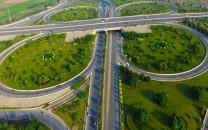
Satellite views of our cities are alarming: concrete dominates vast built-up areas with scarcely any plantation or open spaces. We urgently need to transform these harsh urban landscapes. Although no single tree-density standard applies to every locality, planning guidelines and environmental benchmarks generally recommend 1,0002,500 trees per hectare, or about 30% urban tree-canopy cover, to support a healthy environment.
There are numerous social and psychological impacts of such an environment on residents. These localities are mostly lower-middle and lower-class areas that closely resemble slums, yet a major portion of the urban population lives here. The streets are narrow, with broken or missing tiles, overwhelming sewerage and drainage issues, and a complete nonexistence of basic life amenities. Children born and raised in these settings become accustomed to congestion, a lack of facilities, scattered waste and a dearth of greenery – which is the most distressing part of the situation. Consequently, such places have a specific culture characterised by frequent feuds, social crimes and overcrowded, multi-family households, giving rise to further societal issues. The environmental hazards add fuel to the gravity of situation.
Therefore, to add a green element, a specific strategy should be devised that starts with the use of GIS technology. First, satellite imagery of urban areas should be utilised to identify the most problematic zones. These areas will be cataloged and divided into distinct sectors according to jurisdiction. A closer evaluation of each concrete jungle will then be conducted based on street patterns, rights-of-way, government land, disputed sites and privately owned land. This will become the basis for a comprehensive policy to identify viable spaces for planting. Naturally, in areas where streets are too narrow, brick-soled and lined with extremely small houses, finding space to plant trees becomes quite difficult. However, overcoming this challenge remains central to our policy of greening these neighborhoods.
For the preliminary analysis, it is necessary to check for utilities and underground obstacles. Because services are laid alongside streets, there is need to ensure there are no buried gas lines, electrical conduits or water pipes before drilling or punching into any urban ground. Once appropriate points are drilled down to the underground soil, resilient tree species that require minimal maintenance can be planted. Wherever possible, small holes can be dug at the edges of brick-soled streets to plant evergreen or shady trees, such as Dharaik, which require little to no care. Similarly, planting bougainvillea will add vibrant colour to the streets and alleys. In jam-packed areas where the right-of-way is too narrow and no space is available for planting, government-owned plots should be identified, or land should be acquired in the public interest through direct negotiation. These acquired plots can then be converted into small urban forests, parks or playgrounds. Finally, the tree canopy coverage percentage for specific tracts of land should be calculated using GIS. This is the most critical part of the strategy, as it serves to maintain ecological balance while improving both the environment and local air quality.
Trees are integral to human existence. We must learn to live alongside this gift of nature and nurture them. Trees sustain other living beings like birds, squirrels, etc. Leaving our cities at the mercy of unprecedented housing society sprawl deprives the masses of basic liveability standards.











This material may not be published, broadcast, rewritten, redistributed or derived from. Unless otherwise stated, all content is copyrighted © 2026 The Express Tribune.



COMMENTS
Comments are moderated and generally will be posted if they are on-topic and not abusive.
For more information, please see our Comments FAQ