IHC maintains stay on graveyard demolition
Updated 57 minutes ago

Governor's rule to end after six months, NA told
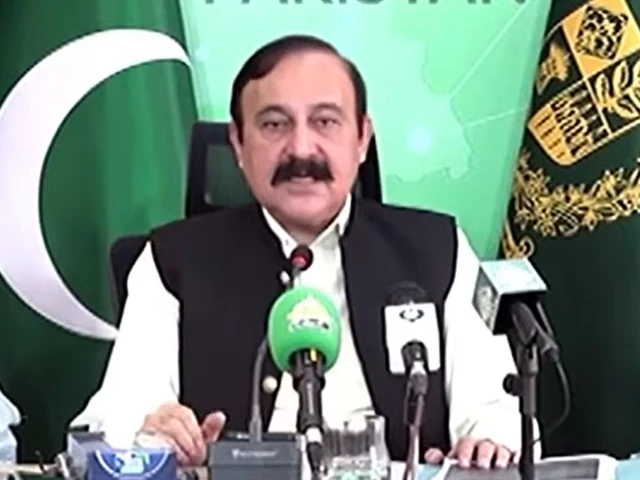
Governor's rule in Khyber-Pakhtunkhwa (K-P) would end after six months, while the emergency would remain in place until peace was restored, Minister for Parliamentary Affairs Dr Tariq Fazal Chaudhry told the National Assembly on Wednesday.
Responding to remarks by Jamiat Ulema-e-Islam-Fazl (JUI-F) chief Maulana Fazlur Rehman and Pakistan Tehreek-e-Insaf (PTI) Chairman Barrister Gohar Ali Khan, Chaudhry defended the measures, blaming the opposition for the circumstances that led to the imposition of governor's rule and emergency in the province.
He said the government aimed to restore peace within six months. "The governor's rule will end after six months. Our objective is to restore peace within this period, and we pray to Almighty Allah that we achieve this goal. The emergency will remain in place until peace is restored," he said.
Chaudhry said the measures covered the entire province and were intended to restore peace and improve administration rather than seize political power. The 12 districts worst affected by terrorism had been granted special status, he added.
The arrangements would allow police and security agencies in those districts to seek assistance directly from the federal government without going through the chief minister's or governor's secretariat, he said.
The minister said Prime Minister Shehbaz Sharif had approved a Rs160 billion package for K-P, to be implemented in three phases. The first would strengthen provincial police capabilities through modern weapons, armoured vehicles, equipment and training.
The second phase would focus on healthcare, education, sanitation and infrastructure, while the third would complete projects left pending during the PTI's 12-year rule in the province, he said.
"The largest share of the Rs160 billion allocation will be directed towards the 12 most-affected districts," Chaudhry said, adding that the government aimed to clear them of terrorists within four to six months while strengthening police capabilities.
Responding to Gohar's allegation that a particular political party was being installed in the province, Chaudhry said neither the advisory council nor the council of elders formed after the imposition of governor's rule included representatives of any political party.
Referring to negotiations between the government and opposition before governor's rule was imposed, he said a proposed agreement had been sent to the K-P leadership. However, then chief minister Sohail Afridi rejected the proposals, bringing the talks to an end.
Chaudhry said Afridi had publicly declared during a long march that he would neither cooperate with security forces nor support federal counter-terrorism measures. The provincial leadership's position had contributed to the circumstances leading to the imposition of emergency and governor's rule, he added.
Referring to the toll of terrorism on political parties, Chaudhry recalled Fazl's remarks about the deaths of around 250 JUI-F workers. He stressed that cooperation from the provincial administration was essential for successful counter-terrorism operations.
On Afghanistan, the minister said Pakistan had exhausted diplomatic options before adopting its current policy. He urged the Afghan authorities to eliminate terrorist safe havens and prevent militants from crossing into Pakistan.
Chaudhry rejected comparisons between the security situations in K-P and Balochistan, saying the Balochistan chief minister was cooperating with the federal government, armed forces and security agencies in combating terrorism.
Addressing concerns over K-P's mineral resources, he rejected suggestions that the measures were intended to facilitate control over the province's natural wealth. The people of each province had the first right to their mineral resources, he said.
However, he questioned whether resources that had remained underground for decades should continue to go unused, arguing that their development could generate revenue for healthcare, education and other public services.
Referring to remarks by US diplomat Natalie Baker that American companies were willing to help explore mineral resources in K-P and Balochistan, Chaudhry said foreign interest should not be interpreted as an attempt to seize provincial resources.
On Kashmir, he said the government had made every possible effort to address the region's problems through dialogue and peaceful means, adding that attempts to create divisions between Pakistan and Kashmir should not be allowed to succeed.
Concluding his remarks, Chaudhry called on political parties to build consensus on national security, counter-terrorism and economic stability. He said Prime Minister Shehbaz Sharif and senior cabinet members remained willing to engage the opposition in dialogue.








This material may not be published, broadcast, rewritten, redistributed or derived from. Unless otherwise stated, all content is copyrighted © 2026 The Express Tribune.





COMMENTS
Comments are moderated and generally will be posted if they are on-topic and not abusive.
For more information, please see our Comments FAQ