20 Gujranwala cops dismissed
Updated 1 hour ago

Rules high court beyond Article 199 review
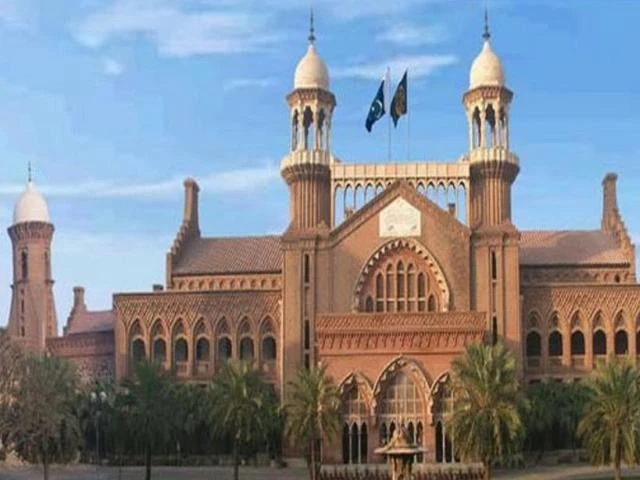
Dismissing a constitutional petition challenging the rejection of a request for pensionary benefits, the LHC has held that a high court, including its committees comprising judges, and decisions endorsed by the chief justice, cannot be subjected to judicial review under Article 199 of the Constitution.
Justice Asim Hafeez observed that Article 199(5) expressly excludes a high court from the entities amenable to the constitutional jurisdiction of judicial review. He held that the court, its judges' committees and the chief justice constituted an integrated institutional whole, and the constitutional jurisdiction could not be invoked against their collective decision.
The Lahore High Court judge observed that what was prohibited directly could not be achieved indirectly through proposed amendments to the petition.
Emphasising the need to preserve institutional collegiality and judicial comity, the court dismissed both the constitutional petition and an application seeking amendment.
The petitioner, Justice (retired) Zafar Iqbal Chaudhry, had sought pensionary benefits, but the request had been considered and disapproved by a committee comprising judges of the high court.
The recommendations were subsequently placed before the chief justice who declined the request. The decision was conveyed to the petitioner through a letter issued by the registrar on May 11, which was challenged before the court.
A law officer opposed the maintainability of the petition by relying on a Supreme Court judgment.
The petitioner's counsel argued that the judgment had subsequently been reviewed by the Supreme Court and, therefore, could no longer serve as a binding precedent.
However, Justice Hafeez observed that the review judgment had neither overturned nor disturbed the reasoning of the judgment. The Supreme Court had set aside the earlier decision to the extent of the review petitioner because of an apparent error concerning Rule 22 of the Peshawar High Court Ministerial Establishment (Appointment and Conditions of Service) Rules, 2020, which provided a specific right of appeal.
The judge noted that the Supreme Court had remanded that matter to the PHC chief justice for placement before judges nominated to decide the appeal in accordance with law. He held that the limited relief granted in the review proceedings did not alter the established legal position concerning the scope of Article 199(5).
Referring to legal principles discussed in a book, Justice Hafeez observed that the article defines which entities are amenable to judicial review, rather than merely operating as a conventional ouster of jurisdiction.
The court rejected the possibility of treating the judges who considered the petitioner's request, or the chief justice who endorsed the decision, as separate individuals outside the protection afforded to a high court under the constitutional provision.














This material may not be published, broadcast, rewritten, redistributed or derived from. Unless otherwise stated, all content is copyrighted © 2026 The Express Tribune.







COMMENTS
Comments are moderated and generally will be posted if they are on-topic and not abusive.
For more information, please see our Comments FAQ