Businesses will not be harassed: PM aide
Updated 1 hour ago

Taxes on vehicle tyres, motorcycle parts clash with trade liberalisation drive
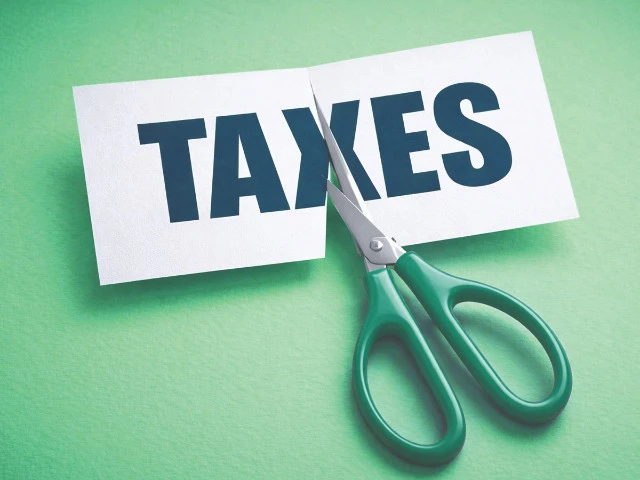
A member of the National Tariff Policy Board has opposed a decision to impose up to 31% additional duty on some imports, which the government has decided to slap despite its new pro-trade liberalisation National Tariff Policy discouraging import substitution.
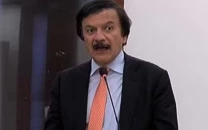
It is a wrong decision to impose additional customs duty on the import of tyres of vehicles and some parts of motorcycles, said Dr Rubina Athar, a member of the Tariff Policy Board, who was part of the National Tariff Policy formulation and one of the strongest proponents of trade liberalisation.
She was responding to a question during a panel discussion on Pakistan's tariff reforms, arranged by the United Kingdom-funded Revenue Mobilisation, Investment and Trade (REMIT) Initiative.
"Every tariff-related proposal should come to the National Tariff Policy Board before going to the cabinet, and as a member of the board I can say this matter has not come to the policy board for a decision before it was sent to the ECC," said Athar.
The finance ministry said on Thursday that the ECC approved the imposition of 11% additional customs duty on import of tyres to protect the local industry. It slapped 11% additional customs duty on the import of parts of motorcycles and 31% if the manufacturers import these parts instead of locally producing them.
The 31% duty is imposed on motorcycle components including licence plate, bracket, side reflector, right and left-side plate, front decorative connection part, foot plate, wheel assembly, windshield, seat, toolbox, centre covers and plates & parts.
But imports of these parts from China will still be taxed at zero duty under the Free Trade Agreement. Prime Minister Shehbaz Sharif's government had approved the National Tariff Policy with an aim to fully liberalise the economy by demolishing trade barriers. It is the first such decision where the government has added more bricks to the wall instead of tearing them down.
The Federal Board of Revenue had moved the summary for the approval of the ECC. When inquired about the motive, beneficiaries of the additional customs duty and the rationale to breach the tariff policy, it did not give a reply.
"It is the Ministry of Industries' proposal developed by the Engineering Development Board," said the FBR spokesman. In its response, the Ministry of Commerce said that the ECC considered the amendment in SRO 693(1)/2006, which pertains to the imposition of additional customs duty on parts being locally manufactured if imported by OEMs in kit form. The commerce ministry said that the list of items to be included in the SRO is to be reviewed bi-annually by the Ministry of Industries & Production.
The "auto sector SROs do not operate under the National Tariff Policy as was held by the Tariff Policy Board in its meeting held on 6th June, 2026, whereby it was decided that the SRO 693 does not fall within the purview of TPB being part of another policy", according to the commerce ministry. The mechanism available under the Auto Policy 2021-26 still exists in the shape of SROs, including SRO 693(1)/2006, and MOC, in principle, supported the amendment, it added.
However, the auto policy lapsed in June this year and there is no new approved auto policy. But the commerce ministry said that these SROs were still in the field. The ministry said that Service Long March locally manufactures these tyres.
The national tariff policy is aimed at opening the economy by ending the import substitution policy, said Rubina Athar. She said that the import substitution policies had made industries inefficient and the consumers did not benefit from it.
Dr Vaqar Ahmed, a senior economist, said that favouritism in the application of tariff policy would kill its purpose, but the auto sector has been explicitly excluded from the purview.
Zafar Mehmood, Chief Executive Officer of Nimir Chemicals, said that lowering the customs duties would not bring efficiency and reduce cost for the consumers, as other duties and taxes were causing more problems. He said that the National Tariff Policy has compromised the cascading principle of protection, which would severely impact many industries.
Member Customs FBR Shakil Shah agreed that import taxes, particularly advance income tax, were creating serious problems for the industries. The FBR withholds advance income tax at the import stage irrespective of whether the industry would make any profit or not, which is unnecessarily blocking the money of industries, said Shah.
"If the earned profits are less than the withheld advance income tax, the importer will never get refunds, and we need to eliminate these withholding taxes at the import stage," said Shah.
Zain ul Abideen, CEO Rubatech, said that the national tariff policy combined with the new energy vehicle policy was a death sentence to the auto industry. Zain said that preferential treatment being given to the NEVs would eliminate internal combustion engine cars.
But Rubina Athar argued that some shock had to be given to the industries to wake them up from inertia. Wajid Bukhari, Secretary General Pakistan Association of Large Steel Producers, said that the tariff policy did not impact the steel industry so far due to reduction in the interest rates and energy cost.







This material may not be published, broadcast, rewritten, redistributed or derived from. Unless otherwise stated, all content is copyrighted © 2026 The Express Tribune.






COMMENTS
Comments are moderated and generally will be posted if they are on-topic and not abusive.
For more information, please see our Comments FAQ