Kashmiri filmmaker Arfat Sheikh released from US ICE detention, campaign says
Updated 4 hours ago

Actor stresses parents must stand by their daughters when they face abuse
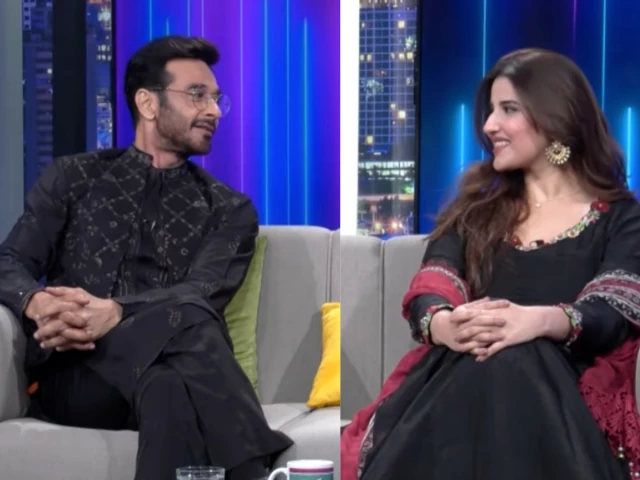
Actor Faysal Quraishi has challenged the belief that married daughters should return to their parents’ homes only after their deaths, stressing that parents remain responsible for their daughters’ safety and well-being even after marriage.
Speaking in an interview with Vasay Chaudhry alongside actor Hareem Farooq, Quraishi questioned the mindset that women should endure abuse in their marital homes rather than seek support from their families.
“I mean, you have raised her, so you won’t stay as her back-up? If she is being beaten up there or is being abused, then why do people have such thoughts that she will only return when it’s her funeral?” he said.
“Is she not your daughter?” he asked, emphasising that marriage does not diminish a daughter’s place in her parents’ lives. “If you are alive and well, take that responsibility,” he added.
His remarks highlighted the importance of parents providing a safe space for their daughters, particularly when they face violence or abuse in their marital homes. He challenged the social stigma that can prevent women from seeking refuge with their families when a marriage becomes unsafe.
Quraishi also referred to the drama Muhabbatein Chahatein, featuring Mawra Hocane, recalling a scene in which a father stands up for his daughter. He praised the portrayal for promoting equality between sons and daughters and demonstrating the importance of parental support.
“I liked it so much that we are showing such stuff in dramas that whether daughter or son, they are both equal,” he said.
He further explained that standing by a child could deter wrongdoing by ensuring the child did not feel alone. “When you stand up for your child, the person doing the crime won’t have the ability to,” he said.
Drawing a connection to his upcoming film, Mango Jutt, Quraishi shared a Punjabi dialogue that conveyed a similar sentiment: “Hun peeche mur ke vekhi, tere peeche main khlota aan” — meaning, “Now look back, I am standing behind you.” “When you know someone is beside you, even the person in front of you can’t commit a crime,” he added.
The conversation also touched on Quraishi and Farooq’s upcoming Punjabi film, Mango Jutt, and the thinking behind its unusual title. While “mango” might initially seem unexpected in the title of a Punjabi film, Farooq said it carried several associations, including being Pakistan’s national fruit and the king of fruits.
She suggested that combining “Mango” with “Jutt” was intended to make audiences curious about the film and encourage them to discover its story.
Quraishi added, "When you see the name, you think what is this? But that's the biggest thing about film. Mango is the national fruit and we want the character of Murad Jutt to be a national hero."
The title also reflects the film’s intended family appeal. According to Farooq, its light-hearted and unusual nature makes it accessible to audiences of different ages, including children who may find the name amusing.
Quraishi also highlighted the film’s connection to Punjabi culture, saying viewers would see “apna Punjab” on screen. The discussion broadened to the role of Punjabi-language entertainment in Pakistan’s film industry.
Farooq said Punjab’s culture and language represented a significant opportunity for the local entertainment business, while Quraishi pointed to the success of The Legend of Maula Jatt as evidence that Punjabi cinema could attract audiences in Pakistan. "It was also proven though Maula Jutt that Punjabi films can work in Pakistan," he said.
Quraishi suggested that bringing Punjabi storytelling to the forefront could help strengthen the domestic film industry and encourage more productions rooted in regional culture and language.
Farooq also spoke positively about working with Quraishi, describing the experience as enjoyable and praising his collaborative approach on set. “I laughed so much on the shoot. Working with Faysal is a pleasure, and I don’t say this because he’s here,” she said.
She noted that Quraishi had a quality she believed was not always found among more senior actors: a willingness to support fellow performers and producers rather than focusing solely on himself. “He supports producers and actors. He doesn’t just want focus on himself. He is somebody who works with everyone, and that made my job very easy,” she added.
Their discussion highlighted the potential of Punjabi films to bring together performers and audiences from different parts of Pakistan while showcasing regional stories on a wider cinematic platform.
Mango Jutt is scheduled to release in cinemas on October 16, 2026.
















This material may not be published, broadcast, rewritten, redistributed or derived from. Unless otherwise stated, all content is copyrighted © 2026 The Express Tribune.






COMMENTS
Comments are moderated and generally will be posted if they are on-topic and not abusive.
For more information, please see our Comments FAQ