ATC reserves verdict in Sidra murder case
Updated 1 hour ago

Nearly 15 games that once brought free exercise, collective enjoyment disappear
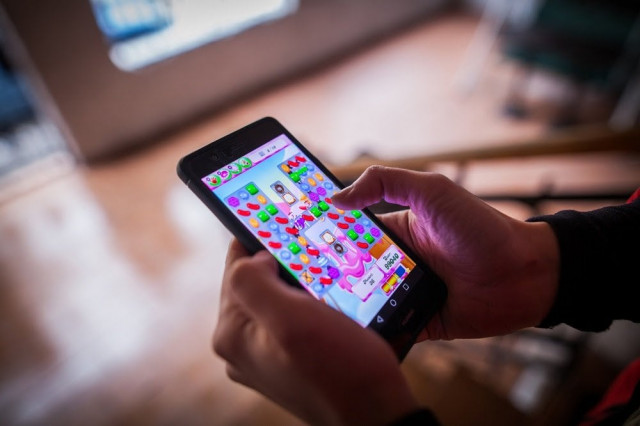
Modern scientific development has pushed nearly 15 traditional games, some around 150 years old, played across Punjab towards extinction.
These free forms of physical exercise have gradually disappeared from streets and neighbourhoods.
These traditional games were once a distinctive feature of Punjab and were played daily in almost every street and neighbourhood. While boys played marbles and Pithu Garam, girls sitting nearby played Kikli, Gitte and Ishtapu.
The traditional games that have disappeared or are fading include wrestling, Malakhara, kabaddi, Gilli Danda, Pithu Garam, Langri Sher, Vanji, skipping rope, playing with small stones, marbles, Bandar Qila, Kikli, Ishtapu, hide-and-seek, Lukan Miti, Chor Sipahi and riding bicycle tyres.
These games were a major source of physical agility, strength and collective enjoyment.
The famous traditional game Gilli Danda involved a small wooden stick called a gilli and a larger stick. It involved aiming and competing to hit and throw the stick over a distance.
In Pithu Garam, pieces of stone were knocked down and then rearranged, while the opposing team tried to hit the players with a ball and get them out.
Khado Khondi was a traditional game similar to hockey and was played in open fields.
Kabaddi and Malakhara (wrestling) served as traditional arenas for demonstrating strength and endurance.
Aankh Micholi and Lukan Miti, traditional children's games, have now disappeared from the streets.
Kikli was a game played by girls. Two girls held each other's hands and moved around in a circle. A popular song was associated with the game: "Kikli Kaler Di, Pag Mere Veer Di, Dupatta Mere Bhai Da, Phatte Munh Jawai Da."
Another game, Hara Samandar, involved several girls standing in a circle with their arms linked, while one girl stood in the middle. The area within the circle was considered the sea. The girls forming the circle asked the girl in the middle how deep the water was. She would say ankle-deep, and they would respond with knee-deep, hand-deep and neck-deep before she would say, "I am drowning," and fall to the ground.
Ishtapu was played by both boys and girls in a small courtyard. A small bounded playing area was marked on the ground using a stone.
Lukan Miti was also played by both genders and required two teams. One team hid while the other searched for them, after a call was made.
Kokla Chhapaaki was another children's game played by both boys and girls. Children sat in a circle while one child carrying a piece of cloth moved around them singing. The game involved a kind of warning that children sitting in the circle should not look behind them. The cloth was dropped behind one of the children. If the child saw the player dropping it, they could catch them and take their place.
The song sung during the game was: "Kokla Chhapaaki Jumerat Aayi Ae, Jehra Agge Pichhe Vekhe, Ohdi Shaamat Aayi Ae."
Children used to run bicycle tyres through streets with sticks. In Langri Sher, a large square or circle was drawn and one boy or girl, acting as the "lame lion", tried to touch the other children inside.










This material may not be published, broadcast, rewritten, redistributed or derived from. Unless otherwise stated, all content is copyrighted © 2026 The Express Tribune.








COMMENTS
Comments are moderated and generally will be posted if they are on-topic and not abusive.
For more information, please see our Comments FAQ