Vance acknowledges 'failures' in US handling of Iran war
Updated 2 hours ago

Mass deletions under Special Intensive Revision draw opposition fire, UN concerns and Supreme Court scrutiny
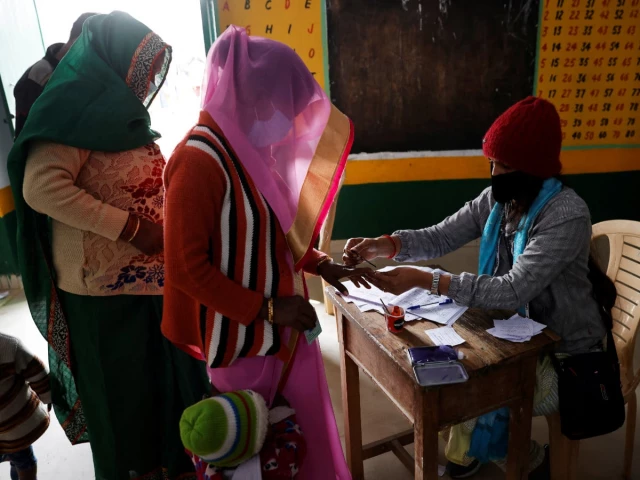
India’s sweeping Special Intensive Revision (SIR) of electoral rolls has triggered an intensifying political and legal controversy, with opposition parties and civil society groups alleging mass disenfranchisement while the Election Commission of India (ECI) maintains that the exercise is aimed at cleaning up voter lists and removing ineligible entries.
The controversy has also drawn international attention. In May, three United Nations (UN) special rapporteurs sent a joint communication to the Indian government raising concerns over the reported large-scale removal of names from electoral rolls through the SIR process, particularly in West Bengal and among minority communities. The UN communication said it had received information concerning the removal of millions of names and expressed concern about the potential impact on minority groups.
The SIR was launched in Bihar on June 24, 2025, and has subsequently been extended to other parts of India. The ECI says the exercise is intended to ensure that electoral rolls contain eligible voters while removing entries relating to deceased persons, people who have permanently moved away, duplicate registrations and other ineligible entries.
India’s Supreme Court, in a May 27, 2026 judgment concerning the Bihar SIR, upheld the ECI’s authority to conduct the revision. It also held that the commission could undertake a limited administrative inquiry into citizenship for electoral purposes, while making clear that a final determination of citizenship remains with the competent authority under the Citizenship Act. The court further said that deletion from an electoral roll on citizenship grounds could not itself constitute a final determination of a person's citizenship.
Read: Shutdown in India's Ladakh marks anniversary of deadly autonomy protests
The scale of the exercise has nevertheless fuelled questions about its impact on eligible voters.
Figures cited by political opponents and campaigners point to millions of deletions or voters requiring verification across different states. In Bihar, the draft exercise resulted in around 65 lakh names being excluded, with the net reduction reportedly falling to about 47 lakh after claims and objections. Other figures cited in the controversy include approximately 2.04 crore names in Uttar Pradesh, 74 lakh in Tamil Nadu, 68 lakh in Gujarat, 45 lakh in Andhra Pradesh, 34 lakh in Madhya Pradesh, 31 lakh in Rajasthan and 34 lakh in Haryana.
These figures relate to different stages of the revision process and should not automatically be interpreted as permanent disenfranchisement. The ECI has provided mechanisms for voters to check their names, submit documents and file claims and appeals.
West Bengal has emerged as one of the most contentious cases. The UN communication specifically highlighted concerns over the removal of millions of names in the state, where assembly elections were held in April 2026. The state election authorities have published draft and final rolls, deletion lists and mechanisms for claims and appeals.
Critics argue that the documentation and verification requirements could disproportionately affect poorer voters and minorities, particularly those who lack older records or whose names do not easily match previous electoral rolls.
The political debate has acquired an additional communal dimension because of the BJP government's broader emphasis on identifying alleged illegal migrants from Bangladesh. Critics argue that references to “Bangladeshi infiltrators” have acquired a particular political resonance in Muslim-majority areas. The ECI, however, has not published religion-wise deletion figures that would establish whether Muslims have been disproportionately removed from electoral rolls.
The issue has also reached Delhi, where the Supreme Court on September 22 questioned the manner in which notices were being issued to voters flagged for “logical discrepancies”.
Read more: India's 'cockroach' movement says will launch protest if poll panel chief doesn't quit in 48 hours
According to figures presented in court, the draft Delhi electoral roll excluded around 47 lakh names, while more than 33 lakh voters were identified for notices over “logical discrepancies” or lack of mapping with earlier rolls. The bench headed by Chief Justice Surya Kant questioned whether some notices appeared to have been issued mechanically and asked the ECI to consider additional safeguards and clearer explanations for affected voters.
The court also suggested that Booth Level Officers should provide greater assistance to voters and that the ECI should prepare standardised guidance explaining the documents and information required to address different categories of discrepancies.
Opposition parties including the Congress, Aam Aadmi Party, Trinamool Congress and Communist Party of India (Marxist) have accused the ECI of facilitating what they describe as “vote theft” and targeted exclusion. Supporters of the revision reject those allegations and argue that an accurate electoral roll is essential to the integrity of elections.
At the heart of the dispute is a basic democratic question: how can electoral authorities simultaneously protect the integrity of voter rolls and ensure that eligible citizens are not excluded through administrative errors, inadequate documentation or flawed verification?
That question has become particularly sensitive in a country of more than a billion people, where even a relatively small error rate can affect millions of voters.
The ECI has made electoral-roll search, document submission and appeals available through its voter services system, while state election authorities have also published deletion lists and supplementary rolls.
For critics of the SIR, however, the central issue is not whether electoral rolls should be cleaned up but whether the process is sufficiently transparent and inclusive to ensure that every eligible voter retains the opportunity to vote.
With the Supreme Court now examining aspects of the exercise and UN experts having raised concerns over its impact on minorities, the SIR controversy has evolved from an administrative exercise into a wider debate over electoral inclusion, institutional safeguards and the credibility of India’s democratic process.








This material may not be published, broadcast, rewritten, redistributed or derived from. Unless otherwise stated, all content is copyrighted © 2026 The Express Tribune.



1727268465-0/Untitled-design-(42)1727268465-0-208x130.webp "sisyphus in the land of saviours")
COMMENTS
Comments are moderated and generally will be posted if they are on-topic and not abusive.
For more information, please see our Comments FAQ