IMF flags risks to global economy from AI market correction, war and debt
Updated 1 hour ago

Row shows how the legacies of nationality, religion and language that shaped Bangladesh are politically potent
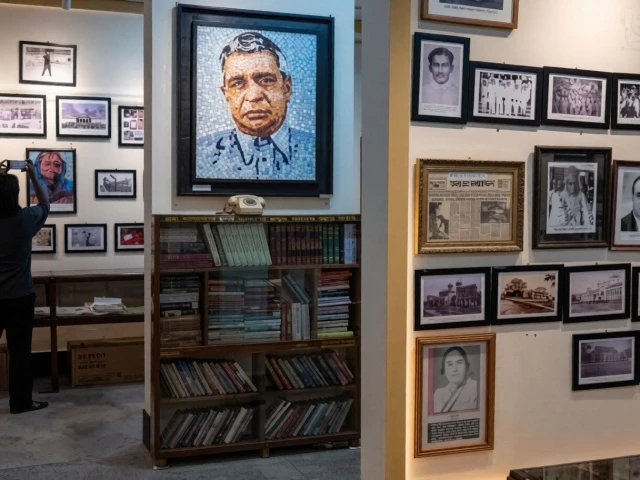
Quaid-e-Azam Muhammad Ali Jinnah died nearly eight decades ago, but his photograph has become the centrepiece of a fresh battle over history at Bangladesh's top university.
The image of Jinnah was shown at a new museum display this month at Dhaka University — only to be torn down, exposing a bitter dispute over how Bangladesh remembers its complicated history.
Abu Tayyab Habildar, the university student who ripped the photograph, called Jinnah a "villain".
The row shows how the legacies of nationality, religion and language that shaped Bangladesh are politically potent — and how the 2024 revolution that toppled Sheikh Hasina has upended old narratives.
Pakistan and Bangladesh were once the western and eastern wings of a single country, created by the violent partition of British-ruled India in 1947.
They were separated by more than 1,500 kilometres of Indian territory.
Bangladesh won independence from Pakistan after the bitter 1971 war.
Hundreds of thousands were killed — Bangladeshi estimates say millions — and many in Dhaka still demand Islamabad apologise for the killings.
Jinnah was not an Islamist, but his campaign for a separate Muslim homeland makes him a potent symbol for Bangladesh's opposition Islamist politicians, who seek to emphasise the country's Muslim identity.
"In Bangladesh, Jinnah was never celebrated," said political analyst Altaf Parvez.
"The ground is fertile for the rise of the Islamists. They need a suitable leader, and that is why there is so much fuss around Jinnah."
The Dhaka University Central Students Union (DUCSU), led by Bangladesh Chhatra Shibir, the student wing of the country's largest Islamist political party, said the photograph was part of a chronological display tracing the university's history.
Read More: Bangladesh sentences to death seven key aides of ousted premier Hasina
DUCSU leader SM Farhad criticised what he called the "mob attack" that ripped the picture down.
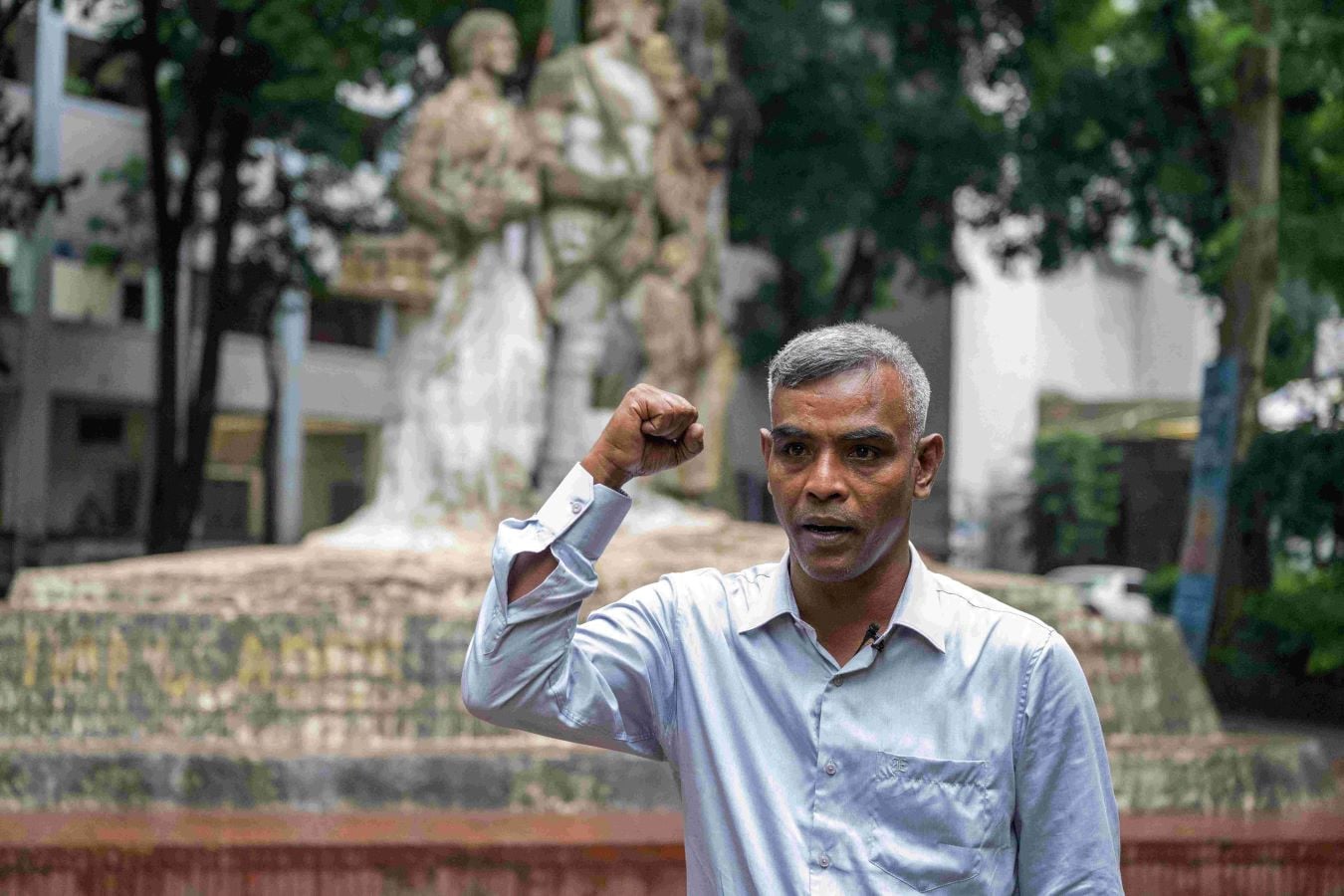
This photograph taken on September 17, 2026 shows Dhaka University student Abu Tayyab Habildar, who ripped Jinnah's photograph, speaking during an interview with AFP in Dhaka. — AFP
"You can correct us if we make any mistake, though we haven't made any," he told AFP.
Critics accused the student union of trying to reshape that history by highlighting Jinnah — while diminishing Sheikh Mujibur Rahman, Bangladesh's founding president and independence leader.
"Jinnah is the father of Pakistan," Habildar, the student who ripped the picture down, told AFP.
"But that same Jinnah, when he stood against Bengali and Bangla language, he is a villain."
But Rahman's legacy is also deeply controversial.
His daughter is Sheikh Hasina, whose iron-fisted rule as prime minister ended in a bloody student-led 2024 revolution, and is reviled by those who overthrew her.
Hasina has been sentenced to death in absentia, and the activities of her former ruling Awami League have been banned.
Rahman's former home, later turned into a museum, was torched during the uprising.
Farhad, the DUCSU leader, said the university museum also needed an update.
"They left no stone unturned to establish the narrative of the Awami League ... so we thought we would renovate it," he said.
But student Mahafuzur Rahman, 19, said removing photographs was not the answer.
"I don't think it's good to remove his photo ... He is also part of history."
The space where Jinnah's photograph hung remains empty.







This material may not be published, broadcast, rewritten, redistributed or derived from. Unless otherwise stated, all content is copyrighted © 2026 The Express Tribune.



COMMENTS (4)
Comments are moderated and generally will be posted if they are on-topic and not abusive.
For more information, please see our Comments FAQ