'Indian duty-free access threatens GSP Plus edge'
Updated 16 hours ago

Experts demand land rights protection; projects face scrutiny over livelihoods
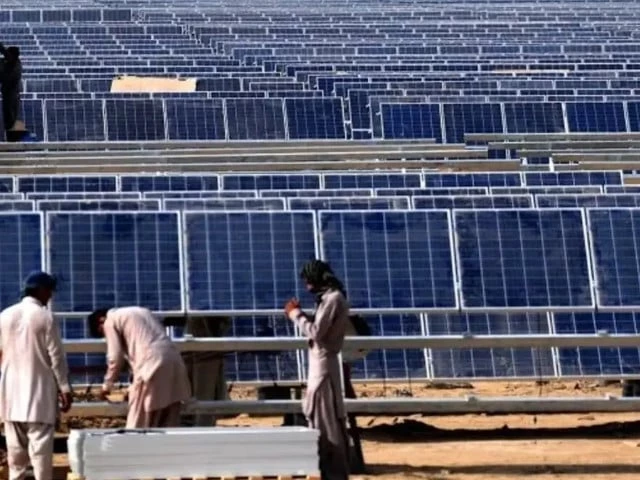
Experts, civil society representatives, policymakers and energy-sector stakeholders have called for a community-centred and inclusive transition towards clean and renewable energy in Sindh, stressing that livelihoods, land rights and well-being of local communities must not be compromised by new energy projects.
The call was made at a strategic stakeholder dialogue titled "Just Energy Transition in Sindh: Ensuring Community-Centred and Inclusive Clean Energy Development". The dialogue was jointly organised by The Citizenry, an online media platform focused on research-based journalism, and The Knowledge Forum, a think tank working on human rights and development.
The consultation focused on four themes: upcoming renewable energy projects at 13 sites in Thatta, Sujawal, Badin and Tharparkar; potential for green jobs; community benefit-sharing and corporate social responsibility in renewable energy; and land laws, resettlement and rehabilitation related to energy projects.
Oonib Azam of The Citizenry presented the organisation's study, "Socio-Economic Evidence from Umerkot and Policy Recommendations for Renewable Energy Development." Based on a survey of 204 respondents in 12 villages, field observations and expert interviews, the study found gaps in basic services and infrastructure, land insecurity, limited community participation and unequal access to development benefits.
Residents expressed concern about displacement, informal land tenure and their limited role in decisions on renewable energy projects. The Citizenry noted that existing and planned projects were not consistently aligned with the Power Generation Policy 2015, Nepra Social Investment Guidelines 2021 and, where applicable, the World Bank Environmental and Social Framework, which promote community engagement, local jobs, skills development, gender inclusion, healthcare, livelihoods, fair compensation and livelihood restoration.
Zehra Shallwani of New Energy Nexus highlighted that technical training was essential as solarisation expanded in off-grid and energy-deprived areas. She noted that poor solar-system design, installation and maintenance had caused financial losses to communities, while young people from Thatta often migrated to larger cities for employment.
Kamal Pallari, a local community member from Jhimpir, said wind power plants had provided little employment or social services to local residents. Instead, he said, projects affected livelihoods through land acquisition, flattening of productive land and restrictions on communities' privacy and mobility.
Abira Ashfaq of Green Chamber said communities in Sindh faced infringement of land rights, loss of livelihoods and displacement, while indigenous people were sometimes described as "encroachers" in energy-project reports.







This material may not be published, broadcast, rewritten, redistributed or derived from. Unless otherwise stated, all content is copyrighted © 2026 The Express Tribune.



1727268465-0/Untitled-design-(42)1727268465-0-208x130.webp "the reverse renaissance")


COMMENTS
Comments are moderated and generally will be posted if they are on-topic and not abusive.
For more information, please see our Comments FAQ