Gold, silver prices fall in global, local markets
Updated 3 hours ago

Meeting notes discrepancy between notified, actual market prices of fuel
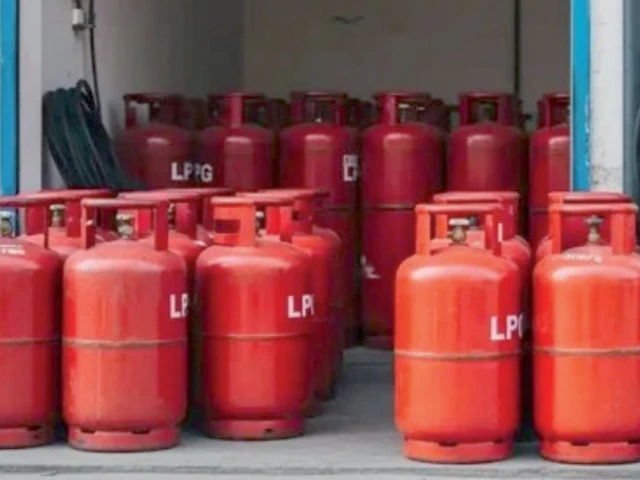
The Oil and Gas Regulatory Authority (Ogra) and the Petroleum Division have pointed out exploitation of the liquefied petroleum gas (LPG) pricing formula and policy framework that have caused market distortion and significant price anomalies.
Sources said that the issue was taken up in a high-level meeting of the National Price Monitoring Committee (NPMC). During the sitting, Ogra presented a detailed briefing on the existing LPG pricing mechanism, highlighting that the prevailing discrepancy between notified and actual market prices primarily stemmed from the exclusion of import parity in the current pricing formula. The meeting was informed that necessary policy revision by the Petroleum Division and Ogra had remained pending since 2023. Director General (LPG), Petroleum Division, said that the original policy framework was tailoured for domestic producers but was subsequently applied to importers, thereby distorting market pricing and creating significant price anomalies. The notified Ogra rate was found much below the rates charged in different cities, especially Gwadar (Rs330/kg) and Turbat (Rs350/kg) – both districts have borders with Iran.
The committee was also briefed by the chief (nutrition), Ministry of Planning, Development & Special Incentives on the results of quality testing conducted by the Pakistan Council of Scientific and Industrial Research (PCSIR) for edible oil, ghee and milk. Its findings highlighted serious quality concerns across the tested samples. Specifically, the analysis of edible oil and ghee revealed elevated levels of trans-fatty acids, peroxide value and free fatty acids, alongside non-compliance with requirements of Vitamin A fortification.
Similarly, the testing of milk samples indicated widespread non-compliance with prescribed quality standards, particularly showing lower protein and fat contents. The chair expressed serious concern over the degraded quality of essential food items, particularly in rural areas, and the severe health risks posed by such substandard commodities to the public.
To address the quality gaps, the chief (nutrition) suggested the formulation of a comprehensive national-level testing framework for essential food commodities, consisting of relevant stakeholders. It was further recommended that guidelines be established for mandatory quarterly testing of essential edibles, with the progress and findings regularly shared with the forum. Dr Mubarak Ali, Consultant (Food & Agriculture), also endorsed the proposal and further suggested that strict compliance measures may be taken.
Chief economist proposed that the Ministry of National Food Security and Research may convene a meeting with representatives of oil and ghee manufacturers, packaged milk producers, Ministry of Science and Technology and provincial governments to deliberate on the testing outcomes. He further suggested that the PCSIR may conduct random testing to validate the consistency of the results on a quarterly basis. After deliberations, the NPMC decided that the Ministry of National Food Security would hold a meeting with representatives of ghee, edible oil and milk producers/ associations to discuss the findings of PCSIR report and take corrective measures within 15 days.
It was also decided that the food ministry, in consultation with the Ministry of Commerce, Ministry of Industries and Production, Ministry of Science and Technology, provincial and regional food authorities, ICT administration and other stakeholders, would develop a comprehensive national framework for the regular quality assessment of edible oil, ghee, milk and other food-related commodities.
It agreed that the minister for petroleum, in consultation with Ogra, would address the prevailing discrepancy between the notified and actual market prices of LPG. Additionally, the Ministry of National Health Services, Regulation and Coordination shall look into the poor quality and high prices of drugs available in markets and submit a report to the NPMC.
The chief nutrition office was told to submit the findings and recommendations of the PCSIR report regarding the quality testing of ghee, oil and milk to the Economic Coordination Committee (ECC) for information and necessary directives.















This material may not be published, broadcast, rewritten, redistributed or derived from. Unless otherwise stated, all content is copyrighted © 2026 The Express Tribune.









COMMENTS (1)
Comments are moderated and generally will be posted if they are on-topic and not abusive.
For more information, please see our Comments FAQ