Stocks swing between gains and losses amid uncertainty
Updated 2 hours ago

Finance ministry again refuses to cut levy or use Rs430b contingency fund
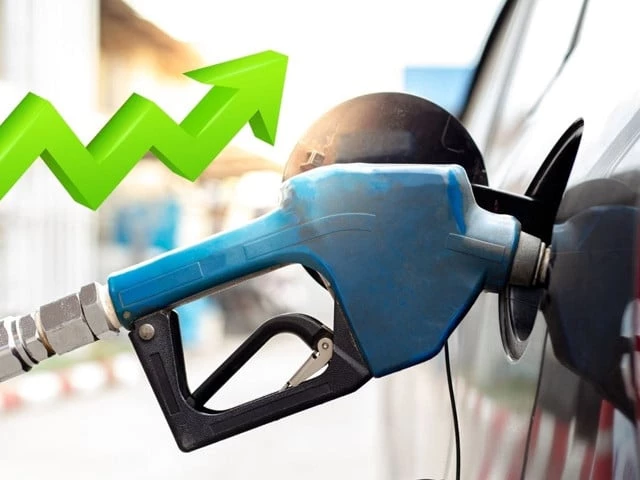
The government has decided to offer a paltry monthly compensation to motorcyclists, as the finance ministry has again turned down a suggestion by some cabinet ministers to cut petroleum levy and utilise a Rs430 billion available contingency budget to offset any revenue impact.
The finance ministry is again resisting the demand to utilise the Rs430 billion allocated contingency fund to cut petroleum levy, after it let Rs113 billion lapse in the last fiscal year instead of using the money earmarked for emergency purposes to shield consumers from the impact of the Middle East war, showed the budget documents.
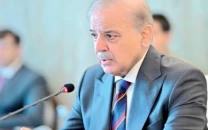
Prime Minister Shehbaz Sharif has given a go-ahead to launch the scheme, which will be implemented initially for three months and may continue depending upon the availability of funds and the situation in the Middle East, according to senior government officials.
The sources told The Express Tribune that the government was considering offering around Rs2,000 per month compensation to motorcyclists to partly offset the impact of unbearably higher petrol prices. The government of PM Sharif is currently charging Rs106 per litre tax on petrol, equal to 28% of the total price. Taxes on diesel are Rs101 per litre, equal to 25% of the total price.
Government officials said that last time Rs2,000 per month had been given to motorcyclists and the same compensation can be offered this time. But the final amount will be decided by PM Sharif, they added.
If the government restricts the compensation to only motorbike owners, it would not help bring down the overall inflationary pressure that is also hurting small-car owners and public transport.
Petroleum Minister Ali Pervaiz Malik had recommended in May this year - even before finalisation of the budget - to set the petroleum levy rate at Rs50 per litre and the annual collection target at Rs1 trillion.
The Rs2,000 monthly relief will be equal to just five litres of petrol at today's prices, which remain on a higher trajectory due to the government's refusal to lower the levy rates.
PM Sharif has taken meetings to find some solution, as public resentment against daily increases in fuel prices grows, with diesel prices again peaking at Rs403 per litre and petrol at Rs376.
This week, there was an abnormal Rs30 per litre increase in the prices of petrol and Rs25 per litre of diesel. Jamaat-e-Islami has given a call for a long march to Islamabad on September 20 to put pressure on the government to reduce the unreasonably high petroleum levy.
The compensation would be disbursed through mechanisms that the Ministry of Information Technology would develop.
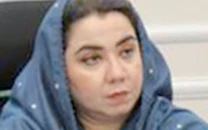
"We are finalising the details to ensure relief as per the prime minister's directions," said Minister for Information Technology Shaza Fatima Khawaja while responding to a question.
However, the larger issue remains unresolved as the finance ministry was not willing to lower the petroleum levy rates, the sources said. During these meetings, a couple of federal ministries again suggested lowering the levy rates and any shortfall in collection may be neutralised by using the Rs430 billion emergency funds.
But the sources said the finance ministry resisted the suggestion and argued that it could compromise the programme with the International Monetary Fund (IMF). They said the ministry was of the view that the money was not meant to reduce the petroleum levy.
But the IMF's third review report indicates that the contingency budget can be used for lowering the fuel cost.
"Amid exceptionally high budget uncertainty, setting aside an adequate contingency reserve would be critical to buffer fiscal risks, including those related to assumptions about the impact of the war in the Middle East," reads the IMF report.
Fuel prices are going up because of the Middle East conflict, making a stronger case for a reduction in taxes and which may also not be objected to by the IMF, said a government functionary who is a proponent of tax cuts.
The spokesman of the finance ministry did not respond to a question whether it was correct that the ministry turned down a suggestion by a few cabinet ministers that this fiscal year's Rs430 billion contingency funds should be used for compensating the adverse revenue effects of any reduction in petroleum levy from Rs80 per litre.
The spokesman also did not answer the question about the ministry's consistent view that the contingency fund can only be used for offsetting fiscal pressures and how the ministry defines fiscal pressures.
For the last fiscal year, Parliament had approved Rs389 billion contingency funds. The budget documents showed that the total spending from this pool was Rs276 billion, resulting in a saving of Rs113 billion.
The sources said a chunk of the Rs276 billion had not been utilised for the intended purposes and some of the funds were also diverted towards implementing the prime minister's directives.
The finance ministry spokesman also did not answer a question about where the Rs276 billion was spent in the last fiscal year.
The finance ministry not only saved Rs113 billion from the contingency fund that could have been used to reduce levy in the last fiscal year but it also collected Rs100 billion extra from consumers on account of petroleum levy.
The Rs213 billion was sufficient to lower the levy rates but the finance ministry preferred to overburden consumers to partly offset the impact of the massive tax shortfall faced by the Federal Board of Revenue (FBR).
The petroleum levy collection surged to Rs1.567 trillion, an increase of 28% compared to the corresponding period of last fiscal year.
The finance ministry had also over-performed on the IMF's condition of primary budget surplus, which was not required given the then economic conditions of the people.
According to the finance ministry report, the unadjusted primary budget surplus – the revenues after paying interest cost – surged to Rs3.63 trillion, exceeding the IMF target by Rs464 billion. The primary surplus was equal to 2.8% of the gross domestic product (GDP). The IMF had set the primary surplus target of Rs3.16 trillion.
The finance ministry spokesman also did not answer the question whether the IMF programme can be suspended just because of any reduction in petroleum levy rate, as the global lender did not suspend the $7 billion programme despite the FBR missing its targets by a margin of over Rs2.2 trillion for fiscal years 2024-25 and 2025-26.








This material may not be published, broadcast, rewritten, redistributed or derived from. Unless otherwise stated, all content is copyrighted © 2026 The Express Tribune.






COMMENTS (5)
Comments are moderated and generally will be posted if they are on-topic and not abusive.
For more information, please see our Comments FAQ