Govt cuts petrol by Rs5.16, diesel by Rs7.69 for Oct 20
Updated 4 hours ago

Chief secretaries, inspector generals of police, advocate generals of all four provinces also summoned on September 10
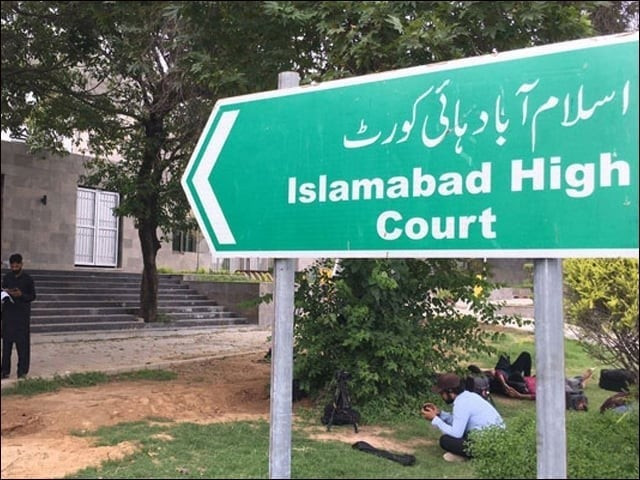
The Islamabad High Court (IHC) on Tuesday constituted a larger bench to hear a petition challenging the Pakistan Tehreek-e-Insaf (PTI)’s planned protest on September 27, with the case scheduled for hearing on September 10.
The development came as PTI stepped up preparations for its September 27 protest and long march towards Islamabad, with party leaders calling on supporters across the country to join the mobilisation.
The bench comprises Chief Justice Sardar Sarfraz Dogar, Justice Azam Khan and Justice Muhammad Asif. Given the sensitivity of the matter, the court had already issued a notice to the Attorney General for Pakistan.
The court also issued notices to the inspectors general of police, advocate generals and chief secretaries of all four provinces, summoning them to appear in person on September 10. The court also summoned Islamabad’s chief commissioner and deputy commissioner.
The larger bench will hear the petition and consider the matter in light of the responses from the relevant authorities.
Earlier, IHC Chief Justice Dogar was hearing a petition filed by citizen Waqas Ahmed challenging the planned protest.
The petitioner’s lawyer told the court that he was a trader who ran a business in Islamabad and would be affected if the protest was brought to the capital.
“How are you an affected party?” the chief justice asked.
The lawyer replied that the petitioner was affected because there was a plan to bring the protest into Islamabad. He referred to recent statements by the Khyber-Pakhtunkhwa (K-P) Chief Minister Sohail Afridi announcing the protest and presented newspaper clippings containing his statements before the court.
“All their matters are already pending before the courts,” he said, adding that the courts were required to decide those cases in accordance with the law. He argued that if the PTI’s position was accepted, people across Pakistan whose cases were pending before the courts could also take to the streets to demand relief.
Read: PTI finalises strategy for Sept 27 march
The lawyer also referred to the PTI’s previous attempt to enter Islamabad in 2024, claiming that three Rangers personnel had been killed during the protest. “If they say they are without weapons, then how did the Rangers personnel die?” he asked.
He also referred to a newspaper report which, he said, had estimated the losses caused by the previous PTI protest at Rs240 million.
The lawyer questioned why similar allegations were repeatedly made against the PTI and not other political parties. “The sole purpose is to put pressure and obtain relief,” he said.
The lawyer also told the court that he had previously filed a petition on behalf of prisoners but had not received the same relief.
He argued that although the Constitution protected the right to protest, the government could impose restrictions in accordance with the law. He subsequently read out the relevant legislation governing protests in Islamabad.
The chief justice then asked whether the protesters would be accompanied by K-P CM Afridi and government machinery.
“Yes, absolutely, they are coming with government machinery,” the lawyer replied.
He presented a letter issued by the Ministry of Interior on November 21, 2024, and alleged that government machinery had nevertheless been used during the PTI’s previous attempt to enter Islamabad. The lawyer further told the court that no application had so far been submitted to the Islamabad district magistrate in connection with the planned protest.
He said the protest was being organised in support of PTI founder Imran Khan, who is serving sentences in cases including the £190 million Al-Qadir Trust case, and pointed out that two cases involving him were pending before the IHC.
The lawyer then referred to orders in the £190 million case, saying the court had repeatedly asked Imran to present arguments in his appeal but that arguments had not been advanced. “This is the situation regarding the legal matter before this court,” he said.
“If they bring two million people, can the government direct the court to suspend the sentences in the appeals?” he asked. The lawyer stressed that the Constitution clearly provided for the independence of the judiciary.
He also referred to a march taking place in Sindh, saying the authorities there had indicated that they would facilitate it. The chief minister’s oath was subsequently read out before the court.
Given the sensitivity of the matter, the chief justice decided that the case should be heard by a larger bench. The court therefore ordered the constitution of a larger bench and issued a notice to the Attorney General for Pakistan.
Notices were also issued to the inspectors general and advocates general of all four provinces. The chief secretaries and IGs of Punjab, Sindh, K-P and Balochistan were directed to appear before the court in person.
Islamabad’s chief commissioner, deputy commissioner and IG were also summoned in person, while the advocates general of the four provinces and Islamabad were directed to appear before the court.
PTI gears up for September 27
The PTI announced the September 27 Islamabad march to press for the release of Imran Khan. The party had been preparing a central convoy from K-P, with caravans from other parts of the country expected to join before proceeding towards the federal capital.
Under a preliminary strategy announced in August, the party planned to bring workers from across the country to K-P at least five days before the march. The main convoy was expected to remain at the Punjab-Khyber-Pakhtunkhwa border for two to three days before moving towards Islamabad once other caravans had assembled.
The PTI had also planned protests and shutdowns in several major cities, including Lahore, Karachi, Hyderabad and Quetta, as well as demonstrations along important national highways.
CM Afridi subsequently intensified the mobilisation campaign during a visit to Karachi on Monday, calling on people in Sindh to join the September 27 protest.
Addressing lawyers at a convention organised under the Sindh High Court Bar Association, Afridi urged supporters to come to Karachi rather than travel to Islamabad and called for the city to remain closed for a week.
He said people from across Pakistan would take to the streets on September 27 and described the planned protest as a movement against what he called an unjust political system.
Afridi also criticised restrictions placed on his convoy as it travelled to Karachi, alleging that containers had been placed along its route and that PTI workers had been arrested.
The PTI’s August plan also included a funding and mobilisation structure for the protest. A committee headed by party Secretary-General Salman Akram Raja was tasked with overseeing finances, while lawmakers were directed to mobilise supporters in their constituencies.
The party had estimated that the first day of the march would cost around Rs450 million, with subsequent days expected to cost approximately Rs14.5 million each. It had also sought financial contributions from lawmakers and party figures to fund the campaign.












This material may not be published, broadcast, rewritten, redistributed or derived from. Unless otherwise stated, all content is copyrighted © 2026 The Express Tribune.






COMMENTS
Comments are moderated and generally will be posted if they are on-topic and not abusive.
For more information, please see our Comments FAQ