Doctors escalate strike after LRH assault
Updated 13 hours ago

It distributes decarbonisation cost among industries, brands & financiers
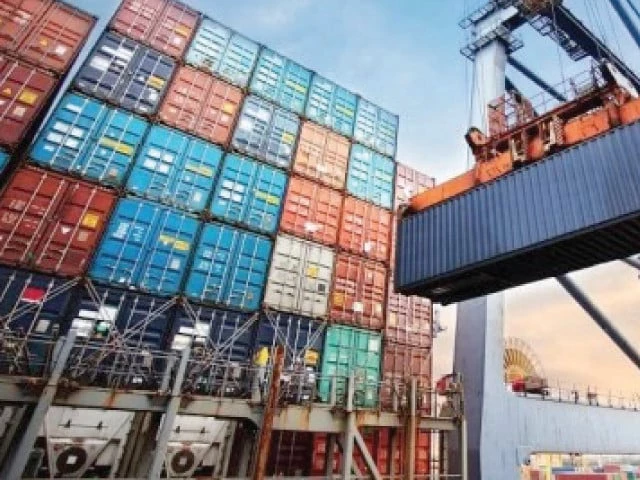
Pakistan's export-oriented textile, sports goods and leather industries are entering a period in which environmental performance is no longer simply a matter of corporate reputation. It is increasingly becoming a condition for maintaining access to major international markets.
For Pakistan, where export competitiveness is already under pressure from energy costs, financing constraints, infrastructure weaknesses and policy uncertainty, the transition to cleaner production could become either a major competitive opportunity or another cost shock depending on how its financial and administrative burden is distributed.
The issue is particularly important for the textile and apparel industry, which remains the backbone of Pakistan's export economy. Textile and apparel exports reached $17.93 billion in FY2025-26, according to the Pakistan Bureau of Statistics, although growth was a marginal 0.26%. During July-March FY2025-26, the sector accounted for 59.7% of Pakistan's total exports. The European Union remains Pakistan's largest export destination, where textiles and clothing account for roughly 70-76% of Pakistan's exports. Pakistan is also the largest beneficiary of the EU's GSP+ scheme, under which it received about 732 million in tariff exemptions in 2024. This makes the transition towards low-carbon and more sustainable supply chains a direct economic issue for Pakistan.
The challenge is that the cost of meeting increasingly demanding environmental, climate and supply-chain requirements is falling disproportionately on manufacturers in developing countries. International buyers are asking suppliers to demonstrate not only the quality and price of their products but also how those products are made. Carbon emissions, energy sources, water consumption, waste management, traceability, labour conditions, due diligence and circularity are becoming part of sourcing decisions.
Pakistan's manufacturers therefore face a difficult equation; they must invest in renewable energy, energy efficiency, cleaner machinery, waste treatment, carbon accounting, digital traceability and skilled personnel while simultaneously remaining competitive against producers from countries with lower costs of capital, more developed infrastructure and greater access to green finance. The question is not that Pakistani manufacturers should avoid these investments. On the contrary, decarbonisation is extremely necessary for their long-term survival. The problem is who should pay for it.
A factory can install solar panels, replace inefficient motors, improve boilers, introduce energy-management systems, treat wastewater, reduce textile waste and establish sophisticated environmental monitoring systems. But these investments require substantial capital, technical expertise and long-term planning. Many Pakistani manufacturers, particularly small and medium-sized enterprises, do not have sufficient financial capacity to absorb these costs immediately.
This is where the principle of shared transition responsibility becomes important. Recently emerged Shared Transition Responsibility Movement (STRM) seeks to distribute the cost and effort of industrial decarbonisation more equitably among manufacturers, brands and financiers rather than placing the entire compliance burden on suppliers.
It is a growing international coalition of researchers, sustainability practitioners, advocacy organisations, industry partners and development finance institutions working to institutionalise the principle that international brands bear shared responsibility, both moral and financial, for decarbonising the supply chains from which they profit.
This argument has an important economic basis. International brands benefit from the environmental improvements made at supplier factories. A cleaner factory allows a brand to report lower supply-chain emissions, demonstrate progress towards its climate commitments and meet regulatory and consumer expectations. If the brand benefits from that investment, it is reasonable that it should share part of its cost.
However, one of the biggest obstacles to green investment is the short-term nature of many international sourcing relationships. A manufacturer is unlikely to invest heavily in renewable energy or cleaner production technology if he does not know whether a buyer will continue purchasing from it for several years. This creates a fundamental contradiction; brands demand long-term sustainability improvements while sourcing decisions may remain heavily influenced by short-term price considerations. A more equitable model could therefore combine co-investment with long-term purchasing commitments, preferential sourcing arrangements, technical assistance and access to concessional green finance.
Shared responsibility does not mean shifting the entire burden from manufacturers to international brands. Governments also have a critical role. The state must provide predictable policies, competitive electricity, infrastructure, environmental regulation, green-finance mechanisms and incentives for investment in clean technologies. This demonstrates why climate policy, energy policy and export policy cannot be developed in isolation.
The requirement for traceability, responsible sourcing, lower emissions, resource efficiency and transparent environmental data is therefore likely to spread across manufacturing sectors. Digital Product Passports could become an important mechanism for demonstrating traceability and transparency across supply chains, extending from downstream value addition to raw-material sourcing.
For exporters, this means sustainability should no longer be regarded as a compliance department's responsibility. It needs to become part of production, procurement, finance, energy management and corporate strategy. Pakistan cannot afford to choose between economic growth and climate responsibility. Its export industries must achieve both.
The real danger is not decarbonisation itself. The greater danger is an unequal transition in which Pakistani factories are required to finance expensive environmental upgrades simply to satisfy standards established elsewhere, while international buyers continue to demand lower prices and shorter sourcing commitments. The concept behind STRM is more than an environmental initiative. It is an attempt to protect Pakistan's position in global value chains by recognising that climate transition is a shared economic challenge. It explicitly frames the objective as bringing manufacturers, brands, policymakers, regulators and researchers together to identify actions requiring joint effort. Making that transition possible cannot be the responsibility of the factory alone.
If global brands want cleaner supply chains, they must help finance them. If Pakistan wants to protect its export markets, the government must create the policy and energy environment that makes green investment viable. And if manufacturers want to remain part of global value chains, they must treat sustainability as an investment in their future rather than simply another compliance cost. The climate transition will ultimately reshape the rules of international trade. Pakistan's challenge is to ensure that its exporters are not merely required to follow those rules, but are given a fair opportunity to compete under them.
The writer is a freelance journalist












This material may not be published, broadcast, rewritten, redistributed or derived from. Unless otherwise stated, all content is copyrighted © 2026 The Express Tribune.








COMMENTS
Comments are moderated and generally will be posted if they are on-topic and not abusive.
For more information, please see our Comments FAQ