Kundi vows crackdown on encroachments
Updated 20 hours ago

The deceased's son says his father suffered heart attack after an argument in the meter reading section
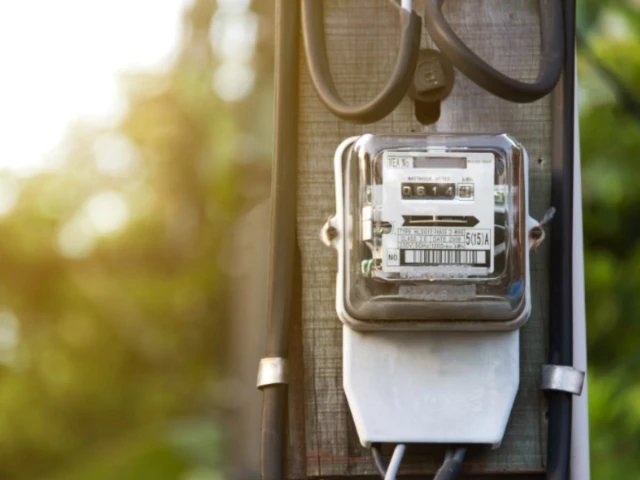
A retired education department employee on Wednesday died after suffering a cardiac arrest at a Peshawar Electric Supply Company (PESCO) office in Khyber-Pakhtunkhwa's (K-P) Charsadda following an alleged dispute over a Rs50,000 electricity bill, his family said.
The deceased, identified as Noor Hassan, had visited the PESCO office to lodge a complaint over the bill, his son Noorullah told The Express Tribune.
“My father suffered a heart attack after an argument in the meter reading section,” Noorullah said. He said the meter had recorded “almost no reading”, yet the bill amounted to Rs50,000.
Noorullah further alleged that PESCO officials “ran away from the office” after his father suffered a cardiac arrest.
The deceased’s son submitted an application to police seeking registration of a first information report (FIR) against the relevant meter reader, identified as Fayyaz.
However, the PESCO Sub-Divisional Officer (SDO) denied that Hassan was subjected to any mistreatment or argument at the office.
Read: Audit flags Rs47 billion overbilling by DISCOs
The official said Noor Hassan had already approached the court over the electricity bill. According to the SDO, the bill was corrected in accordance with the court’s decision and reduced to Rs12,000.
The incident came just two months after the Public Accounts Committee (PAC) flagged power distribution companies (DISCOs) for widespread overbilling, with PESCO ranking second after LESCO in the amount of overbilling detected.
At a PAC subcommittee meeting on July 23, audit officials said DISCOs had overbilled consumers by Rs47 billion in a single month. LESCO accounted for Rs45 billion, while PESCO was responsible for Rs1.56 billion.
Audit officials told the meeting that 278,649 consumers had received inflated bills, with lower-level DISCO employees responsible for meter readings allegedly using their discretionary powers to manipulate readings and inflate bills.
They said paying consumers were deliberately overbilled to conceal electricity theft and line losses, while refunds were generally issued only after consumers formally complained.















This material may not be published, broadcast, rewritten, redistributed or derived from. Unless otherwise stated, all content is copyrighted © 2026 The Express Tribune.




COMMENTS (1)
Comments are moderated and generally will be posted if they are on-topic and not abusive.
For more information, please see our Comments FAQ