Palestinians protest West Bank demolitions
Updated 2 hours ago

IRGC says ballistic missiles killed US forces in Jordan as Washington hits Iranian targets around Strait
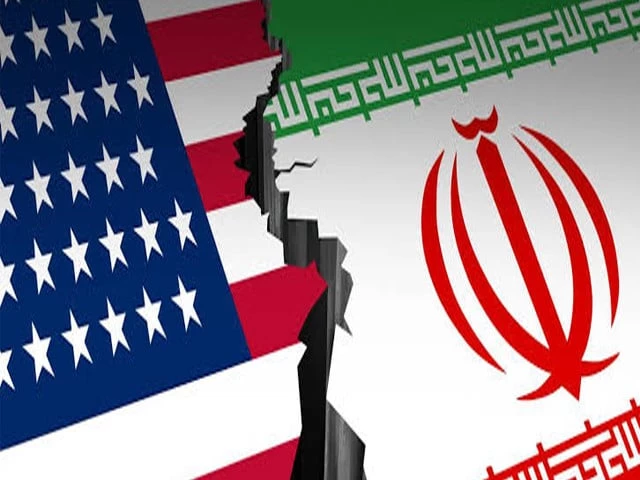
Iran's Revolutionary Guards said on Tuesday that they targeted a US base in Jordan with ballistic missiles and claimed to have killed a large number of US forces, in retaliation for the American strikes on targets around Strait of Hormuz.
Jordanian state television reported that alarm sirens had been activated in the Mafraq and Aqaba governorates. The IRGC said in a statement that it had targeted a US base in Jordan with ballistic missiles and "killed a large number of US forces".
The claims came after the United States launched new air strikes on Iranian targets, threatening to reignite the six-month-old conflict that has pushed global energy prices higher. The escalation has also heightened tensions around Jordan, which hosts US military facilities.
The US Central Command said the strikes began at noon local time (1600 GMT), following recent attempted attacks by the IRGC against commercial shipping in the Strait of Hormuz and US service members deployed in the region.
Iranian state television said the United States had targeted Jiroft airport in the southern province of Kerman. Fars news agency, citing the province's deputy governor, later reported that the attack caused "no casualties" and did not damage the runway or airport buildings.
Iran's state broadcaster also reported explosions on Qeshm Island, on the northern side of the Strait of Hormuz. State-linked Nour News reported explosions in the port city of Bandar Abbas and in Chabahar, while state news agency IRNA reported the sound of explosions in Jask and Sirik.
The US strikes came as two supertankers carrying Saudi oil were struck by unknown projectiles within minutes of each other while transiting outbound through the Strait of Hormuz late on Monday, according to shipping intelligence and tracking firms Marisks and Kpler.
The escalation raised tensions after an exchange of attacks over the weekend, quashing hopes that the confrontation might remain limited. Oil prices had already risen following the first exchange of direct attacks since July and reports that two tankers had been hit while leaving the Strait.
US President Donald Trump warned Iran that any retaliation would trigger a stronger response. In a post on his social media channel, he said that if Iran retaliated, "they will be hit again at a much harder and higher level".
An IRGC spokesperson, quoted by Fars news agency, said the United States "will regret its new attacks". The US Embassy in Qatar meanwhile urged Americans in the Middle East to exercise heightened vigilance, warning of possible flight cancellations, airspace closures and travel disruptions.
The six-month-old conflict had shifted towards an economic standoff before the latest escalation. US forces attacked Iran's Larak Island on Sunday, after which Tehran launched missile attacks against two US air bases in Jordan.
Although Trump had warned of a US response, he said on Monday that the Iranian attacks did not signal a return to full-scale war. A senior Iranian source likewise described Sunday's confrontation as "limited and contained".
The latest exchange, however, has highlighted how quickly a conflict increasingly fought through sanctions, blockades and economic pressure could spill back into military action, with both sides warning of further retaliation.
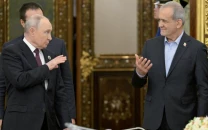
Iranian President Masoud Pezeshkian said earlier on Tuesday at a regional summit in Kyrgyzstan that Tehran would respond immediately if Washington honoured its commitments under a June Memorandum of Understanding intended to halt the conflict.
Iranian officials have shown no public sign of yielding to the US pressure. Parliament Speaker Mohammad Bagher Ghalibaf was quoted by Iranian media as saying that if Iran was prevented from exporting oil from the Persian Gulf, "no one will be able to export oil".
Foreign Ministry spokesman Esmaeil Baghaei said Washington was "addicted to making excessive demands and has mistaken negotiations for dictating terms", warning that Tehran would use all its capabilities "whether on the battlefield or through our diplomatic apparatus".
Meanwhile, US Treasury Secretary Scott Bessent said Washington was likely to announce new bank sanctions against Iran this week and next, intensifying efforts to economically pressure the Iranian leadership after six months of conflict.








This material may not be published, broadcast, rewritten, redistributed or derived from. Unless otherwise stated, all content is copyrighted © 2026 The Express Tribune.






COMMENTS
Comments are moderated and generally will be posted if they are on-topic and not abusive.
For more information, please see our Comments FAQ