Oil little changed as supply concern lingers amid Houthi attacks on Saudi Arabia
Updated 1 hour ago

Individuals take different types of loans to meet essential needs, which increases import bill
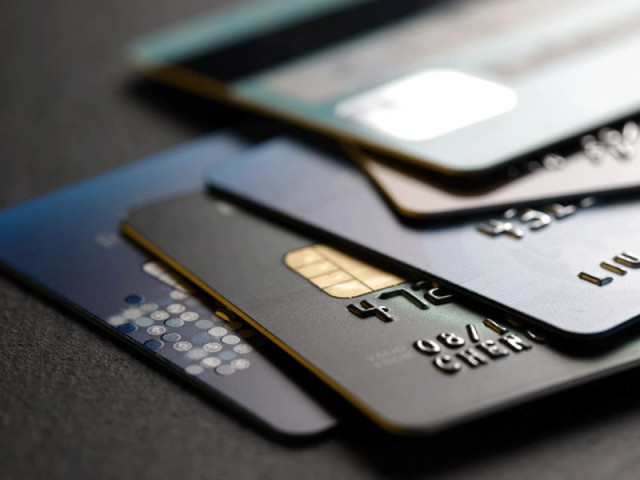
A household is said to be financialised when it depends on cedit. Credit is advanced to households in the form of personal loans, auto loans, home loans, mortgages, etc. Credit advancement to households promotes consumption which, in turn, increases the import bill.
Credit advancement to households increased in the advanced economies during the 1970s and 1980s while credit expansion in the developing economies started in the 1990s and gathered pace in the early 2000s. This expansion increased the household debt-to-income ratio.
For instance, the US household debt-to-income ratio was around 100% in 2000 and it grew to 130% in 2008. Similarly, the Turkish household debt-to-income ratio grew from 7.5% in 2002 to 29.5% in 2007. Aggressive household lending contributed heavily to increase this ratio. In addition, South Korea, Malaysia, Mexico, Brazil and many East European countries experienced a growth in the household debt-to-income ratio during this time period.
Similarly, credit card loans were made easy in Pakistan in 2002. It was the beginning of a credit card culture. A new middle-class market was tapped through the relaxation of rules by the State Bank of Pakistan (SBP). As a result, the emerging middle class started to take personal loans and use credit cards to fulfil their wants. Auto loans grew around 320% from 2002 to 2007, though comparable figures of household debt-to-income ratio are not available for Pakistan.
The financialisation of household is also marked by market-based pension schemes. Market-based provision of pension replaces government-provided pension schemes. Governments used to adopt pay-as-you-go (PAYG) pension where pensioners do not contribute towards pension. When a public servant reaches the age of superannuation, he will become eligible and get pension for the rest of his/her life.
In Pakistan, the federal expenditure on pension under the PAYG scheme reached around Rs1,000 billion in FY 2026. These expenditures were around 4.2% of the total expenditure and 0.8% of GDP in FY 2026. These expenditures do not include the pension expenditure of provincial governments.
On the other hand, market-based pension requires contribution from public servants. A certain percentage is deducted from the salary of public servants and governments match same amounts in the accounts of their employees. Both of these contributions become part of employees' accounts. All these accounts are part of the pension fund managed by a team of professionals working in a pension fund company.
Such contributory pension schemes have been adopted by the governments of developed and developing economies alike. In Latin America, Chile was the forerunner in privatising the pension system. It adopted a contributory pension scheme for public servants. This scheme turned out to be costly for public servants. Fund managers used to charge around one-third of contributions as consulting, advising and asset managing fee.
Taking stock of the situation, the Chilian government has to reform the pension system to safeguard the interests of elderly and low-income individuals. Such pension schemes are relatively successful in developed countries. However, the performance of contributory pension schemes in developing countries is less than satisfactory.
In a nutshell, the financialisation of household promotes consumption through the extension of credit in various forms. Households fulfil their desires and/or wants which, in turn, creates demonstration effect. Through this effect, individuals tend to copy the spending patterns and lifestyles of the privileged class.
The demonstration effect tends to reduce savings in the economy. Hence, the financialisation of household gives rise to a long-term trend of consumption in an economy.
The writer is an independent economist and authored a book: Pakistan's Structural Economic Problems in the era of Financial Globalization











This material may not be published, broadcast, rewritten, redistributed or derived from. Unless otherwise stated, all content is copyrighted © 2026 The Express Tribune.







COMMENTS (1)
Comments are moderated and generally will be posted if they are on-topic and not abusive.
For more information, please see our Comments FAQ