PSX recovers on late buying, gains 641 points
Updated 6 hours ago

PM aide says stability essential for development; super tax removed from export businesses
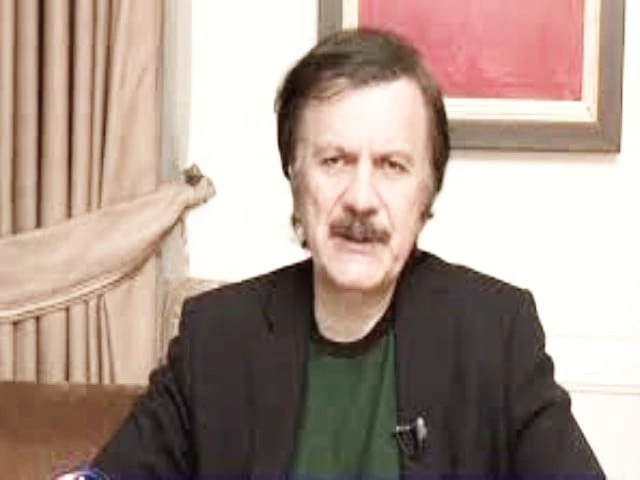
Special Assistant to the Prime Minister for Industries and Production Haroon Akhtar Khan has said that the government has completely removed the super tax on export businesses, while the super tax rate for non-export businesses earning profits of more than Rs500 million has been reduced from 10% to 8%.
He said the government was taking several steps to promote industrialisation, revive sick industrial units, reduce the cost of doing business and provide easier financing to the private sector. He added that new policies were being prepared for Battery Energy Storage Systems (BEES), solar panels, mobile phone manufacturing, electric vehicles, agricultural machinery, fertiliser, automobiles and other sectors. The aim is to promote local manufacturing and reduce dependence on imports. The new auto policy is in final stages, which will offer special incentives for electric two-, three- and four-wheelers.
Speaking to the business community at the Lahore Chamber of Commerce and Industry, the special assistant said the new industrial policy had been prepared with the approval of the prime minister. It includes measures for the revival of sick industrial units, protection of businesses from unnecessary harassment, easier financing and speedy resolution of business disputes. Effective systems for commercial courts, bankruptcy and restructuring of businesses are also being introduced.
He emphasised that political differences were separate from business matters and economic issues should be kept above politics. "The private sector is the backbone of Pakistan's economy and the government's responsibility is to provide direction and facilities while the private sector should play the leading role in taking the economy forward," he said.
Khan called economic and political stability essential for development, citing examples of countries such as China, Vietnam and Indonesia, which achieved growth through a stable environment, industrialisation and strong private-sector participation.
He pointed out that Pakistan's importance at the international level had increased and recent diplomatic successes had improved the country's image. The government is giving special importance to economic diplomacy and creating opportunities for business-to-business linkages and joint ventures with different countries.
The PM aide mentioned that the prime minister himself had a business and industrial background and therefore understood the problems of industrialists, adding that the government's clear vision was to establish new industries, increase manufacturing, keep factories operational and strengthen the economy through private-sector leadership.
Khan noted that macroeconomic stability had resulted in a significant decline in inflation, while the policy rate, which had reached 22% at one stage, came down to 11.5%. The government is also working to reduce electricity prices and make the industry regionally competitive.
He said that 6,400 acres of land belonging to Pakistan Steel Mills had been converted into a land-lease model, under which investors would not have to pay a large amount upfront and they could acquire land for 30 years by paying an annual fee. The lease can be renewed for another 30 years.
He mentioned that the government was moving ahead with the privatisation of airports and electricity distribution companies, with several investors showing interest in the process. A commercial court system is also being introduced for the speedy resolution of business disputes. Business experts and judges will work together to ensure that commercial cases are resolved quickly.
Speaking on the occasion, LCCI President Faheem ur Rehman Saigol said that Pakistan's economy had shown some encouraging signs recently. He cited the improvement in Pakistan's credit rating by Moody's, increase in remittances, improvement in foreign exchange reserves and positive performance of the stock market as encouraging developments.
With better economic decisions and continuity of policies, he said, investment, industrial production, exports and employment could be increased. Saigol stressed that the business community had high expectations from the new industrial policy as measures limiting unnecessary enforcement powers, including the freezing of bank accounts, could play a critical role in restoring business confidence.







This material may not be published, broadcast, rewritten, redistributed or derived from. Unless otherwise stated, all content is copyrighted © 2026 The Express Tribune.




COMMENTS (1)
Comments are moderated and generally will be posted if they are on-topic and not abusive.
For more information, please see our Comments FAQ