UK eyes long-term investment
Updated 3 hours ago

Adviser to FinMin says discussions with the US over the proposed facility have been 'constructive'
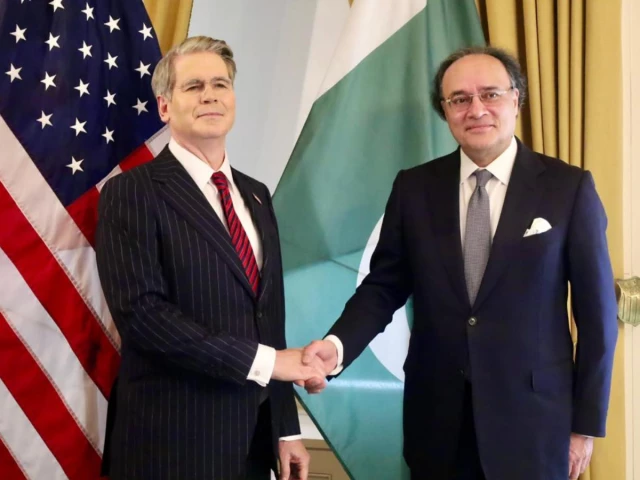
Pakistan expects to receive a response from Washington within the next couple of months on its request for a $10 billion bilateral stabilisation facility, as Islamabad seeks to build on its improving ties with the Trump administration.
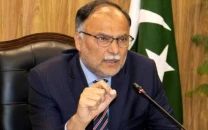
Adviser to the Finance Minister Khurram Schehzad told Bloomberg on Tuesday that discussions with the US over the proposed facility had been “constructive”.
“The proposed US stabilisation facility would also serve as a potential backstop and confidence signal, supporting market access and helping crowd in private capital,” Schehzad said.
Pakistan had approached US Treasury Secretary Scott Bessent last month, seeking a Bilateral Exchange Stabilisation Support Facility with a maturity of up to five years, according to a Reuters report.
Finance Minister Muhammad Aurangzeb confirmed the request last week, saying the proposed arrangement was aimed at providing a signal of stability for the currency and foreign exchange market rather than functioning as a conventional loan or credit facility.
Read: '$10b US facility not a loan'
"This is not about a credit line or a loan or whatever. This is a signal about our currency stability, a signal about exchange rate stability, and that in turn allows us to go to the markets to raise debt," said Aurangzeb, clearing the air about the $10 billion facility.
Aurangzeb said the request was under consideration by the US Treasury Department, with progress expected by September. If approved, the facility could provide additional financial support to Pakistan as the cash-strapped economy works to strengthen its external position.
The request follows Pakistan's role in brokering talks over the Iran war, which raised its diplomatic profile and stirred hopes that it could seek economic gains from Washington and other partners.
In the request to US Treasury Secretary Scott Bessent, Islamabad is seeking a Bilateral Exchange Stabilization Support Facility between the US and the Pakistani government worth $10 billion with a maturity of up to five years.
The facility, if agreed to, would bolster Pakistan's reserves, ease pressure on the rupee and reduce its reliance on multilateral financing, even as Islamabad undertakes tighter fiscal and monetary policies in line with its International Monetary Fund programme.
Pakistan remains under $7 billion IMF discipline that has required politically unpopular tax increases, spending restraint and reforms.
Also, Moody's on Monday upgraded Pakistan to B3 rating but said that international surveys continue to point to weak rule of law and control of corruption and limited government effectiveness.
The agency has given a highly speculative rating of B3, which is seven notches below the investment grade. Moody’s upgraded Pakistan from Caa1, which is a substantial risk rating.













This material may not be published, broadcast, rewritten, redistributed or derived from. Unless otherwise stated, all content is copyrighted © 2026 The Express Tribune.






COMMENTS (3)
Comments are moderated and generally will be posted if they are on-topic and not abusive.
For more information, please see our Comments FAQ