PSX gains over 1,000 points as investors look past rate hike
Updated 3 hours ago

Points to continue weak rule of law and control of corruption
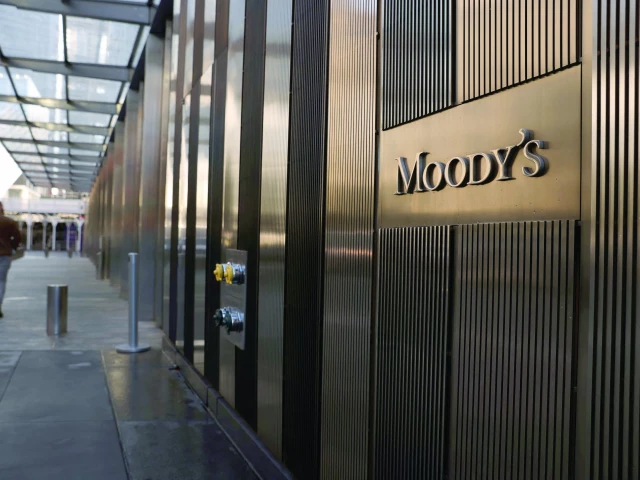
Ahead of the government’s plans to venture in western markets to raise billions of dollars in debt, Moody’s on Monday upgraded Pakistan to B3 rating but said that international surveys continue to point to weak rule of law and control of corruption and limited government effectiveness.
In its rating upgrade, one of the leading international credit rating agencies also said that the nation’s debt profit remains weak due to “fragile” external position and constraints on growth and investment.
Prime Minister Shehbaz Sharif congratulated the nation for the rating upgrade, although the one-notch elevation would not materially change Pakistan’s credit risk. The agency has given a highly speculative rating of B3, which is seven notches below the investment grade. Moody’s upgraded Pakistan from Caa1, which is a substantial risk rating.
“We have upgraded the rating for the senior unsecured programme to B3 from Caa1 and maintained the outlook for the Government of Pakistan at stable,” according to Moody’s. The upgrade to B3 reflects the expectations that improvements in governance will allow the government to sustain the recent improvements in the country's external position and strengthen fiscal metrics, it added.
🇵🇰 𝗣𝗮𝗸𝗶𝘀𝘁𝗮𝗻’𝘀 𝗚𝗹𝗼𝗯𝗮𝗹 𝗖𝗿𝗲𝗱𝗶𝘁 𝗦𝘁𝗮𝗻𝗱𝗶𝗻𝗴 𝗥𝗶𝘀𝗲𝘀 𝗙𝘂𝗿𝘁𝗵𝗲𝗿 — 𝗠𝗼𝗼𝗱𝘆’𝘀 𝗨𝗽𝗴𝗿𝗮𝗱𝗲𝘀 𝗥𝗮𝘁𝗶𝗻𝗴 𝘁𝗼 𝟰-𝗬𝗲𝗮𝗿 𝗛𝗶𝗴𝗵
— Khurram Schehzad (@kschehzad) August 24, 2026
Moody’s Ratings has upgraded Pakistan’s sovereign credit rating to B3 from Caa1, with a Stable Outlook — taking… pic.twitter.com/WSmCgS1iY9
Moody’s further commented that “international surveys of various indicators of governance, while showing some early signs of improvement, continue to point to weak rule of law and control of corruption, as well as limited government effectiveness”.
It further said that fiscal policy effectiveness is low, although it has improved somewhat, resulting in a persistently narrow revenue base that constrains the government's capacity to address the country's needs, although measures are being taken to address the issue.
The Express Tribune reported last week that the government could fully complete only four out of 19 Economic Governance System improvement actions for the end June period, determined by the International Monetary Fund.
The agency said that Pakistan's credit profile remains vulnerable due to a structurally fragile external position, weak debt affordability, a still relatively narrow revenue base and constraints on attracting investment and stimulating high-productivity and economic growth. These credit constraints are embedded in the B3 rating, it added.
While justifying its comments about weak external position, Moody’s said that Pakistan's external position remains structurally fragile, reflecting a small export base, very low foreign direct investment (FDI) inflows, high dependence on remittances, and reliance on official and commercial financing to meet its external financing needs.
It added that weak foreign direct investment inflows also underscore longstanding challenges in attracting investment, constraining productivity gains, export diversification, and the economy's growth potential. These vulnerabilities leave Pakistan exposed to shifts in external financing conditions, weaker remittance inflows, or reduced investor confidence, which could increase external financing pressures, it added.
Finance Minister Muhammad Aurangzeb said last Wednesday that the country was planning to tap global debt markets by issuing long-term papers of five, seven and 10 years. However, the finance minister has not yet appointed a permanent director general debt –a position that remains vacant since January this year. The acting charge of the critical post is given to an additional secretary budget, which ends the purpose of having an independent debt management office.
Moody’s said that Pakistan's external vulnerability risks have eased further since its last rating action in August 2025, with foreign exchange reserves building steadily, supported by sustained macroeconomic stabilisation. At the same time, lower domestic financing costs amid monetary easing and an improved fiscal position have driven a material improvement to Pakistan's debt affordability.
But it said that the country’s foreign exchange reserve would improve to only $20 billion by the end of this fiscal year, which is at least a $1 billion lower than the understanding reached with the IMF.
The projections for June 2028 for foreign exchange reserves are $20–21 billion, which is close to this fiscal year’s target.
Moody’s said that continued adherence to the IMF programme would allow Pakistan to meet its external financing needs of about $21 billion in fiscal 2027 and around $30 billion in fiscal 2028, according to IMF estimates, while supporting continued reserves accumulation.
About $7 billion and $12 billion of financing requirements in FY2027 and FY2028, respectively, comprise existing bilateral deposits, which we expect to be rolled over, it added.
Moody’s said that the stable outlook balances a potentially faster improvement in Pakistan's credit fundamentals against outstanding risks related to the vulnerabilities above, which, if materialised, could weaken access to foreign currency financing and further reduce fiscal flexibility.
It has also raised Pakistan's local and foreign currency country ceilings to B1 and B3 but explained that the two-notch gap between the local currency ceiling and sovereign rating was driven by the government's relatively large footprint in the economy, weak institutions, and high political and external vulnerability risk.
The two-notch gap between the foreign currency ceiling and the local currency ceiling reflects incomplete capital account convertibility and relatively weak policy effectiveness. It also takes into account risks of transfer and convertibility restrictions being imposed, it added.
It acknowledged that Pakistan's external vulnerability indicator has improved to about 145% in 2026, compared to 230% in 2025.
Pakistan's debt affordability has also improved materially, from very weak levels. Interest payments absorbed about 35% of government revenue in fiscal 2026, down sharply from 49% in fiscal 2025. The improvement primarily reflects a significant reduction in domestic interest rates following a sharp decline in inflation. The earlier disinflation allowed the central bank to cut the policy rate significantly.
But it warned that despite improvement in Pakistan's debt affordability, it remains weak and an important constraint on Pakistan's rating. The high share of government revenue absorbed by interest payments will limit fiscal flexibility, and the government's capacity to address essential social spending and infrastructure needs, it added.
The rating is also constrained by factors limiting the attractiveness of Pakistan as a place to invest, including some unpredictability in policies and regulations and ongoing domestic and geopolitical risk.
Last month, Standard & Poor's raised Pakistan's credit rating by a notch to B, citing improved political and institutional stability that helped implement tough reforms.
Political stability has bolstered the government's capacity to implement reforms. On July 22, 2026, S&P Global Ratings raised its long-term sovereign credit rating on Pakistan to B from B negative, according to an official statement.
The finance ministry stayed on the fiscal consolidation path despite resistance from within the government to some of the tough reforms. S&P has also acknowledged the strengthening fiscal position as the third key driver for the upgrade, after political and institutional strengthening.
However, S&P has wrongly credited two tax broadening initiatives – agriculture and retail schemes – for the increase in tax-to-GDP ratio, as both these initiatives were not even implemented in 2025. This exposes S&P's poor understanding of the country's taxation policies.










This material may not be published, broadcast, rewritten, redistributed or derived from. Unless otherwise stated, all content is copyrighted © 2026 The Express Tribune.








COMMENTS (1)
Comments are moderated and generally will be posted if they are on-topic and not abusive.
For more information, please see our Comments FAQ