Businesses will not be harassed: PM aide
Updated 6 hours ago

ECC sets up negotiation team to clear path for US GSA redevelopment plan

Pakistan on Monday constituted a negotiation committee to settle a dispute with the trade union of Roosevelt Hotel New York, which won at least $35 million in an award that may create hurdles in the way of a deal with the US General Services Administration (GSA) for running the hotel as a joint venture.
The Economic Coordination Committee of the cabinet (ECC) approved the formation of a committee to negotiate a settlement enabling the hotel's redevelopment in coordination with the union, according to an announcement by the Ministry of Finance after the meeting. The committee would comprise members from the Ministry of Defence, the Ministry of Finance, the Privatisation Commission, a US-based legal counsel, and two members from the PIA Investment Limited Board.
In November last year, the union won an award making the owners liable to pay a severance package costing roughly $35 million and reinstating employees with effect from January this year, costing another $1 million a month. The hotel will remain closed from 2025.
In February this year, Pakistan and the US GSA signed a memorandum of understanding to explore options for joint operation, maintenance, renovation and redevelopment.
Pakistani authorities said the award could impact the hotel's future redevelopment plans and must be settled amicably.
Under the negotiation committee's mandate, Pakistan would seek a comprehensive, one-time settlement of all outstanding issues with the union to enable the hotel's redevelopment.
The committee would also seek withdrawal of grievances and cases by both parties from relevant courts and forums, and secure a firm commitment from the union to support the hotel in obtaining all requisite no-objection certificates and permissions for redevelopment. The ECC was informed that the Roosevelt Hotel was reopened after Covid-19 and in mid-2023 entered a deal with New York City administration for migration business. The impartial arbitrator asked to recall laid-off employees and restore payroll effective from January this year. The ECC also approved the loan limit for Roosevelt Hotel to $153.8 million and allowed conversion of borrowing from the National Bank of Pakistan into rupees against sovereign guarantees. It deferred another summary seeking concessions for PIA buyers.
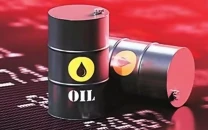
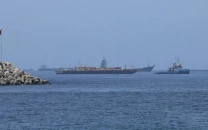
Among other decisions, the ECC allowed import of petroleum products on foreign suppliers' accounts through Customs bonded storage facilities. The proposal focused on developing and strengthening key pillars of the country's energy security, including indigenisation, development of strategic petroleum reserves and promotion of bonded storage to ensure a resilient and sustainable petroleum supply chain. The ongoing disruption in the Strait of Hormuz has exposed Pakistan's vulnerabilities due to heavy dependence on imported fuel.
The Petroleum Division said developing bonded storage facilities has become critical given the region's current political situation, and has sought approval for revised policy guidelines and amendments to relevant laws and regulatory frameworks to enable this.The new policy would cover imports of crude oil, motor spirit including premium petrol, high-speed diesel (HSD), jet fuel, fuel oil including furnace oil, LPG and LNG on foreign suppliers' accounts through Customs-bonded storage facilities. Goods subject to international sanctions or included in the Negative List of the Import Policy Order, 2022, would remain excluded.
For domestic sales to oil marketing companies (OMCs) and refineries, foreign suppliers would be allowed to maintain bonded inventories at private and public storage terminals at approved locations, including Port Qasim, Keamari, Hub, Gwadar, Mahmood Kot, Machike and Sheikhupura. For imports intended for re-export, port-based bonded storage facilities would be permitted at approved locations.
Foreign suppliers, through their consignees, would also have access to the national petroleum pipeline network to move bonded inventory from port-based facilities to approved inland locations. Such movement would not trigger customs duty or taxes as long as products remain within the bonded regime. The existing import regime for licensed OMCs and refineries would remain unchanged and continue in parallel with the proposed scheme.
Application of the policy to individual petroleum products at specific bonded locations would be subject to Ogra first notifying product-specific safety, insurance, containment and emergency-response protocols and confirming readiness for each product and location.
A foreign supplier could participate through a liaison office registered in Pakistan or through a designated person, including a locally established branch or locally incorporated company, which would serve as the consignee.
The consignee could develop dedicated storage infrastructure or use private or public bonded warehouses and dedicated storage terminals at approved locations, subject to licensing by Ogra and relevant approvals under the Customs Act, 1969 and port regulations.
The consignee would not be required to register with the Federal Board of Revenue (FBR) under the Sales Tax Act, 1990 as a condition for commencing operations. For domestic sales, sales tax obligations – including registration as importer, filing of returns and payment of sales tax – would rest with the OMC or refinery acting as importer of record at ex-bonding.
The proposed policy also provides tax-neutral treatment for foreign suppliers and consignees in respect of bonded storage, blending, trading and re-export operations. Taxes, duties, levies and other charges would not apply while goods remain within the bonded regime and have not been released for domestic consumption.
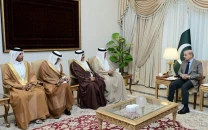
The ECC also approved a summary to approve a Sale Purchase Agreement (SPA) in pursuance of the Inter-Governmental Agreement (IGA) earlier signed between Pakistan and the Sultanate of Oman. The SPA aims to promote and develop cooperation between OQ Trading and Pakistan State Oil (PSO) in the field of energy.
The ECC allowed mixing of 15% imported wheat with local commodities before supplies to provinces. Provinces would get one million metric tonnes of wheat already in federal stocks. The government is also in the process of importing another 766,000 metric tonnes of wheat to meet the domestic shortfall.











This material may not be published, broadcast, rewritten, redistributed or derived from. Unless otherwise stated, all content is copyrighted © 2026 The Express Tribune.







COMMENTS
Comments are moderated and generally will be posted if they are on-topic and not abusive.
For more information, please see our Comments FAQ