Businesses will not be harassed: PM aide
Updated 8 hours ago

PKI warns of 3 million tonne shortfall, fears mount as support price fails farmers
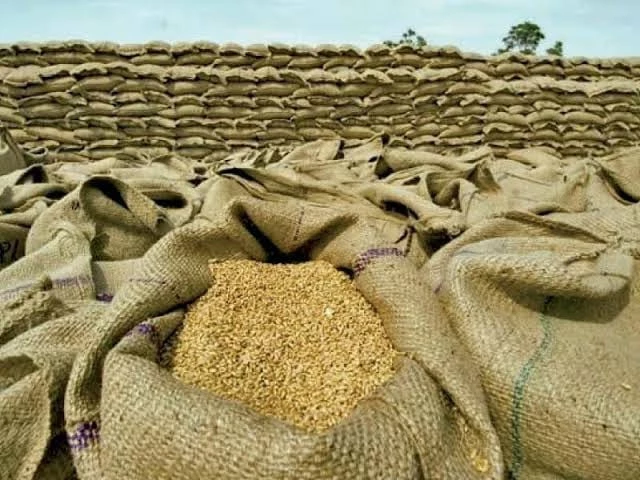
Millions of wheat growers across Pakistan face a bleak sowing season this year, with farmer representatives warning that the country could face a shortfall of nearly three million tonnes of wheat, forcing the government to spend roughly $1.2 billion in foreign exchange on imports unless the state moves quickly to restore a viable support price for the crop.
The warning comes from the Pakistan Kissan Ittehad (PKI), the country's leading farmers' body, which says three consecutive years of policy missteps have pushed growers into losses estimated at Rs2,200 billion, eroding confidence in wheat cultivation just as the Rabi sowing season approaches. PKI says the erosion of farmer income has already discouraged growers from planting on land that would otherwise have gone under wheat, threatening the yields needed to keep the country self-sufficient in its staple grain.
PKI President Khalid Mahmood Khokhar said the compounding effect of global and domestic pressures had left farmers with no room to absorb further losses. "Wheat is not just a crop for us, it is the backbone of the country's food security, and right now that backbone is under severe strain," Khokhar said, adding that growers were being squeezed between rising input costs and a support price that no longer reflects the reality of production.
According to PKI's calculations, the current wheat support price of Rs3,900 per 40-kilogram maund, last approved by the federal Economic Coordination Committee (ECC) in March 2023, falls well short of covering today's production costs, which the body puts at Rs3,761 per maund. Adding a 25% profit margin, the group argues that a realistic price would be closer to Rs4,702 per maund.
The federal government had set the procurement price for the 2025-26 season at Rs3,500 per maund, with production estimated at around 28.4 million tonnes, down from 31.4 million tonnes a year earlier, according to industry data. Farmers' groups have noted that Pakistan's per-maund production costs, ranging between Rs2,800 and Rs3,400 depending on the region, remain among the highest in South Asia, well above the Rs2,200 to Rs2,250 recorded in India, where fertiliser costs are more tightly regulated.
Farmers say the pressures have been compounded by external shocks. The conflict in the Gulf, disruptions to shipping through the Strait of Hormuz, and the prolonged war between Russia and Ukraine have driven up global fertiliser prices, freight rates and shipping times, feeding directly into the cost of cultivating wheat in Pakistan. Since the Gulf conflict escalated in February this year, phosphatic fertiliser and diesel prices have surged further, alongside higher electricity tariffs for tube wells.
Agricultural economists say the combination of a lagging support price and rising input costs has created a disincentive that could ripple through the broader economy. When the cost of growing wheat outpaces what farmers are paid for it, the rational response is to grow less of it or shift to other crops altogether, and that is precisely the risk Pakistan is running into this season.
Beyond price, PKI has also raised concerns over fertiliser subsidy design, urging the government to extend any subsidy on phosphatic fertilisers to all such products rather than restricting it to di-ammonium phosphate (DAP) alone. The group says roughly 80% of phosphatic fertiliser used by wheat farmers comes in other forms, including Nitrophos, TSP, SSP, MAP, NP/NPS and NPK blends, and that confining relief to DAP alone would fuel black-marketing and force the country to spend additional foreign exchange on DAP imports, even though domestic stocks of other phosphatic fertilisers are said to be sufficient for the coming Rabi season. PKI notes that a broader, nutrient-based subsidy on all phosphatic fertilisers was approved by the ECC in March 2022, though it has not been consistently applied since.
The farmers' body is now pressing the prime minister and the minister for national food security to publicly commit, by the end of August, to restoring the wheat support price and procurement mechanism, arguing that early clarity is essential to encourage farmers to bring fallow and diverted land back under wheat cultivation ahead of the Rabi season.













This material may not be published, broadcast, rewritten, redistributed or derived from. Unless otherwise stated, all content is copyrighted © 2026 The Express Tribune.








COMMENTS
Comments are moderated and generally will be posted if they are on-topic and not abusive.
For more information, please see our Comments FAQ