Afridi demands policy shift to restore peace
Updated 8 hours ago

Lawyers question public display of child detainee
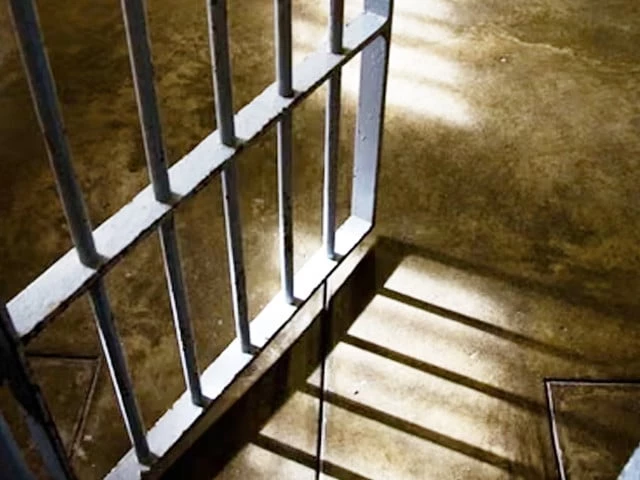
Recently, the Khyber-Pakhtunkhwa (K-P) police detained a 14-year-old boy over a viral social media video allegedly promoting obscenity. But what happened at the police station raised a more troubling question: did dealing with a child's alleged offence require putting his identity on public display?
Instead of quietly investigating the boy and letting due process take its course, police put him before a camera and into the public eye. What began as a minor social media offence soon became a case of public exposure, raising troubling questions about the limits of police power and the protection owed to children and detainees.
Malik Ayaz, a community leader who has lived in Peshawar's inner city for around four decades, said the incident could have lasting consequences for the child and his family.
"The boy has sisters and a family. A minor mistake has effectively put the honour and reputation of the entire family under a question mark," he said. Ayaz added that police could have summoned the child and his parents, counselled them and resolved the matter privately.
Similar questions were raised over the treatment of grooms arrested for aerial firing in Peshawar, Charsadda and Mardan. In some cases, their lock-up photos and videos were circulated with their faces visible and flower garlands still around their necks.
Nouman Muhib Kakakhel, an advocate who has worked extensively on human rights and social issues, said exposure of arrested persons must be examined in light of constitutional protections, judicial directions and due process.
According to Kakakhel, the Peshawar High Court had issued directions concerning the dignity and privacy of arrested persons and restrictions on their exposure in police custody or jail.
"An accused cannot be declared guilty before a court reaches a decision. A media trial cannot replace due process," Kakakhel said.
He added that publicly displaying the face and statement of a child could have consequences far beyond the incident, particularly in a society where one person's actions can affect an entire family's reputation. He called for legal and departmental action against the officials responsible.
Senior lawyer Ali Gohar, who has also worked on social and human rights issues in Khyber-Pakhtunkhwa, said presenting the child's and his father's statement publicly was highly problematic. He noted that no FIR had been registered against the boy.
"The way the statement was presented before the public was enough to make the child appear like a major criminal. This is an extremely inappropriate and legally questionable approach," Gohar told The Express Tribune.
Gohar also questioned the publication of images of grooms inside lock-ups. "No groom wants to spend his wedding day in a police lock-up. But if a groom is arrested for aerial firing, where does the law permit police to photograph him inside the lock-up and publish those images on social media?" he questioned.
The controversy has revived concerns over police practices in lock-ups. A few years ago, a young man died by suicide in custody at Peshawar's West police station, after which police introduced SOPs on the privacy and dignity of arrested persons. Rights advocates, however, say implementation remains inconsistent.
Gulbahar Circle Superintendent (SP) Ali Hamza told The Express Tribune that the child's statement was recorded with his father's consent and no FIR had been registered. He acknowledged shortcomings and said police had suspended the Gulbahar Station House Officer (SHO) and an Assistant Sub-Inspector (ASI), with departmental proceedings under way.
The case has renewed debate over police accountability and due process, with legal experts saying investigative powers do not permit authorities to publicly declare guilt, expose a minor or humiliate families before a court ruling.






This material may not be published, broadcast, rewritten, redistributed or derived from. Unless otherwise stated, all content is copyrighted © 2026 The Express Tribune.




COMMENTS
Comments are moderated and generally will be posted if they are on-topic and not abusive.
For more information, please see our Comments FAQ