Vance acknowledges 'failures' in US handling of Iran war
Updated 3 hours ago

.
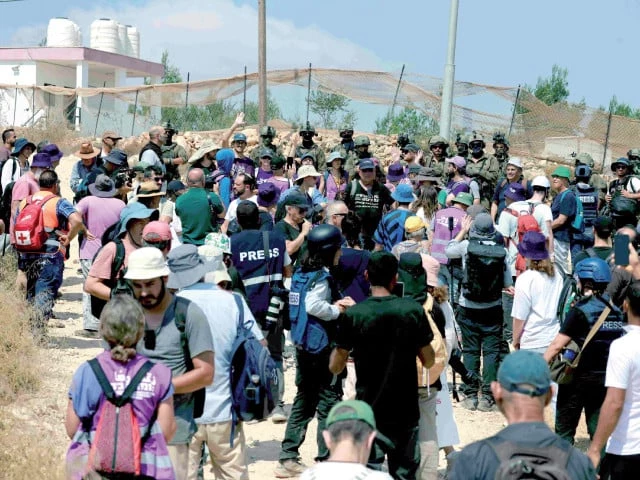
Palestinian Amin Rahal and his three brothers haven't gone to work in weeks, instead taking turns guarding what remains of their land atop a West Bank hill from incursions by nearby settlers.
"We never leave the place unless we have two people here," says Rahal, a 31-year-old father of three, pointing to the roof of a settler's newly installed prefabricated home 100 metres from his house.
"They've stolen hens, land with olive trees, damaged the sage bush in our backyard with their ATVs, brought their sheep into our courtyard, and more," he told AFP.
Last week, settlers from the newly inaugurated Israeli settlement of Emek Dotan just below his home put up a rope across his land and forbade him and his family from crossing it.
A chicken farm and many olive trees stand on the other side of the rope and are now lost to the Rahal family under threat of violence.
"Our fear is that they will attack the children, burn one of the houses, attack us at night and break into the houses," as has happened in other West Bank villages where settlers have moved in, he said.
Across the West Bank, such accounts have become common, with the UN's Office for the Coordination of Humanitarian Affairs reporting an average of six incidents per day involving West Bank settlers in 2026.
These include theft, vandalism, arson, beatings and sometimes murder, with Palestinians complaining that most crimes against them go unpunished.
'Cancel Oslo'
The north of the West Bank, with its many Palestinian communities and few settlers, had been relatively spared from the tensions.
Under former Israeli prime minister Ariel Sharon's 2005 disengagement plan, four isolated settlements -- Homesh, Sa-Nur, Ganim and Kadim -- were evacuated to make a contiguous Palestinian space within the West Bank.
But under Prime Minister Benjamin Netanyahu's current government, the most right-wing in Israel's history, the abandoned sites -- long a sore point for the settler movement -- have been reinvested one by one in 2026.
A plan approved in December legalised 17 more settlements in the northern West Bank, with the specific intent of connecting them all, in another affront to the Oslo Accords reached during the 1990s peace process.
While all settlements on occupied territory are illegal under international law, the Oslo Accords allowed Israel to keep building settlements and demolish Palestinian buildings, but only in Area C -- the 60 percent of the West Bank under Israeli control. AFP












This material may not be published, broadcast, rewritten, redistributed or derived from. Unless otherwise stated, all content is copyrighted © 2026 The Express Tribune.





1727268465-0/Untitled-design-(42)1727268465-0-208x130.webp "sisyphus in the land of saviours")
COMMENTS
Comments are moderated and generally will be posted if they are on-topic and not abusive.
For more information, please see our Comments FAQ