Georgina Cates, 'Clay Pigeons' actress, dies at 51
Updated 14 hours ago

Exploring girls’ education and 'ghost schools', it cannot be screened in the province after certification was refused
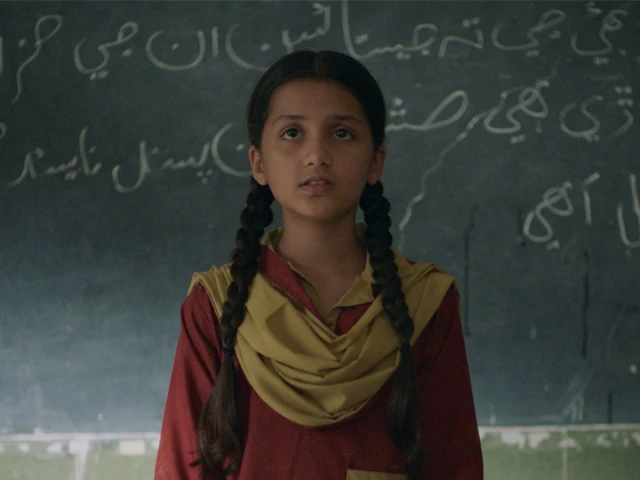
British-Pakistani filmmaker Seemab Gul’s award-winning film Ghost School, inspired by Pakistan’s so-called “ghost schools”, has been refused certification by the Sindh Board of Film Censors (SBFC), preventing it from being screened in cinemas in the province where its story is set.
The decision has prompted debate around artistic freedom, girls’ education and the ability of filmmakers to examine difficult social realities through cinema.
Speaking in an interview with Chalti Tasveerain, Gul appealed to the censor board to reconsider its decision.
“I would like to request the Sindh Board of Film Censors to reconsider its decision. This is a film from a child’s perspective to inspire, debate, ask questions, and promote education in Pakistan. We have asked them [SBFC] to give us a reason. They haven’t given us a reason,” she said.
The film has already travelled widely on the international film festival circuit. It won the Best Director award at the UK Asian Film Festival and premiered at the Toronto International Film Festival, where it was nominated in a major competition category.
Ghost School was also screened at the Red Sea Film Festival in Jeddah, received an honourable mention at the Indian Film Festival of Los Angeles and won a special award at the Asian, African and Latin American Film Festival.
Yet despite its international screenings and accolades, the film has not been screened in Sindh — the very province where its story unfolds.
At the heart of the film is 10-year-old Rabia, who sets out to discover why the only school in her village has shut down. Through her perspective, the film explores girls’ education, resilience and the corruption and dysfunction that can affect publicly funded schools.
Gul describes the phenomenon explored in the film as a widespread problem.
“Ghost schools are basically empty schools. They’re schools which are no longer used for the purpose of education. Sometimes they were never finished. They did not have windows, or doors, or water, electricity, or gas. Other times, they were finished, and the teachers started teaching, and somehow they stopped,” she said.
The issue is particularly significant in Pakistan, where millions of children remain outside the formal education system. “There are 26 million children out of school in Pakistan,” she added.
For Gul, the certification decision raises questions beyond the fate of a single film. She is calling on the board to reconsider and allow audiences to engage with a story she says intends to encourage discussion and promote education.















This material may not be published, broadcast, rewritten, redistributed or derived from. Unless otherwise stated, all content is copyrighted © 2026 The Express Tribune.





1727268465-0/Untitled-design-(42)1727268465-0-208x130.webp "sisyphus in the land of saviours")
COMMENTS (2)
Comments are moderated and generally will be posted if they are on-topic and not abusive.
For more information, please see our Comments FAQ