Dar vows to safeguard Pakistan's water rights under IWT, oppose attempts to weaponise water
Updated 1 hour ago

Says Makkah defence pact is defensive in nature and is not directed against any country
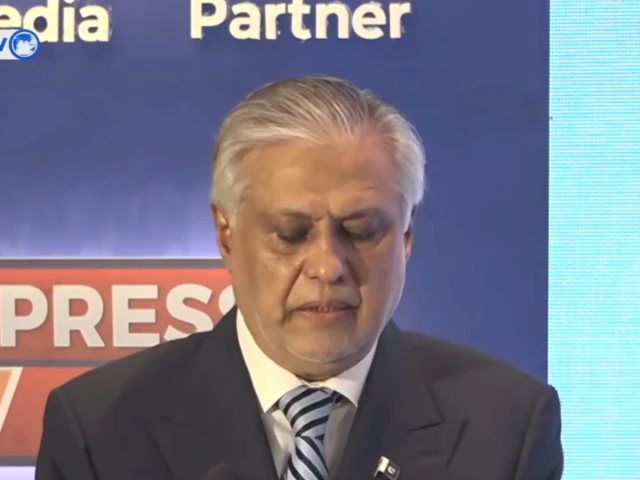
Deputy Prime Minister and Foreign Minister Ishaq Dar on Tuesday reaffirmed Pakistan's commitment to safeguarding its rights under the Indus Waters Treaty (IWT), warning against any attempt to weaponise water, while calling for respect for treaty obligations to ensure regional stability.
Addressing the inaugural session of Margalla Dialogue 2026 in Islamabad, Dar said rivalry among major powers had reached its peak, while international institutions such as the United Nations were facing political divisions.
FM Dar stressed the need for greater international cooperation, diplomacy and dialogue to address emerging global challenges, saying Pakistan remained committed to the peaceful resolution of disputes in accordance with the United Nations Charter.
He said tensions in the Gulf and the Red Sea demonstrated how regional conflicts could disrupt the international system.
The foreign minister said emerging technologies, including biotechnology, were changing how states responded to crises. Policymakers needed to recognise that a crisis in one domain could spread to other sectors, he added.
DPM Ishaq Dar says the international security is facing immense pressure, warning that security crises can trigger economic shocks. He stresses the need for policies that are responsive to emerging challenges and evolving global realities.#IshaqDar #MargallaDialogue2026… pic.twitter.com/C1OtHwfo2u
— Pakistan TV (@PakTVGlobal) November 10, 2026
FM Dar said the theme of this year's Margalla Dialogue, "Changing Global Order — How to Navigate Strategic Uncertainty", reflected the challenges facing Pakistan.
Read: Turkish parliament approves Makkah defence pact with Pakistan, Saudi Arabia
He emphasised that protecting Pakistan's national interests required effective diplomacy abroad and strength at home. The deputy prime minister said Pakistan's regional diplomacy was based on the establishment of peace, citing negotiations between the United States and Iran held in Islamabad as an example of the country's commitment to peaceful diplomacy.
The foreign minister said the Islamabad memorandum of understanding reflected efforts by the prime minister and the field marshal towards the peaceful resolution of disputes.
FM Dar also referred to a resolution presented by Pakistan concerning diplomacy and dialogue during conflicts, which he said was adopted by the United Nations Security Council on November 5, saying that communication channels should remain open under all circumstances and that Pakistan wished to continue dialogue with all regional partners.
The foreign minister stressed that maritime routes and territorial waters should remain open for uninterrupted and secure trade.
DPM Ishaq Dar says Pakistan believes in a multipolar world order that amplifies the voices of more countries. He cautions that rivalries among global powers and ongoing conflicts heighten the risk of confrontation, stressing that sea lanes must remain open to ensure freedom of… pic.twitter.com/ZPyT69ROAS
— Pakistan TV (@PakTVGlobal) November 10, 2026
Discussing regional security, FM Dar said lasting peace in South Asia required a resolution of the Jammu and Kashmir dispute in accordance with United Nations Security Council resolutions. He reiterated that resolving the Kashmir dispute was essential for regional peace and security.
Referring to Afghanistan, FM Dar said Pakistan wanted to ensure that Afghan territory was not used against any other country, particularly Pakistan. He reiterated that Pakistan would continue to protect its citizens and ensure that Afghan territory was not used against the country.
Read more: Regional powers back Islamabad MoU
Speaking about regional partnerships, he described the Makkah Joint Defence Agreement (MJDA) as a defensive arrangement and said it reflected Pakistan's partnership with Saudi Arabia and Turkiye. He clarified that the MJDA was not directed against any country.
DPM Ishaq Dar reiterates Pakistan’s commitment to regional de-escalation, saying that the Makkah Defence Pact is defensive in nature and is not directed against any country.#IshaqDar #MakkahDefencePact #RegionalPeace #DeEscalation #PakistanTV pic.twitter.com/X4KkAxmPJY
— Pakistan TV (@PakTVGlobal) November 10, 2026
The foreign minister said Pakistan's strategic partnership with China remained an important pillar of its foreign policy. He added that Pakistan was also engaging with European partners through the R4 framework and remained committed to maintaining dialogue with all regional stakeholders.
FM Dar said economic diplomacy was part of his responsibilities as foreign minister.
He stressed that the emerging global order must take into account the development needs of the Global South. The foreign minister said the shape of the future international system would depend on decisions being taken by countries today.













This material may not be published, broadcast, rewritten, redistributed or derived from. Unless otherwise stated, all content is copyrighted © 2026 The Express Tribune.






COMMENTS
Comments are moderated and generally will be posted if they are on-topic and not abusive.
For more information, please see our Comments FAQ