China rejects claims yuan is undervalued
Updated 5 hours ago

Ministry proposes access to pipeline network for global suppliers, easier fuel re-export, storage expansion
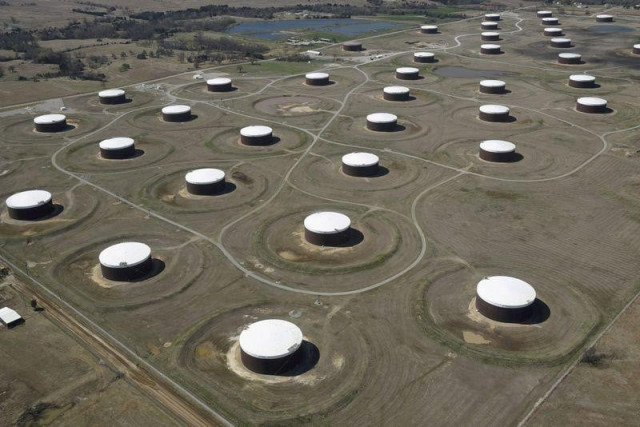
Pakistan is going to significantly liberalise its petroleum storage regime for international oil suppliers by giving access to the national pipeline network, expanding bonded-storage operations and allowing easier fuel re-export as the government seeks to build a more resilient supply chain amid heightened regional energy-security risks.
The Petroleum Division has submitted revised policy guidelines on the "Import on Foreign Supplier's Account through Customs Bonded Storage Facilities" to the Economic Coordination Committee (ECC) for approval, according to official documents seen by The Express Tribune. The move follows an unsuccessful launch of the original policy approved by the ECC in June 2023. Despite subsequent issuances of rules, guidelines and standard operating procedures, the Petroleum Division acknowledges that no foreign supplier has established a bonded-storage facility under the policy to date.
The ministry has now linked the urgency of operationalising the regime to disruption in the Strait of Hormuz, saying the situation has highlighted vulnerabilities in Pakistan's energy security. It has identified customs-bonded storage, strategic petroleum reserves and indigenisation among the measures needed to strengthen the country's oil and gas supply architecture.
Under the proposed framework, international suppliers will be allowed to import and keep petroleum inventories in bonded facilities before selling them to Pakistani buyers or re-exporting them. The final proposed scope covers crude oil of all grades, motor spirit including premium gasoline, high-speed diesel, jet fuel, fuel oil, LPG and LNG, while excluding products subject to international sanctions or restrictions under the Import Policy Order.
One of the most significant changes will give foreign suppliers, through their consignees, access to Pakistan's national petroleum pipeline network for movement of bonded inventory. This way petroleum stocks will be transported from port facilities to inland locations, including Mehmood Kot and Machike in Punjab, for eventual sale to licensed oil marketing companies (OMCs) and refineries.
Crucially, the draft says such movement through the pipeline network will not trigger duties or taxes, although the Goods Declaration requirements will continue to apply. Foreign suppliers could maintain stocks for domestic sale at private as well as public bonded terminals at approved locations, including Port Qasim, KPT/Keamari, Hub, Gwadar Port, Mehmood Kot and Machike. The framework also leaves room for other designated ports to be approved by relevant authorities.
The government has, however, sought to ring-fence the existing business of domestic oil importers. The draft explicitly states the scheme will not alter the existing import regime for licensed OMCs and refineries, which will continue in parallel.
The proposed regime also seeks to make it easier for international suppliers to re-export petroleum stocks that they do not sell in Pakistan. Under the final draft, Ogra would have the first right of refusal for the last 10% of products held in a customs-bonded warehouse. A consignee desiring to export that quantity will approach Ogra, which would have two days to make a decision. In the absence of a response, consent would be deemed to have been granted. For subsequent re-export, the draft states the consignee will not be required to obtain approval from the regulator. The relevant Goods Declaration will be filed with Customs and processed within 24 hours.
At the same time, regulators will have greater visibility over stocks. The Federal Board of Revenue (FBR) will provide Ogra access to its information systems for monitoring bonded petroleum inventories, while consignees will be required to report stocks at each approved location to Ogra daily.
The liberalisation plan has not been without resistance during inter-ministerial consultations. In comments on an earlier draft, the FBR said the proposals required "multiple clarifications", including clearer definitions of the foreign supplier and consignee and questions over the inclusion of products considered outside the Petroleum Division's domain.
The FBR proposed a stakeholders' meeting to resolve the outstanding issues. Subsequently, the Petroleum Division held further consultations and amended the policy in an effort to build consensus. The Ministry of Commerce has concurred in principle but pointed out that amendments to the Import Policy Order and other relevant provisions would be needed to align the trade regime with the revised policy.
The Board of Investment has broadly supported the liberalisation drive, saying the measures including wider product coverage, more flexible participation by international suppliers, tax neutrality for bonded operations, streamlined quality-clearance procedures and investor protection can "materially improve Pakistan's attractiveness to international oil traders".
However, the BOI objected to an earlier proposal assigning single-window approval and compliance-monitoring role to BOI/SIFC, arguing that petroleum imports, storage, blending, pricing and re-export already fell within an established sector-specific regulatory structure involving Ogra and the Petroleum Division.








This material may not be published, broadcast, rewritten, redistributed or derived from. Unless otherwise stated, all content is copyrighted © 2026 The Express Tribune.











1727268465-0/Untitled-design-(42)1727268465-0-208x130.webp "the poor man s burden")


COMMENTS
Comments are moderated and generally will be posted if they are on-topic and not abusive.
For more information, please see our Comments FAQ