Palestinian woman killed, 2 injured in Israeli airstrike in Gaza despite ceasefire
Updated 21 minutes ago

Taliban swept into Kabul in August 2021 well before any negotiated political settlement
Every account of the current Pakistan-Afghanistan confrontation begins in the same place: Doha, February 29, 2020, where the United States signed an agreement with the Taliban that excluded the internationally recognized government in Kabul from the table, entirely.
The deal rested on four pillars; a ceasefire, a Taliban pledge not to let Afghan soil be used against the US and its allies, a full withdrawal of foreign forces, and a promise of intra-Afghan negotiations toward a political settlement. It was, by design, an agreement between Washington and Taliban, the government in Kabul wasn't even at the table.
The Taliban swept into Kabul in August 2021 well before any negotiated political settlement had been reached and the "intra-Afghan" side of the bargain never materialized in any meaningful form. Successive US officials, including the then-chairman of the Joint Chiefs of Staff, would later tell Congress that the Taliban had failed to honor nearly every other condition attached to the agreement most notably, never renouncing its ties to Al-Qaeda.
Rather than an inclusive government, Afghanistan got an all-male caretaker cabinet within weeks, and four years on, no power-sharing arrangement has emerged.
The Taliban instead govern through loyalist commanders and regional militias; control without institution-building and built-in deniability for sheltering groups like the TTP while profiting from their networks.
These militias fund themselves through Afghanistan's shadow economy: opium/heroin trafficking (still a major share of global supply, as per Brookings Report) and taxation /protection rackets along smuggling routes. The Taliban's pledge to end poppy cultivation is widely seen as a bargaining chip for recognition, not real policy.
The result: a governing model resting on coercive and financial leverage of armed factions, structurally unsuited to reining in militants on its own soil.
By 2026, nearly all six of Afghanistan's neighbors had security complaints against Kabul: Iran over border clashes and the Helmand water dispute; Tajikistan and Uzbekistan over rocket fire and militant attacks (prompting China to fund its own border fortifications rather than trust Kabul); even Turkmenistan manages steady incidents. Pakistan, with the longest, most porous border, has suffered most. The Global Terrorism Index 2026 now ranks Pakistan the country most impacted by terrorism worldwide 1,139 deaths and 1,045 incidents in 2025, its worst year since 2013 and the sixth straight year of rising terrorism deaths, directly linked to strained Afghan relations.
Pakistan has not so far recognized the Taliban government (Russia recognized it in July 2025) but engaged fastest, hoping the Afghan Taliban would be able to bring about a participatory and all-inclusive form of government, as per their agreement, that would result in a stable Afghanistan.
To the contrary, Afghanistan has become a conglomerate of terrorist organisations under the tutelage of the Afghan Taliban, with, according to UN Security Council reports, more than 20 active global and regional terrorist outfits competing for power and influence. This terrorist ecosystem has further strengthened a militant economy that enables the pursuit of nefarious agendas by state sponsors of terrorism, including India. The TTP and BLA are among the largest beneficiaries of this ecosystem, receiving logistical support from the Afghan Taliban and covert financial backing from India.
A report by ACLED (Independent Tracking by Armed Conflict Location & Event Data Project) recorded 630 TTP attacks on Pakistani security personnel and civilians between January 2021 and September 2025. 2024 alone saw 558 deaths, a 90% rise year-on-year, after 2023 casualties were already almost 50% higher than 2022 (which included the Peshawar police-mosque bombing martyring 95). K-P and Balochistan bear the brunt, but the toll has touched most of the country.
Analysts increasingly view the continued TTP sanctuary, along with rocket fire into Central Asia and clashes with Iran, as deliberate Taliban leverage over neighbouring countries rather than mere oversight.
Pakistan's response initially centred on diplomacy, direct engagement and mediation by Qatar and Türkiye. However, rising casualties despite four years of talks shifted the calculus towards unilateral strikes against militant ammunition and logistics infrastructure. Operation Ghazab Lil Haq, launched on February 26, 2026, targeted terrorist infrastructure across several Afghan provinces as a last resort.
Taliban retaliation has appeared aimed more at domestic audiences than at achieving significant military effects. Most notably, in June 2026, Kabul's Defence Ministry claimed to have carried out strikes on ISKP camps in Khyber. Pakistan's Information Ministry rejected the claim, saying the Afghan Taliban hosts ISKP and dozens of other militant groups. It said that only a single rudimentary drone near Shinko in Khyber had been intercepted and neutralised by Pakistan Air Force air defences before it could cause meaningful damage.
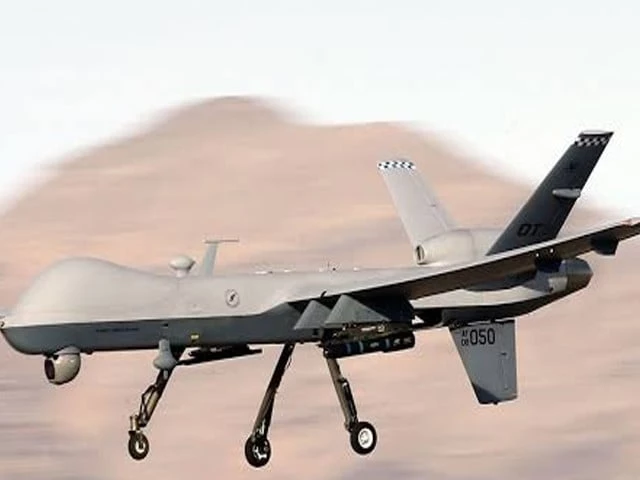
The drones involved are either modified commercial quadcopters or small, custom-built kamikaze unmanned aerial systems (UAS), reportedly assembled from components supplied directly or through third-party supply chains by India rather than being products of an indigenous military drone programme. Nine cross-border UAS incursions were recorded in June and July 2026 alone: four in Khyber and five across Balochistan.
Taliban claims that these incursions represent a "national air force" strain credulity. The force Kabul inherited in 2021 was reportedly operating at only around 30 per cent readiness and was chronically dependent on US maintenance and air-support capabilities, according to the Special Inspector General for Afghanistan Reconstruction (SIGAR). Since then, it has been further weakened by pilot shortages, crashes and international isolation.




This material may not be published, broadcast, rewritten, redistributed or derived from. Unless otherwise stated, all content is copyrighted © 2026 The Express Tribune.




COMMENTS
Comments are moderated and generally will be posted if they are on-topic and not abusive.
For more information, please see our Comments FAQ