Teenager killed in celebratory firing
Updated 1 hour ago

Documentary sheds light on life, legacy of Ahmad Din Siddiqi
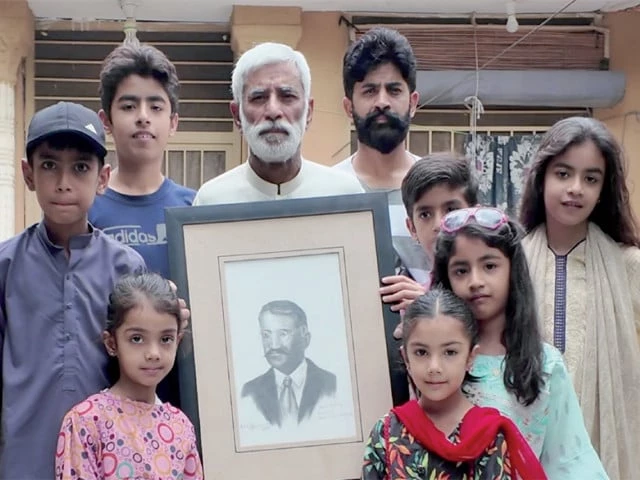
The history of archaeology in the subcontinent is often associated with Sir John Marshall, whose excavations at Taxila and Mohenjo-daro introduced the world to ancient civilisations. However, behind these landmark discoveries was a figure whose remarkable contributions remained overlooked for decades.
That figure was Khan Sahib Ahmad Din Siddiqi, a distinguished archaeologist from Taxila. He served the Archaeological Survey of India for more than three decades and played a key role in excavations, documentation and preservation work at Taxila, Mohenjo-daro and other historical sites.
In recognition of his services, the British government conferred upon him the honorary title of "Khan Sahib", one of the highest civilian distinctions of the time. Another enduring tribute to his work is the famous SD Area at Mohenjo-daro, whose name continues to reflect his initials and stands as a silent reminder of his contribution to the discovery of the ancient civilisation.
The greatest acknowledgment of his abilities came from Sir John Marshall himself. In a written message issued on Siddiqi's retirement, Marshall wrote, "Mr Siddiqi was my assistant for more than twenty years, and I never had a better assistant."
These words remain an exceptional tribute in the history of archaeology.
A comprehensive documentary on Ahmad Din Siddiqi has recently been produced by Taxila-based researcher and documentary filmmaker Mohammad Usman Ghani. It features family records, official documents, rare correspondence between Sir John Marshall and Ahmad Din Siddiqi, and interviews with his grandson, Iftikharuddin Siddiqi, bringing renewed attention to the archaeologist's contributions.
The documentary also raises an important historical question. Between 1918 and 1921, Ahmad Din Siddiqi served as an official photographer for the Archaeological Survey of India. Experts say nearly 5,000 rare archaeological photographs from Sir John Marshall's era remain a valuable historical archive, but it is still unclear how many of these images were captured by Siddiqi and why his contribution did not receive due scholarly recognition.
His legacy continued through his family. His son, Manzoor Ahmad Siddiqi, served as a draftsman in Pakistan's Department of Archaeology and participated in archaeological projects at Taxila, Mohenjo-daro, Harappa and other historic sites.














This material may not be published, broadcast, rewritten, redistributed or derived from. Unless otherwise stated, all content is copyrighted © 2026 The Express Tribune.





COMMENTS (1)
Comments are moderated and generally will be posted if they are on-topic and not abusive.
For more information, please see our Comments FAQ