Power supply chains face a new test
Updated 9 hours ago

Committee agrees on giving up price control believed to benefit consumers
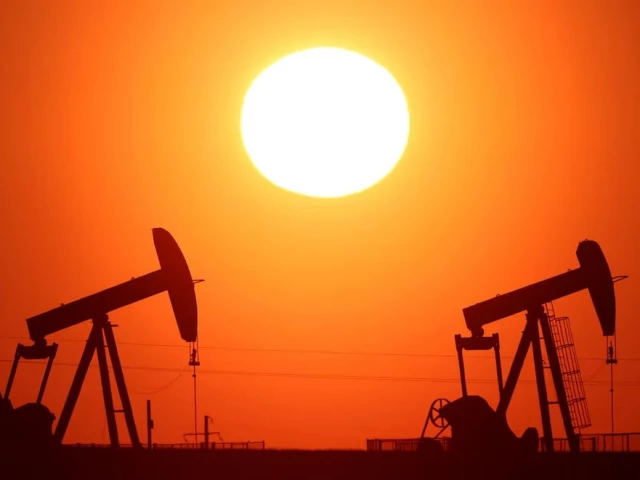
The government has decided to press ahead with phased deregulation of the oil industry, which comes after shifting from the weekly to daily petroleum price revisions in the face of continuing US-Iran war.
Officials say that Pakistan's experience demonstrates that deregulation, when accompanied by healthy competition, can deliver tangible benefits to consumers. Unlike petrol and high-speed diesel, the high octane blending component (HOBC) is deregulated, allowing oil marketing companies to compete in prices and offer consumers a better value.
A similar transformation has already taken place in the telecommunication sector, where liberalisation has replaced rigid price controls with market competition, leading to lower tariffs, improved services and greater innovation.
If the government limits its role to collecting reasonable taxes and customs duties while allowing competitive market forces to determine prices, the consumers stand to benefit through lower costs, better services and increased choice, say industry stakeholders. The key is not regulation for its own sake, but providing a competitive marketplace that prevents monopolistic practices and rewards efficiency.
The fifth meeting of a committee constituted by the prime minister to review the petroleum pricing mechanism was held on Thursday, headed by Federal Minister for Petroleum Ali Pervaiz Malik. The committee reached an understanding to move from the controlled to a deregulated oil price mechanism.
The sub-committees established by the main committee presented their findings and recommendations on various aspects of the petroleum pricing mechanism. Audit, tax and advisory services firm KPMG also presented its report comparing petroleum pricing and taxation structures in the region.
Members of the committee appreciated the daily pricing formula and the steps taken to enhance transparency as well as to reduce volatility in the new oil pricing system.
The federal minister emphasised that deregulation of the petroleum sector should be undertaken through a clear and measurable roadmap, with specific benchmarks and milestones identified to assess progress towards the intended objectives.
The committee was briefed that the dashboard on the Oil and Gas Regulatory Authority (Ogra) website had become operational, which was providing information about daily petroleum product prices, the applicable pricing formula and the relevant Platts data, enhancing transparency and public access to price information.
Meeting participants reviewed the potential impact of building strategic petroleum reserves and a proposed price stabilisation fund on the pricing mechanism, including their role in mitigating market volatility and ensuring the stability of petroleum supplies and prices.
The minister said that oil marketing companies should be made responsible for ensuring end-to-end digitisation of the petroleum supply chain to improve traceability, efficiency and accountability. The meeting deliberated on the moratorium placed on establishing new OMCs and its implications for competition, investment and market structure. It was also resolved that the inland freight equalisation margin (IFEM) pool needed a wholesome review.
The issue of windfall tax was discussed too. It was decided that the Finance Division, in consultation with the Federal Board of Revenue and the Petroleum Division, would present a report to the committee in its next meeting. It was agreed that the committee would continue to deliberate on recommendations of the sub-committees and formulate a comprehensive roadmap for reforms in the oil sector to promote transparency, competition, efficiency and consumer protection. The meeting was attended by National Coordination and Management Council National Coordinator Lt General Zafar Iqbal, Minister of State for Finance Bilal Azhar Kayani and other members of the committee.



This material may not be published, broadcast, rewritten, redistributed or derived from. Unless otherwise stated, all content is copyrighted © 2026 The Express Tribune.




1727268465-0/Untitled-design-(42)1727268465-0-208x130.webp "the reverse renaissance")

COMMENTS
Comments are moderated and generally will be posted if they are on-topic and not abusive.
For more information, please see our Comments FAQ