From stabilisation to growth
Updated 26 minutes ago

Policy amendments clear way for investment of billions of dollars in upgrading plants
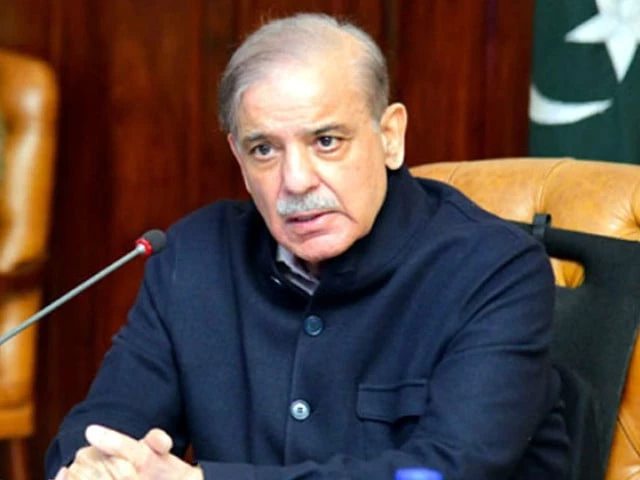
Prime Minister Shehbaz Sharif on Tuesday approved amendments to the Brownfield Refinery Policy, removing key bottlenecks that had delayed its implementation and paving the way for billions of dollars in investment to modernise Pakistan's refining sector.
The approval came during a meeting of the Cabinet Committee on Energy (CCoE), chaired by the prime minister, which endorsed an implementation framework for the Pakistan Oil Refining Policy for Up-gradation of Existing (Brownfield) Refineries, 2023. A major relief for the industry came in the form of a general sales tax (GST) waiver on the import of plant, machinery and equipment required for refinery upgrade projects. Industry officials had identified the withdrawal of tax concession following the Finance Act 2024 as one of the principal hurdles to implementing the policy.
Under the approved framework, all refineries will be required to sign Upgrade Agreements with the government within 90 days. Once the agreements are executed, the refineries will have seven years to complete their projects, enabling the production of Euro-V compliant fuels while significantly reducing furnace oil output. Officials said the decision provided a long-awaited clarity to investors and was expected to unlock billions of dollars in planned investments that had remained on hold due to uncertainty surrounding the policy implementation.
During the meeting, PM Sharif directed the Petroleum Division and other relevant ministries to ensure that all existing refineries undertake plant upgrades under the brownfield policy and take every possible facilitation measure to help implement the projects within the stipulated timeframe. The prime minister also instructed officials to organise investment roadshows in Saudi Arabia and Qatar to attract foreign investment into Pakistan's refinery modernisation programme. He stressed that the government would extend full support to facilitate investment in the downstream petroleum sector and ensure the timely execution of upgrade projects.
The upgrading programme is aimed at improving fuel quality, increasing the production of high-value petroleum products and reducing dependence on imported refined fuels while bringing domestic fuel specifications in line with international environmental standards.
The CCoE decision follows months of consultations among the Petroleum Division, the Oil and Gas Regulatory Authority (Ogra), the Finance Division and the refining industry over the implementation mechanism and incentive framework. Industry representatives welcomed the government's decision to remove the remaining policy bottlenecks, saying the restoration of GST waiver and a clear implementation roadmap would help revive long-pending investment plans.
Cnergyico Vice Chairman Usama Qureshi termed the government's decision a landmark step for the energy sector. "We thank Prime Minister Shehbaz Sharif for his leadership in approving the Brownfield Refinery Policy and resolving the long-pending issues that had delayed its implementation. We are also grateful to Petroleum Minister Ali Pervaiz Malik and his team, the Petroleum Division, Ogra and all stakeholders whose efforts made this policy a reality," Qureshi said.
"The policy provides the certainty the industry needed to move forward with refinery upgrades. It will facilitate significant investment in modernising Pakistan's refining sector, enable the production of Euro-V compliant fuels, reduce furnace oil output and strengthen energy security. We look forward to working closely with the government to ensure timely implementation of these strategic projects," he said.
Attock Refinery CEO Adil Khattak mentioned that the policy was originally notified on August 17, 2023, later amended in February 2024 and amended again on July 28, 2026 after taking into consideration the genuine concerns of refineries over some of the issues which would have made the proposed upgrading projects unviable. The amendments were made after intense and prolonged consultations between the government, refineries, independent financial and legal advisory firms, he said. "The policy will enable oil refineries to undertake major upgrade projects to not only comply with Euro-V specifications but also increase the production of deficit products – petrol and diesel – and reduce the production of furnace oil, which because of drastically reduced demand in recent years often results in storage constraints forcing the refineries to slash capacity utilisation."
The upgrading of plants will bring investments of $5-6 billion and not only result in cleaner environment-friendly fuels but also major foreign-exchange savings. "Though the amended policy unfairly penalises some of the refineries for the delay, it is still an occasion to celebrate in the larger interest of the country as every year of delay in up-gradation was causing a loss of $1.5 to $2 billion to the country," he said.














This material may not be published, broadcast, rewritten, redistributed or derived from. Unless otherwise stated, all content is copyrighted © 2026 The Express Tribune.







1727268465-0/Untitled-design-(42)1727268465-0-208x130.webp "the poor man s burden")
COMMENTS
Comments are moderated and generally will be posted if they are on-topic and not abusive.
For more information, please see our Comments FAQ