Power supply chains face a new test
Updated 6 hours ago

Growth of financialised GDP is good for govt, but it is not good for people as it does not reveal true employment pict
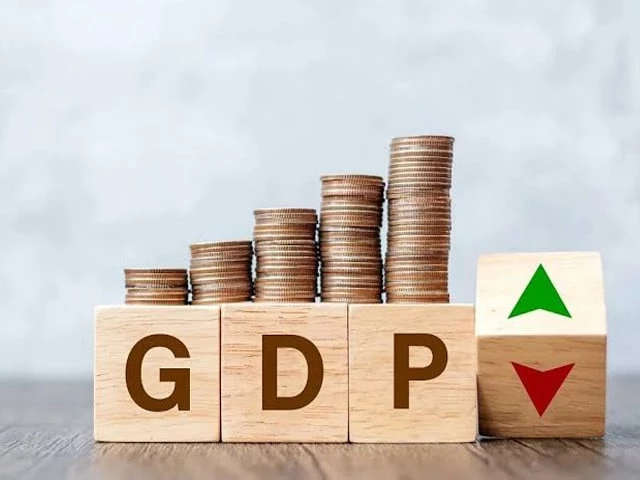
The financialisation of the gross domestic product (GDP) has implications for the real economy. The re-classification of a fee-based financial income in GDP has increased the size of the overall economy. Financialised GDP signifies financial investment and enhances the significance of financial institutions.
Since the Western economies have included the FIRE sub-sector in GDP, this has changed their structure of GDP. These structural changes have been applied to the developing economies in the name of international standardisation.
GDP per capita has been an indicator of average standard of living in the economy. Higher GDP per capita used to reflect a high level of economic development. Developed and developing economies have been using this indicator since long.
Owing to the financialisation of GDP, researchers now look at the medium income of population to evaluate the standard of living since the medium income deviates from the GDP per capita a great deal.
There used to be a strong link between GDP and unemployment in the advanced economies. This macroeconomic fact is called Okun's Law. Okun's Law states that an increase in GDP will reduce unemployment. For instance, an increase of 1% in GDP implies a drop in unemployment by 0.5% from 1960 to the 1980s in the developed economies. This statistical fact has been distorted a great deal owing to the financialisation of GDP since the 1990s.
GDP used to be a leading indicator of boom and bust cycles in the economy. A recession in the real economy was depicted through a consecutive drop in GDP for six months or two quarters. The financialisation of GDP has masked this reality. The inclusion of Finance, Insurance and Real Estate (FIRE) sub-sector has reduced the volatility of GDP. In other words, the FIRE sub-sector has a smoothening effect on GDP where volatility of non-financial/real economy is not captured.
When the volatility of real economy is not captured, the real employment situation is not revealed. GDP statistics used to help policymakers to take appropriate decisions as the economy went into a tailspin. Then policymakers used to adopt expansionary monetary and fiscal policies to come out of the recession. And researchers used to track the job loss in the economic downturn.
As far as the case of financialised GDP is concerned, expansionary monetary and fiscal policies grow the gross domestic product at a decent pace. However, this growth comes at the cost of employment, which is known as jobless recovery. Hence, the growth of the financialised GDP is good for the government, but it is not good for the masses as it does not reveal the true picture of employment.
Jacob Assa, a senior economist at the United Nations Development Programme (UNDP), mentions that the FIRE sub-sector value addition is a synthetic measure, which is based on certain assumptions. This synthetic measure inflates the net income of the FIRE sub-sector. He further states that there is a need to regulate the FIRE as it is speculative in nature. In addition, this sector takes resources away from productive sectors of the economy. Equally important, the FIRE sub-sector does not have the potential to create enormous job opportunities.
In short, the financialisation of GDP has implications for a broader developing economy. The association between the financialised GDP and unemployment has become weak and is unable to explain the crisis.
A growth fueled by the FIRE sub-sector is beneficial for the short term. This type of growth will take place at the cost of real structural transformation. For a developing economy like Pakistan, the real structural transformation is necessary to provide teeming millions gainful employment opportunities.
The writer is an independent economist who authored a book: Pakistan's Structural Economic Problems in the era of Financial Globalisation







This material may not be published, broadcast, rewritten, redistributed or derived from. Unless otherwise stated, all content is copyrighted © 2026 The Express Tribune.









1727268465-0/Untitled-design-(42)1727268465-0-208x130.webp "the reverse renaissance")

COMMENTS
Comments are moderated and generally will be posted if they are on-topic and not abusive.
For more information, please see our Comments FAQ