Rice planters to raise yield up to 15%
Updated 36 minutes ago

Provincial cash commitments to federal govt threaten spending target
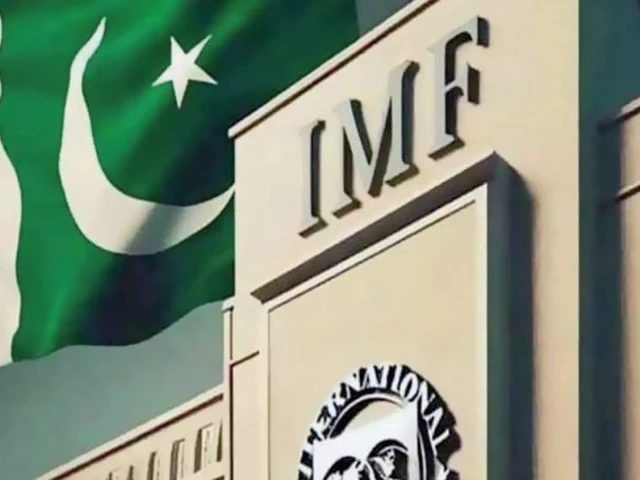
The International Monetary Fund (IMF) may cut health and education spending targets to around Rs3.9 trillion because of fiscal pressures that the provincial governments are facing after committing cash grants to the centre in addition to generating a huge cash surplus to meet another condition of the programme.
Government sources told The Express Tribune that after holding meetings with the provincial governments, it has become evident to the IMF that the target of cumulative spending of Rs4.2 trillion on health and education will again be missed during this fiscal year. For the last fiscal year, the combined spending remained Rs370 billion less than the IMF-given target.
Secretary Finance Imdad Ullah Bosal had told a parliamentary committee last month that the IMF condition on health and educational spending has been constantly missed during the ongoing programme.
Under a condition of the $7 billion bailout package, the five governments are required to spend over Rs4.2 trillion, but their total budget allocations are already Rs500 billion less than the IMF requirement.
Sources said that there was a possibility that the IMF could lower the target to Rs3.9 trillion, but the final round of discussions was pending. Even after adjusting the target downwards by Rs300 billion to Rs3.9 trillion, there would still be a gap of around Rs200 billion against the budget allocations and any revised target, subject to the final agreement between both sides.
The finance ministry could not ensure at the time of budgets in June to reconcile provincial health and education spending with the IMF's quarterly and annual targets, and there was no gap in allocations versus targets.
IMF talks are reaching their conclusion, and discussions are currently focused on finalising a consensus draft of the Memorandum of Economic and Financial Policies (MEFP) – the policy document that would become the base for the next programme review. The talks are scheduled to end on Wednesday, and if a staff-level agreement is reached, Pakistan will get $1 billion under the $7 billion package and another over $200 million under the climate facility.
The sources said that at one point the IMF had hinted at making the condition more stringent by declaring it a quantitative performance criterion as against the current indicative target. The breach of the performance criterion requires the waiver of the IMF executive board. The IMF resident representative did not comment on the development.
Due to constantly missing the tax collection target of the Federal Board of Revenue, the IMF has now made it a quantitative performance criterion by enhancing its severity limit from the indicative target. The condition on health and educational spending has been missed in the past despite the IMF having imposed a limit to keep primary current spending at the projected inflation rate, while fiscal space is explicitly reallocated to social protection, health and education.
The sources said that during the review talks, the IMF mission inquired from the provinces whether they would be able to achieve the spending targets on health and education. Sindh and Punjab said that their budgets were already facing pressures due to the commitment to provide Rs1.7 trillion cash surplus and giving cash grants to the federal government under the National Economic Initiative.
However, Khyber-Pakhtunkhwa, which has not yet committed to provide cash grants to the centre, assured the meeting that it would meet its spending targets.
The finance secretary said last month that the health and education spending targets could not be met because of some provinces, and it remained a recurring concern in almost every review. Bosal said that due to missing the FBR's tax collection targets, the federal government had to request the provinces to curtail their expenses.
For fiscal year 2026-27, the Punjab government has allocated Rs1.3 trillion for education and health sectors out of its total provincial budget outlay of Rs5.9 trillion. Sindh has cumulatively allocated Rs1.1 trillion, K-P over Rs800 billion and Balochistan Rs268 billion for spending on health and education.
In the budget, the federal and provincial governments had agreed to an arrangement under which these governments would provide Rs1.036 trillion in cash grant provided the FBR achieves its annual target of Rs15.263 trillion. The FBR has exceeded the first-quarter target by a margin of Rs33 trillion, mainly because of setting a low target.
The federal government had also cut its Public Sector Development Programme (PSDP) by Rs126 billion to Rs1 trillion to create fiscal space for national economic initiatives. Punjab also reduced its development spending envelope by Rs150 billion.












This material may not be published, broadcast, rewritten, redistributed or derived from. Unless otherwise stated, all content is copyrighted © 2026 The Express Tribune.






COMMENTS
Comments are moderated and generally will be posted if they are on-topic and not abusive.
For more information, please see our Comments FAQ