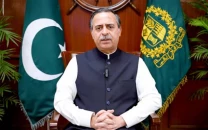
California Senate hails Pak-US ties
Updated 2 hours ago

$7.6m US-backed WASH assets transferred to provinces with training support
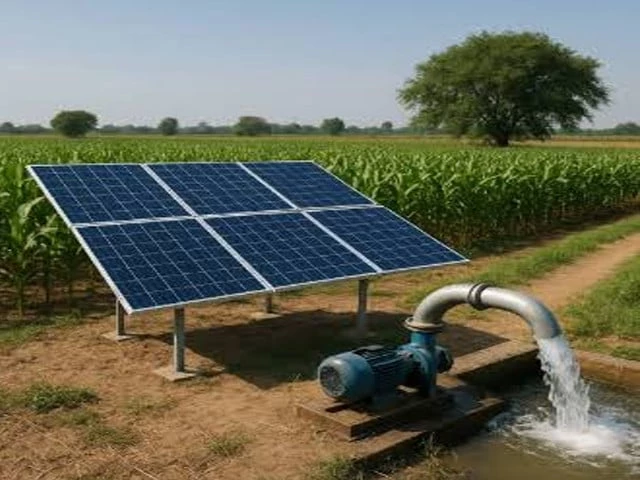
The United Nations Office for Project Services has transferred $7.6 million worth of water and sanitation infrastructure to the Public Health Engineering Departments of Sindh and Khyber-Pakhtunkhwa, equipping the provinces with solar-powered systems designed to lower long-term operational costs.
Funded by the US Department of State, the project delivered six drinking water supply schemes, more than 40 kilometres of distribution pipelines and over 1,300 water collection points across Umerkot district in Sindh and Tank district in Khyber-Pakhtunkhwa.
The assets now serve nearly 300,000 people. A fully equipped water-testing laboratory was also handed over to support continuous quality monitoring for 164,000 residents, while six school toilet blocks provide sanitation access to 6,440 students.
The economic centrepiece of the transfer is the solar component. UNOPS installed over half a megawatt of solar power capacity across the schemes, allowing them to operate independently of the national electricity grid. Provincial departments will therefore avoid recurring electricity and diesel expenses, reducing the fiscal burden of maintaining the systems while also slashing the project's carbon footprint.
With clean water available at the doorstep, local women are reallocating hours previously spent on collection to income-generating work such as handicrafts, kitchen gardening and agriculture. This shift converts unpaid labour into productive activity and supports household earnings in two underserved districts.
The Public Health Engineering Departments of both provinces will now operate and maintain the infrastructure. UNOPS has planned capacity-building programmes covering operation and maintenance, water quality monitoring and project management to strengthen institutional readiness for sustained service delivery.
By combining solar-powered assets with provincial ownership and skills transfer, the handover converts external financing into durable public infrastructure that lowers future costs and expands economic options for rural communities.













This material may not be published, broadcast, rewritten, redistributed or derived from. Unless otherwise stated, all content is copyrighted © 2026 The Express Tribune.







COMMENTS
Comments are moderated and generally will be posted if they are on-topic and not abusive.
For more information, please see our Comments FAQ