Rod Stewart cancels tour dates after heart surgery
Updated 4 hours ago

Organisers reject link between cinema grant and Russian pavilion
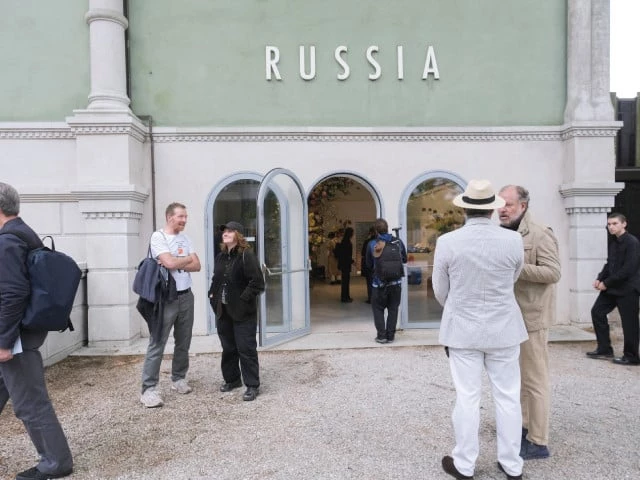
The Venice Biennale will challenge the European Union's decision to withdraw a 2 million ($2.3 million) grant after organisers allowed Russia to return to the prestigious international arts festival, reigniting a controversy that has surrounded the event since the announcement was made earlier this year.
The Biennale, one of the world's leading cultural events showcasing art, architecture, cinema, dance, music and theatre, has been at the centre of political and public debate since March, when organisers confirmed that Russia would reopen its national pavilion at the 2026 edition for the first time since Moscow's 2022 invasion of Ukraine.
The decision drew strong criticism from the Italian government, while the European Commission warned that funding worth 2 million would be suspended or withdrawn if the Russian pavilion participated in the festival.
In a statement, the Biennale said the decision by the European Education and Culture Executive Agency (EACEA) to revoke the grant had been anticipated and pledged to contest the move through all available legal channels.
"We will assert our rights before all competent authorities," the organisers said, maintaining that the funding was linked to projects run by the Biennale's cinema department and had no connection with Russia's participation in the exhibition.
The European Commission confirmed that it had revoked the grant following legal advice and a recommendation from Brussels. Commission spokesperson Thomas Regnier said cultural events financed with European taxpayers' money should uphold democratic values and promote dialogue, diversity and freedom of expression, principles that, he said, were not respected in present-day Russia.
Rejecting the Commission's position, the Biennale insisted the funding decision would have no significant impact on its finances or programme. It said all planned and ongoing activities would proceed as scheduled.
Biennale President Pietrangelo Buttafuoco defended the decision to allow Russia's return, describing the festival as "a space of coexistence for the whole planet" where censorship had no place.
Although the Russian pavilion was reopened when the exhibition began in May, public access has remained limited. Visitors were allowed inside only during four days of press previews. For the remainder of the six-month exhibition, access to the building has been restricted, with visitors instead viewing video projections on its exterior walls while live music plays from inside. REUTERS





This material may not be published, broadcast, rewritten, redistributed or derived from. Unless otherwise stated, all content is copyrighted © 2026 The Express Tribune.



COMMENTS
Comments are moderated and generally will be posted if they are on-topic and not abusive.
For more information, please see our Comments FAQ