California Senate hails Pak-US ties
Updated 2 hours ago

Rating agency cites reforms, political stability and fiscal consolidation
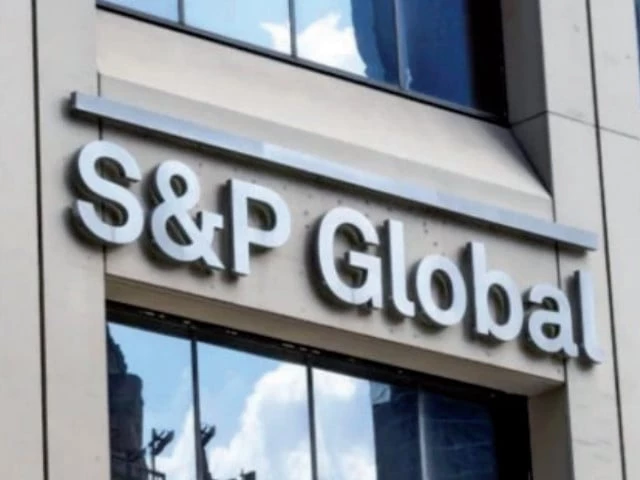
Standard & Poor's raised Pakistan's credit rating by a notch to B on Wednesday, citing improved political and institutional stability that helped implement tough reforms.
Political stability has bolstered the government's capacity to implement reforms. On July 22, 2026, S&P Global Ratings raised its long-term sovereign credit rating on Pakistan to B from B negative, according to a statement released on Wednesday.
The finance ministry stayed on the fiscal consolidation path despite resistance from within the government to some of the tough reforms. S&P has also acknowledged the strengthening fiscal position as the third key driver for the upgrade, after political and institutional strengthening.
However, S&P has wrongly credited two tax broadening initiatives – agriculture and retail schemes – for the increase in tax-to-GDP ratio, as both these initiatives were not even implemented in 2025. This exposes S&P's poor understanding of the country's taxation policies.
"This includes tax initiatives like the Agriculture Income Tax and the widening of the tax net to bring in more registrants in the retail sector. These efforts led to a significant increase of government revenue by 3.2 percentage points of GDP over the 12 months ending June 2025," reads the report.
The agency said the government's efforts to expand its revenue base have hastened fiscal consolidation. This has facilitated a steady decline in its net general government debt-to-GDP ratio. It also does not see any adverse impact of energy price volatility on the government despite Prime Minister Shehbaz Sharif fully passing on global price increases to consumers, in addition to recovering taxes. "We do not anticipate volatile energy prices to impose a hefty fiscal cost on the government," reads the report. The government is allowing price pass-through, with targeted subsidies to help vulnerable groups, it added. S&P said that entrenched economic reforms will bring about a sustained period of steady growth and fiscal consolidation.
The rating agency said the upgrade is predicated on improved institutional stability that has helped implement critical International Monetary Fund (IMF) programme reforms. These reforms have quickened fiscal consolidation and rebuilt external buffers. Pakistan's institutional settings have strengthened over the last two years. The rating agency said a relatively stable political environment has been instrumental in this regard.
Deterioration in indicators
While S&P has improved the country's standing by a notch, it has also projected deterioration in all economic sustainability indicators for fiscal year 2026-27.
The report showed Pakistan's economy grew in fiscal 2026 for a third consecutive year to 3.6%. It will slightly slow down to 3.5% in the current fiscal year. "We project growth at 3.5% in fiscal 2027 supported by IMF programme reforms alongside marginal price pressures due to an energy shock in the wake of the Middle East conflict." The report also showed a 0.1% of GDP decline in investment to 14.4% and a 0.5% decline in savings to 13.5% of GDP. These are already low bases.
Without any substantial increase in these indicators, Pakistan cannot permanently get rid of the IMF and put the economy on a path of sustainable growth, according to analysts. Exports-to-GDP ratio has also been shown marginally declining further to 9.6% in the current fiscal year. Net foreign direct investment is also shown declining by 0.1% to mere 0.4% of GDP for this fiscal year.
Gross external financing requirements have been shown further increasing to 104.9% of current account receipts. But net external liabilities are shown improving to 145.5% of current account receipts. The report noted that border tensions with India and Afghanistan, as apparent in the recent outbreak of hostilities, can raise the spectre of miscalculations and accidental clashes that could worsen credit risks.
Debt
S&P projects Pakistan's ratio of net government debt to GDP to gradually decline amid fiscal consolidation efforts. But it said the ratio is likely to remain fairly high at over 60% of GDP over the forecast period. The main pressure on debt sustainability is the extremely high interest expense relative to fiscal revenue. It called this a major constraint on its assessment of the government's debt burden.
High dependency on bilateral creditors
The credit rating agency said support from bilateral creditors, including China, Saudi Arabia and Kuwait, has been critical for Pakistan to meet its high external financing needs. Total support from these partners in the form of central bank deposits and swaps reached $16.8 billion as of end-fiscal 2026.
"We expect Pakistan to continue relying on the renewal of existing bilateral credit and commercial loan facilities, as well as on the potential extension of new ones."
S&P said additional deposits or loans from external partners would further add to Pakistan's substantial narrow net external debt position. It forecast the narrow net external debt to reach 113% of current account receipts by the end of this fiscal year. "Pakistan's continued external debt maturities will place sustained pressure on its foreign exchange reserves, absent considerable net new funding. Consequently, gross external financing needs, as well as net external indebtedness, will remain high over the next one to two years." Pakistan borrowed $27.2 billion in the last fiscal year to repay maturing debt, build foreign exchange reserves and finance the budget, according to government publications.












This material may not be published, broadcast, rewritten, redistributed or derived from. Unless otherwise stated, all content is copyrighted © 2026 The Express Tribune.







COMMENTS
Comments are moderated and generally will be posted if they are on-topic and not abusive.
For more information, please see our Comments FAQ