Pakistan, Egypt reject Israeli settlers violence
Updated 3 hours ago

Threatens attacks on regional energy infrastructure
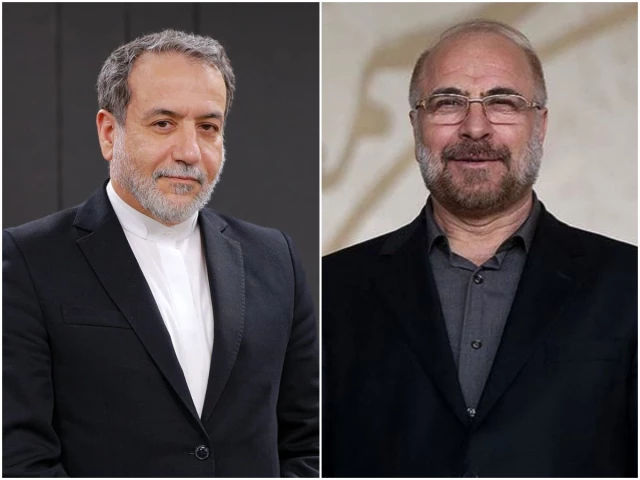
Iran’s Parliament Speaker and chief negotiator Mohammad Bagher Ghalibaf said on Wednesday that the situation in the Strait of Hormuz would not return to its pre-war state, warning that no country in the region would be able to sell oil if Iran was prevented from doing so.
In a post on X, Ghalibaf said the conflict had become an “all or nothing” equation.
“In a region where we cannot sell oil, no one will sell oil,” he warned.
Qalibaf also warned that if Iran’s security was not guaranteed, “no infrastructure will remain secure”.
He further argued that security in the Strait of Hormuz depended on the absence of US forces, adding that Iran had repeatedly stated that conditions in the strategic waterway would not revert to those that existed before the war.
معادلهٔ این جنگ مشخص است: یا همه یا هیچکس!
— محمدباقر قالیباف | MB Ghalibaf (@mb_ghalibaf) July 22, 2026
در منطقهای که ما نفت نفروشیم، کسی نفت نخواهد فروخت. اگر امنیت ما تأمین نشود، هیچ زیرساختی ایمن نخواهد بود و امنیت تنگه در نبود نیروهای آمریکایی است. بارها گفتهایم که وضعیت تنگه به قبل از جنگ باز نمیگردد.
Meanwhile, Foreign Minister Abbas Araghchi warned that any attack on Iran's infrastructure would trigger a “powerful and decisive” response, saying countries supporting such strikes would be considered legitimate targets.
Araghchi made the warning in a post on X, saying Iran’s defence doctrine was based on the principle of “eye for an eye”.
“Any aggression against Iran, including our infrastructure, will compel a powerful and decisive response.”
He added that “those who contribute to such aggression, whatever the kind of support, will also be considered as legitimate targets.”
Our defense doctrine is clear: eye for an eye.
— Seyed Abbas Araghchi (@araghchi) July 22, 2026
Any aggression against Iran, including our infrastructure, will compel a powerful and decisive response.
Those who contribute to such aggression, whatever the kind of support, will also be considered as legitimate targets.
An Iranian military source earlier warned that Tehran would strike regional infrastructure, including energy facilities, if Washington targeted bridges and power plants in Iran, following US President Donald Trump’s threat to attack infrastructure over commercial shipping in the Strait of Hormuz.
Trump threatened earlier today that the US would bomb an Iranian bridge or power plant every time Tehran attacked a commercial vessel in the strategic waterway.
Speaking to the semi-official Tasnim News Agency, the source said Iran has a “steel determination” to exercise its sovereignty over the Strait of Hormuz and “would never allow the waterway to become a source of threats” against the country again.
A military source said Iran will retaliate against regional infrastructure and energy facilities with American interests if the United States struck any Iranian bridge or power plant, responding directly to a new threat from US President Donald Trump. pic.twitter.com/a8MIFqxktx
— Tasnim News Agency (@Tasnimnews_EN) July 22, 2026
The source added that shipping through the strait would remain safe provided vessels coordinated with Iran and complied with arrangements established by Tehran.
Otherwise, the source said, Iran would continue exercising what it described as its firm resolve to control the strategic waterway as part of ensuring its long-term security.
“If the US targeted any Iranian bridge or power plant, Tehran would respond by striking regional infrastructure, including energy facilities in which Washington has interests,” he warned.
The source also said the US should have become fully aware over the past 10 days that Iran is capable of striking any target it chooses, adding that any “gamble” by Trump “would once again end in failure”.
The source said the last ten days had provided the Americans with full certainty about Iran’s targeting capabilities.
— Tasnim News Agency (@Tasnimnews_EN) July 22, 2026
“Therefore, Trump’s potential gamble will once again lead to his disgrace,” the source said.
The warning comes as US and Iranian forces continued exchanging strikes despite a Pakistan-brokered framework agreement signed in June to end the war that began in February and pave the way for a lasting peace agreement.
Trump warns US will bomb Iranian bridges, power plants if Tehran attacks ships in Hormuz again
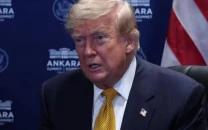
US President Donald Trump on Wednesday warned that the United States would retaliate with strikes on Iranian infrastructure if the Islamic Republic attacked any vessel transiting the Strait of Hormuz.
In a post on his Truth Social platform, he said any attack by Iran on a ship in the strategic waterway — whether carried out with "a missile, rocket, drone, or any other device or weapon" — would trigger a US military response.
"From this point forward, any time the Islamic Republic of Iran shoots at a ship in the Strait of Hormuz ... the United States will bomb and destroy one bridge or power plant, including those located next to, or in, the capital city of Tehran," Trump wrote.
From this point forward, any time the Islamic Republic of Iran shoots at a ship in the Strait of Hormuz, whether it be by Missile, Rocket, Drone, or any other device or weapon, the United States will bomb and destroy ONE BRIDGE OR POWER PLANT, including those located next to, or… pic.twitter.com/011kjiBiiX
— Commentary Donald J. Trump Truth Social Posts On X (@TrumpTruthOnX) July 22, 2026
Earlier, Iran's Tasnim News Agency reported loud explosions heard on the island resulting from a missile attack, which took place at 2:48pm local time, according to Al Jazeera.
The report said that investigations have been launched by the relevant authorities to determine the extent of the attack, the point where the missile hit, and the possible damage caused.
Rubio says US 'open to diplomacy' with Iran, disputes Iran's 'power' over Strait of Hormuz
US Secretary of State Marco Rubio said Wednesday that Washington “would love to reach a diplomatic settlement” with Iran, pushing back against the idea that Iran has "power" over the Strait of Hormuz.
Rubio warned that US President Donald Trump has “many options available” if Tehran does not cooperate, and according to Al Jazeera, said regarding the Islamabad Memorandum of Understanding Article 5 that "I don’t think that’s [power over the Strait] what the MoU says, so that’s not the way we interpreted it from the very beginning."
“We understood that to mean that they would ensure that no ships were being blown up. … The MoU does not give them the right to launch drones and missiles against commercial shipping vessels.”
He added that he believed “everybody here understands that the US would love to reach a diplomatic settlement. We would love to reach an agreement if it were possible with Iran that would ensure they never have a nuclear weapon, and obviously help stop them,” Rubio told reporters in the Philippines.
Rubio said that the US would prefer an agreement where the Iranian side “says we'll no longer sponsor terrorism and we will not pursue a nuclear weapon or the things you need for a nuclear weapon.”
He noted that Trump “always prefers to negotiate and reach a deal on these things, and we are prepared to do that. We've tried to do that now for a year and a half, but we're also not going to sit by and let ships be blown up or Americans be attacked.”
“The president has many options available to him if they continue to insist on not being cooperative. And I won't get ahead of the president on any of those. But I think Iran knows we have many options as well.”
He reiterated that the US is not going to accept Iran’s targeting of “global shipping and international waterways,” adding: “There are other countries that should feel just as strongly as we do because they're actually more impacted by it than we are.”
Baghaei slams repeated US attacks, threats against Iranian 'peaceful nuclear facilities'
Iranian Foreign Ministry spokesperson Esmaeil Baghaei condemned the "repeated US attacks and threats against Iran's peaceful nuclear facilities" in a post on X on Wednesday.
He said the attacks constituted "a flagrant violation of the core principles of the UN Charter, international law, and the relevant resolutions of the IAEA Board of Governors, General Conference, and UN Security Council", and also revealed "the United States’ deep-rooted enmity toward Iran’s scientific progress and technological development."
The repeated U.S. attacks and threats against Iran’s peaceful nuclear facilities not only constitute a flagrant violation of the core principles of the UN Charter, international law, and the relevant resolutions of the IAEA Board of Governors, General Conference, and UN Security…
— Esmaeil Baqaei (@IRIMFA_SPOX) July 22, 2026
"Iran’s nuclear activities have been fully declared to the IAEA in accordance with its safeguards obligations. Washington’s obsessive focus on Kolang Kouh where no nuclear activity is taking place, is nothing more than a fabricated pretext for aggression, destruction, and sabotage."
War history is written by impact, not death count: Iran’s envoy to Trump
History of wars is written by the depth of impact, not the total death count, said Iran’s ambassador to Germany in response to US President Donald Trump’s recent message comparing the war of aggression against Iran to other US wars in terms of duration and casualties, according to IRNA.
Earlier, in a post on his Truth Social, Trump compared the wars in Afghanistan, Iraq, Vietnam, Korea, Venezuela, and the war against Iran, listing the duration and number of American casualties in each, claiming that the war with Iran has resulted in 18 American deaths in less than four months.
Majid Nili rebuked Trump’s focus on US casualties, saying that the true historical weight of a war lies in how broad and deep its repercussions are.
According to IRNA, he said that four months was enough for two American smart missiles that hit the Minab elementary school to reveal the true face of American warmongering.
At least 168 schoolchildren and their teachers were killed on February 28 when a US strike hit Shajareh-Tayyebeh primary school in Iran’s southern city of Minab.
Drone shot down over Tehran: Iranian media
A drone was destroyed over the capital of Iran after air defence systems were activated, according to Al Jazeera.
According to the semiofficial Fars News Agency, the drone was shot down during nighttime attacks after the Islamic Revolutionary Guard Corps deployed air defence systems over the city.
No information was shared regarding the specific location in Tehran where the drone was taken down, its country of origin or its target.
After a US announcement that it had launched another nighttime attack on Iran, numerous explosions were reported in different parts of the country.
Iran targets US military bases in Kuwait, Jordan and Bahrain
The Iranian army said on Wednesday it launched a new wave of drone attacks targeting US military facilities at Al-Azraq US base in Jordan and Sheikh Isa US base in Bahrain, according to state media.
Iran’s official broadcaster IRIB reported that the operation began Wednesday morning and targeted US military infrastructure at the two bases.
According to the report, Iranian forces struck “housing and welfare facilities” as well as “equipment storage sites used by the US military” at Al-Azraq US base in Jordan.
Drones also targeted “large equipment warehouses and heavy aircraft maintenance and repair workshops” at Sheikh Isa US base in Bahrain, the army said.
There was no immediate comment from Jordan or Bahrain.
The reported attacks came a day after Iran said it had launched missile strikes on US-linked military targets in Jordan and Bahrain.
Jordanian authorities said their air defence systems intercepted and destroyed several Iranian missiles and drones that entered the kingdom’s airspace. In contrast, Bahrain’s military said it had intercepted and destroyed several Iranian aerial attacks after air raid sirens sounded across the country.
Iran's military also said on Wednesday that it launched a new wave of drone strikes against US military facilities in Kuwait, claiming it targeted a key American base "a few hours ago," the semi-official Tasnim News Agency reported.
Iranian forces used "a large number of attack drones" to strike ammunition depots and logistical equipment belonging to the US Army at Camp Doha in western Kuwait.
The report said the attack targeted the storage facilities and “logistical equipment of the land forces command centre."
Iran executes man accused of acting on behalf of US and Israel
Iran’s Fars news agency reported that a man arrested and tried on charges of belonging to an “anti-revolutionary terrorist group” and committing “operational acts benefitting the US and Israel” was executed following a judicial ruling, according to Al Jazeera.
The individual was identified as Mehdi Khanki. According to the report, he was arrested in Karaj after security forces discovered an arsenal in his home, including handguns, ammunition, explosive remotes, handmade grenades, shoulder-fired explosive tubes and high-destruction bombs.
Jordan says it was targeted by six Iranian missiles
Jordan’s military intercepted four Iranian missiles targeting the kingdom, while two other missiles fell in remote, uninhabited areas, according to the Petra news agency, as per Al Jazeera.
Citing an anonymous military source, the agency said that air defence systems detected six missiles coming from Iranian territory and dealt with them immediately upon entering Jordanian airspace.
It added that there were no casualties or material damage due to the attack.
Sirens sound in Jordan’s port city of Aqaba
A statement by neighbouring Israel’s military said an Iranian missile attack targeted the kingdom, according to Al Jazeera.
Plumes of smoke could be seen overhead in the Red Sea city of Aqaba in videos filmed by people in nearby Eilat, Israel, according to The Associated Press.
Jordan has been repeatedly targeted by Iran for allowing the deployment of US troops and aircraft on its territory.
Another recent attack on Aqaba saw Israeli officials warn that there could be a spillover of the Iranian attacks into its territory.
Rubio says US still willing to negotiate with Iran over US-Israeli war
US Secretary of State Marco Rubio said on Wednesday the United States is still willing to negotiate an end to the Iran crisis but Tehran is not serious about talks, as the widening conflict disrupted two of the world's most critical energy chokepoints.
Rubio made his comments in a meeting of Southeast Asian foreign ministers a day after three oil tankers carrying Saudi crude to Asia reversed course in the Red Sea, apparently in response to threats from Yemen's Houthis.
The Houthis, who control the coast at the mouth of the Red Sea, announced a naval blockade on Saudi Arabia on Monday, opening a potential new front in the war which has killed thousands of people across the Gulf since it began on February 28 with US and Israeli attacks on Iran.
With Iran already threatening shipping through the Strait of Hormuz leading out of the Gulf, the Red Sea has served as the main alternate route out for millions of barrels of Saudi oil per day.
A senior Iranian official told Reuters on Monday that Tehran had received a proposal from mediators for a 10-day ceasefire in efforts to salvage the interim ceasefire agreement signed by the US and Iran in June, which replaced an earlier April ceasefire.
Read: Trump says US will strike reported Iranian nuclear site at Pickaxe Mountain 'very heavily'
In another sign that diplomacy remains alive, Iran's Interior Minister Eskandar Momeni has visited mediator Pakistan and asked Islamabad to continue its efforts.
Rubio said Washington was "always committed to diplomacy" but doubted whether Tehran was equally committed to negotiations.
"The problem we're having right now is that they're not serious about talks. If they're serious, we're serious. If they're not, then we will do what's necessary to protect our interests, and also the interests of our allies," Rubio said in Manila.
He stressed that Iran could not be allowed to control the Strait of Hormuz, arguing it would create a dangerous precedent for the world, including Southeast Asian countries, many of which have territorial disputes in the South China Sea with China.
"If we create a precedent in the Middle East where a nation state can decide that they are going to control an international waterway, charge a toll, and if you don't pay them, blow up your ships, we have created a very dangerous precedent, which will repeat itself in other parts of the world, including in this region," Rubio said.
With no diplomatic breakthrough in sight, the US military bombed targets across Iran for an 11th straight night on Tuesday. Tehran residents reported hearing explosions in the early hours of Wednesday as Iran activated its air defences over the capital, Iran's semi-official Fars news agency said.
Explosions were also reported in the southeastern coastal cities of Chabahar and Konarak, and two blasts were heard in Bushehr, home to Iran's only nuclear power plant, Iran's official IRNA news agency reported.
Earlier, Iran targeted US military sites in Bahrain, Kuwait and Jordan and a tanker was hit in the Strait of Hormuz.
Iran said it had struck infrastructure belonging to Amazon in Bahrain, where the US tech company operates a regional data centre. Amazon did not comment and Reuters could not verify the report.
US President Donald Trump confirmed that 18 US service members had been killed so far in the war, including four in Iranian attacks on US military bases in Jordan and Iraq over the last few days.
Oil prices rose further in Asian trade on Wednesday after climbing more than 2% on Tuesday following the Houthi threats, with Brent crude hovering above $91 a barrel and US gasoline back over $4 a gallon.
French shipping company CMA CGM to impose emergency surcharge due to Hormuz tensions
The shipping and logistics company said the decision, which will be effective on August 1, follows the renewed escalation of hostilities in the Strait of Hormuz, according to Al Jazeera.
“Following the renewed escalation of hostilities in the Strait of Hormuz over the past days, fuel prices have surged sharply again, reversing the easing observed in recent weeks. As a result, bunker costs have significantly increased across all regions and trades, impacting the overall cost of ocean transportation,” the firm said on its website.
The surcharge, which will range from $65 to $165 per container, will be in place until further notice.
US attacks hit electrical substation near Bushehr nuclear plant
US forces struck several locations in Iran’s southwestern Bushehr province and western Ilam province early Wednesday, Iranian state media reported.
Ehsan Jahanian, deputy governor of Bushehr for political and security affairs, said explosions were reported in Bushehr and Dashti counties following the strikes, according to the official IRNA news agency.
Bushehr province is home to a key nuclear facility in its southeast.
Jahanian said one of the strikes targeted the area around Khormoj, the capital of Dashti County, adding that the missile attack caused no casualties.
Power was restored to the village of Bandarjah in Bushehr County about two hours after it was cut off by a missile strike on a power substation serving the Bushehr nuclear power plant the previous night, according to the semi-official Fars news agency.
Separately, the governor of Chavar in western Ilam province said a missile struck a location in the city, IRNA reported.
The attack caused no casualties, while a limited fire that broke out in nearby grassland was brought under control, the governor said.
Funeral procession held for newly identified Minab primary school strike victims
A funeral procession took place in Minab as residents gathered to honour the newly identified victims of the Shajareh Tayyebeh Elementary School attack, according to Iran’s semi-official Tasnim news agency.
The school was destroyed on February 28 by a missile strike on the opening day of the war, killing more than 170 children and teachers.
According to Tasnim, large crowds assembled for the mourning ceremony, carrying portraits of the victims and offering prayers as the procession moved through the streets.
Oil prices climb to $92 a barrel
Oil prices continued their upward trajectory, with Brent crude futures gaining $1, or 1.1%, to $92.01 per barrel as of 03:30 GMT (08:30 PKT), according to Al Jazeera.
US West Texas Intermediate (WTI) crude went up 82 cents, or 1.0%, to trade at $85.16.
The gains came after oil settled at a five-week high on Tuesday, according to Reuters, in the wake of US forces attacking targets in southern and western Iran, and Iran striking US facilities in Bahrain, Kuwait and Jordan.
Brent futures closed at $91.01 per barrel on Tuesday, while WTI settled at $84.91.
US military says its latest strikes on Iran have ended, marking 11th successive night of attacks
The US military said late on Tuesday it ended its latest round of strikes on Iran that marked the 11th consecutive night of American attacks.
"CENTCOM assets targeted Iranian military operations centres, maritime capabilities, aircraft hangars, drone storage facilities, and military logistics infrastructure to further degrade Iran's ability to threaten commercial shipping in the Strait of Hormuz," the US Central Command said in a statement.
The strikes lasted about 75 minutes late on Tuesday, according to the US military.
Read more: US informs Israel of plans to intensify attacks on Iran
Washington said Iran has attacked more than 30 commercial vessels transiting the Strait of Hormuz in the last three months.
The war began when the US and Israel attacked Iran on February 28 and Iran responded with its own strikes on Israel and Gulf states that host US bases. US-Israeli strikes on Iran and Israeli attacks on Lebanon during the war have killed thousands of civilians, destroyed homes and displaced millions.
Fifty civilians have been killed and 500 wounded in the recent US strikes on Iran, an Iranian health ministry official said.
US troop deaths in the war have risen to 18 in recent days.
On Monday, Trump vowed revenge against Iran after strikes against US troops.
Last week, Trump threatened to expand the targets being struck in Iran to include energy plants and bridges.
The 1949 Geneva Conventions on humanitarian conduct in war prohibit attacks on sites considered essential for civilians. After Trump's past threats to strike such targets, international law experts in the US said in April such attacks may amount to war crimes.
"Gate of Tears"
In a letter to shippers, the Houthis on Tuesday threatened to attack any ships that load or discharge Saudi oil.
Trump said the Houthis had not yet shut the Bab el-Mandeb, the "Gate of Tears" strait leading into the Red Sea, and threatened to act against them if they did.
"So far it hasn't happened," Trump said. "If something like that happens, we take care of it."
Three oil tankers loaded with Saudi crude for China and India made U-turns in the Red Sea on Tuesday, heading towards the Suez Canal rather than braving the Yemeni coast at the sea's mouth.
Throughout the war, Saudi Arabia partially escaped the shipping disruption by piping oil to Yanbu on the Red Sea instead. But a full closure of that alternative route by the Houthis could reduce global oil supply as it would leave most Saudi oil exports trapped.
On Tuesday, Trump renewed his threats to again attack Iran's nuclear facilities at Natanz "pretty soon", which he said in June 2025 had been "totally obliterated" after the US military bombed the facility, buried in a mountain range, that month. Iran promised it would retaliate.
Iran’s Kurdistan hit in US attacks
The IRIB state broadcaster reported that “a point outside the city limits” of Baneh in the western Kurdistan province “has been targeted by enemy attacks”, according to Al Jazeera.







This material may not be published, broadcast, rewritten, redistributed or derived from. Unless otherwise stated, all content is copyrighted © 2026 The Express Tribune.






COMMENTS
Comments are moderated and generally will be posted if they are on-topic and not abusive.
For more information, please see our Comments FAQ