Beijing shuts tourist sites, suspends bus services as heavy rain continues
Updated 19 minutes ago

.
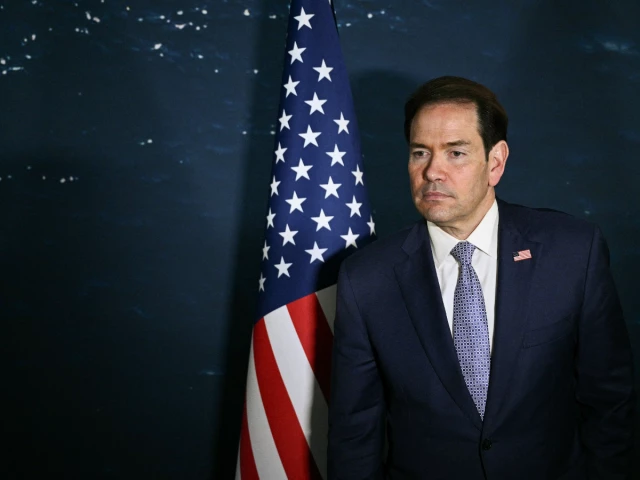
US Secretary of State Marco Rubio and Chinese counterpart Wang Yi discussed on Wednesday a visit to the US in September by Chinese President Xi Jinping during an Asian gathering where ministers voiced concern about the Iran war and South China Sea tensions.
Rubio said he and Wang discussed at length the need to lay the groundwork for a "very positive visit" by Xi, and it was their job to manage the big differences between the two countries and ensure they did not get out of control.
Wang, on his part, demanded that the US "respect China's core interests ... effectively manage differences and disagreements, and address China's legitimate concerns," according to an official Chinese summary, which called the meeting "pragmatic, positive, and constructive."
Wang and Rubio agreed to "make sound preparations for the next stage of high-level exchanges," Wang's ministry said in a statement.
The broader ASEAN meeting in Manila comes amid a flare-up in the conflict between the US and Iran, and while tensions simmer between Beijing and close US ally the Philippines over an incident in the South China Sea on Monday that led each to summon the other's ambassador.
Meeting with foreign ministers of the Association of Southeast Asian Nations, who expressed concerns about the Middle East war, Rubio put the blame squarely on Iran.
"The problem we're having right now is that they're not serious about talks," he said. "If they're serious, we're serious. If they're not, then we will do what's necessary to protect our interests, and also the interests of our allies."
He stressed that Iran could not be allowed to control the Strait of Hormuz, as it could set a dangerous precedent for other parts of the world.
Rubio's remarks follow his opinion piece in Philippine media on Tuesday that aimed at Beijing's conduct in the South China Sea, warning of "dire new threats" if those waters were to "fall under the control of a power willing to use commerce as a geopolitical weapon."
Beijing claims sovereignty over almost the entire South China Sea via a line on its maps that cuts into the exclusive economic zones of Brunei, Indonesia, Malaysia, the Philippines, and Vietnam, and is at the centre of long-running disputes over a multitude of islands and features. Reuters











This material may not be published, broadcast, rewritten, redistributed or derived from. Unless otherwise stated, all content is copyrighted © 2026 The Express Tribune.






COMMENTS
Comments are moderated and generally will be posted if they are on-topic and not abusive.
For more information, please see our Comments FAQ