Oil eases as weaker demand outlook counters Mideast supply concerns
Updated 1 hour ago

Experts say regulatory recognition alone won't transform lending to SMEs
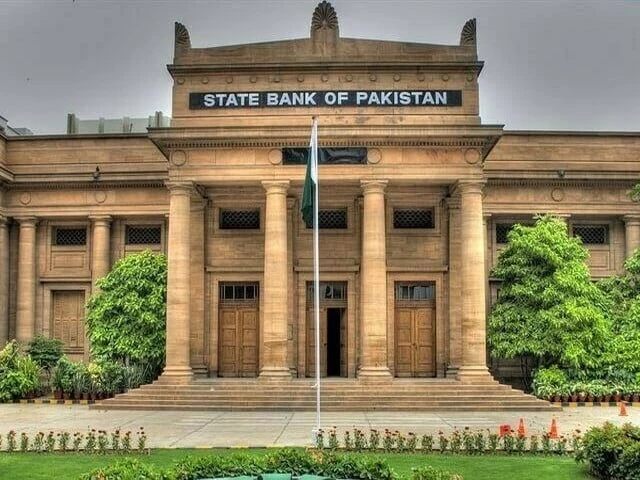
The State Bank of Pakistan (SBP) has introduced a separate category for start-ups under its revised Prudential Regulations for SME Financing, a policy shift that could reshape access to formal finance for early-stage businesses. Experts caution, however, that regulatory recognition alone is unlikely to transform lending without broader banking reforms.
For the first time, the central bank has defined start-ups as businesses operating for up to five years and in early development stages, formally recognising a segment long outside conventional bank lending. The move follows amendments to the Prudential Regulations for SME Financing, which revised SME definitions and introduced a start-up category. Under the new framework, micro enterprises have annual sales up to Rs30 million, small enterprises above Rs30 million to Rs400 million, and medium enterprises above Rs400 million to Rs2 billion. Businesses operating for up to five years are classified as start-ups.
While higher turnover thresholds are expected to bring more businesses within the SME framework, experts believe start-up recognition marks the most significant change, providing banks a regulatory basis to develop financing products for businesses that have traditionally struggled to access credit. "The SBP's decision aligns the regulatory framework with Pakistan's economic realities by expanding turnover thresholds, enabling significantly more businesses to qualify as SMEs," Ahmed Ali Siddiqui, Founding Director of the IBA Centre for Excellence in Islamic Finance, told The Express Tribune.
"The revised definition will improve access to formal finance, enable investment, support business expansion and contribute to employment generation and sustainable economic growth," he said. Siddiqui, who also heads Shariah Compliance at Meezan Bank, said the framework creates greater opportunities for Islamic banks to expand Shariah-compliant financing through asset-backed and partnership-based solutions tailored to SME needs. He said start-up recognition encourages financial institutions to support young enterprises during their formative years, fostering entrepreneurship and long-term economic resilience.
He stressed, however, that the initiative should be complemented with dedicated start-up financing programmes, cash flow-based credit assessments, credit guarantee mechanisms and stronger collaboration among banks, regulators, incubators and venture capitalists. Such an ecosystem, he said, would enable promising start-ups to access timely financing and contribute meaningfully to Pakistan's innovation-led growth.
Kapeel Kumar, Founder of The Founder's Space, described the move as a significant regulatory milestone, saying the absence of a formal definition had long left start-ups in a regulatory grey area, making it difficult for banks to categorise high-growth but high-risk businesses.
He said while the new classification does not automatically guarantee higher credit flows because banks remain tethered to collateral-based lending, it establishes the prerequisite framework for banks to design start-up-specific products. Kumar described the five-year definition as a pragmatic starting point because it covers the critical "valley of death" phase, when most young businesses struggle to survive. He added that Pakistan may eventually need longer recognition for research-intensive ventures requiring extended development cycles.
To translate the regulatory change into meaningful financing, Kumar called for a government-backed credit guarantee scheme under which the state would absorb part of the default risk, encouraging banks to lend on future cash flows rather than physical collateral.
He also advocated a "startup-first" procurement policy, under which a portion of government digital transformation contracts would be awarded to local start-ups, providing early market validation needed to attract investment. He also urged policymakers to expand regulatory sandboxes beyond fintech to logistics, agriculture and education, enabling innovators to test solutions without excessive compliance costs.
Kumar argued that Pakistan's bigger challenge is not incubating start-ups but retaining them. Complex capital movement regulations, inconsistent tax policies and infrastructure bottlenecks force many founders to relocate to Dubai and Singapore to scale their businesses.
"If we want to change the narrative, we must shift our focus from merely incubating start-ups to retaining them," he said, adding that Pakistan's regulatory framework should evolve from being a gatekeeper to becoming a partner in entrepreneurial growth.
The experts agreed that while the revised SME definition modernises Pakistan's prudential framework and broadens access to SME financing, its success will ultimately depend on whether banks, regulators and policymakers translate the new regulatory recognition into practical financing solutions for start-ups.














This material may not be published, broadcast, rewritten, redistributed or derived from. Unless otherwise stated, all content is copyrighted © 2026 The Express Tribune.










COMMENTS
Comments are moderated and generally will be posted if they are on-topic and not abusive.
For more information, please see our Comments FAQ