Oil eases as weaker demand outlook counters Mideast supply concerns
Updated 2 hours ago

Weekly inflation rises 1.4% on surge in tomato, chicken, LPG prices amid oil disruption
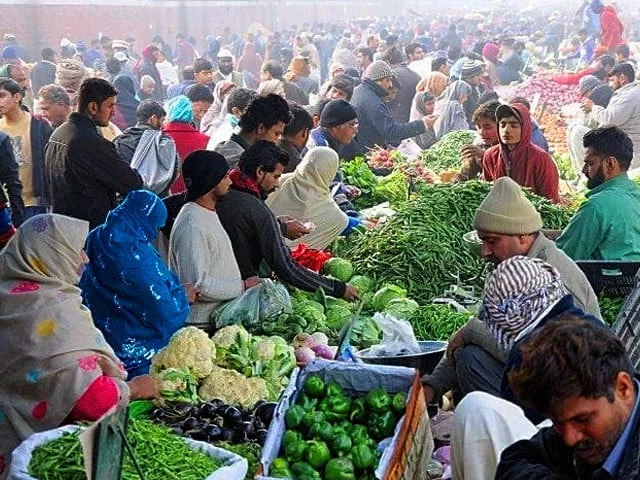
The Sensitive Price Indicator (SPI) remained elevated at 13.09% year-on-year for the week ended July 16, 2026 as prolonged closure of the Strait of Hormuz amid the Israel-US conflict with Iran continued to disrupt global oil supply chains and push energy costs up in Pakistan.
The weekly SPI, compiled by the Pakistan Bureau of Statistics by covering prices of 51 essential items across 50 markets in 17 cities, increased 1.40% from the previous week. The combined SPI stood at 357.61 points against 352.66 a week earlier and 316.23 in the corresponding week of last year.
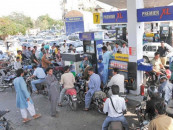
Petrol Super and high-speed diesel prices climbed 4.40% and 4.41%, respectively, during the week, while LPG surged 12.46%. These fuel increases, directly linked to the Hormuz blockade and resulting shortages in crude and refined product flows, raised transport and cooking costs for households.
Tomatoes recorded the steepest weekly jump of 22.79%, followed by chicken at 14.66%. Garlic rose 3.72%, eggs 2.15%, Lipton tea 1.56%, onions 1.53% and potatoes 0.85%. Firewood edged up 0.18%.
Of the 51 items, prices of 27 (52.94%) increased, four (7.84%) declined, and 20 (39.22%) remained stable. Banana prices fell 0.80%, pulse moong 0.70%, sugar 0.36% and pulse masoor 0.10%.
On an annual basis, tomato prices soared 210.18%, onions 75.93% and wheat flour 71.81%. Electricity charges for the lowest consumption quintile jumped 49.14%, LPG 42.50% and gas charges 29.85%. Mutton rose 16.02%, beef 13.60%, chilli powder 15.20% and gents' sponge chappal 16.69%.
Potatoes, however, were 36.28% cheaper than a year ago. Pulse gram rates declined 21.71%, sugar 21.10%, chicken 16.71%, salt powder 14.09%, pulse masoor 13.19% and eggs 12.42%.
The impact varied across income groups. The lowest expenditure quintile (Q1) saw a 1.11% weekly and 13.63% yearly rise. The highest quintile (Q5) recorded a sharper 1.58% weekly increase but a lower 11.32% annual rise. The combined weekly and yearly changes stood at 1.40% and 13.09%, respectively.
The Hormuz disruption has kept international oil prices elevated, feeding into domestic petrol, diesel and LPG rates. Higher fuel costs have also raised logistics expenses for perishable goods such as tomatoes, chicken and eggs, amplifying short-term inflationary pressures.
Wheat flour's sharp yearly increase continues to weigh on household budgets, while the decline in potato and pulse prices has provided limited relief. Electricity and gas tariff hikes for lower slabs remain a key driver of the annual SPI rise.
Meanwhile, gold prices in Pakistan eased on Friday, tracking the drop in global rates. In the local market, the price of gold per tola fell by Rs3,600 to settle at Rs421,836. The rate for 10 grams of gold declined by Rs3,086, reaching Rs361,656, according to the All-Pakistan Gems and Jewellers Sarafa Association. Silver prices also slipped, losing Rs126 to Rs6,029 per tola. Internationally, gold prices decreased by $36 to $3,994 per ounce.
Furthermore, the Pakistani rupee extended its gains against the US dollar in the inter-bank market. The local currency closed at 277.96, gaining Rs0.01 against the greenback.












This material may not be published, broadcast, rewritten, redistributed or derived from. Unless otherwise stated, all content is copyrighted © 2026 The Express Tribune.









COMMENTS
Comments are moderated and generally will be posted if they are on-topic and not abusive.
For more information, please see our Comments FAQ