New team formed to re-examine Raza's 'murder'
Updated 10 hours ago

Key laws on thalassaemia, breastfeeding, smoking remain unenforced years after approval

Sindh has enacted several landmark public health laws in recent years, but most remain confined to the statute books, with little or no implementation, raising concerns that weak enforcement is undermining efforts to tackle preventable diseases and improve public health.
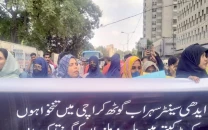
Among the key laws awaiting effective enforcement are the Sindh Prevention and Control of Thalassaemia Act, the Sindh Protection and Promotion of Breastfeeding and Child Nutrition Act, 2023, the Prohibition of Smoking and Protection of Non-Smokers' Health Ordinance, 2002, and the Sindh Prohibition of Preparation, Manufacturing, Storage, Sale and Use of Gutka and Mainpuri Act, 2019.
Despite their passage by the Sindh Assembly, no meaningful implementation mechanism has been put in place, allowing health risks to persist and preventable illnesses to spread, according to health experts.
Experts say more than 25,000 children across Sindh, including Karachi, are living with thalassaemia, while enforcement of the breastfeeding law - aimed at restricting the sale and promotion of infant formula - remains virtually absent.
The Sindh Protection and Promotion of Breastfeeding and Child Nutrition Act, passed in 2023, prohibits the sale of infant formula without a doctor's prescription and prescribes a fine of Rs500,000 and up to six months' imprisonment for doctors found prescribing formula unnecessarily. It also bans the promotion of infant formula in hospitals, allowing its use only in medically justified emergencies and under a doctor's supervision.
However, infant formula continues to be sold openly in the market, with no visible enforcement of the law. The legislation was enacted to promote breastfeeding and raise awareness about the health benefits of mother's milk for infants.
Pakistan Pediatric Association Sindh President Professor Wasim Jamalvi and former Secretary General Professor Khalid Shafai cited the National Nutrition Survey 2018, which found that only 52.3 per cent of mothers in Pakistan breastfeed their children, while nearly 48 per cent rely on infant formula.
According to the paediatricians, 41.3 per cent of children in Sindh are underweight. They warned that increasing dependence on formula milk is contributing to malnutrition and illnesses such as pneumonia and typhoid, besides causing poor weight gain and other health complications.
They also pointed to the financial burden on low-income families, particularly in rural areas, where some mothers dilute formula with excess water to make it last longer, increasing the risk of malnutrition and disease among children.
The doctors stressed that breastfeeding strengthens a child's immunity and development, describing mother's milk as a natural source of protection against infections.













This material may not be published, broadcast, rewritten, redistributed or derived from. Unless otherwise stated, all content is copyrighted © 2026 The Express Tribune.









COMMENTS
Comments are moderated and generally will be posted if they are on-topic and not abusive.
For more information, please see our Comments FAQ