'If terrorism has ended, who is doing the killing?'
Updated 17 hours ago

Despite negative reactions in the Arab/Muslim world for lack of progress on the core issue of Palestine

The US-Israeli war on Iran has redefined the regional security architecture profoundly. That architecture in the Middle East was traditionally pegged to the 'purchased security framework' led by the US. The emerging, yet to be instituted and new security architecture is transitioning away from this historic and traditional US-led bilateral and multilateral alliances mode, and is gravitating towards a multipolar, regionally owned framework, wherein the main players are increasingly hedging with global powers, seeking advantage wherever they find it. The new architecture is likely to be increasingly driven by the outcome of the war with Iran; the need for local stabilisation; localised mini-lateral coalitions and hedging. This emerging arrangement also continues to be defined by systemic conflicts, shifting American commitments to its regional allies, and the necessity of preventing global economic crisis. To achieve these objectives, regional powers are forming independent diplomatic and defence mechanisms. The core shifts and salients of the new security architecture are as follows.
First, 'Quartet' and the emergence of regional security blocs. To defuse the tense standoff between the US-Israel Combine and Iran through active diplomacy by Pakistan and facilitation by other powers, a new 'quadrilateral' security and consulting mechanism, comprising Pakistan, Saudi Arabia, Egypt and Türkiye, is taking shape. This 'Quartet' is trying to negotiate peace, ensure regional stability, push against Israeli operations, work for statehood recognition and counterbalance regional expansionism of the conflict by containing Iran. Its effectiveness is put to the test in holding on to the tenuous peace in the Strait of Hormuz (SoH) and halting the ongoing skirmish from conflagrating into large-scale shooting war. And that is increasingly becoming difficult. However irrespective, the 'Quartet' will endure to resolve other legacy and emerging issues, overtime.
Likewise, the non-polar Iran, Oman and Qatar's Triangular understanding aims, theoretically at least, at eliminating Western hegemonic presence, resolving bilateral rifts in addition to self-reliant defence capabilities.
Second, 'Shield' dynamics, unleashed by the Abraham Accords. The Accords, a set of agreements, aiming at diplomatic normalisation between Israel and several Arab states, began with the UAE and Bahrain in 2020, later joined by Sudan (unratified) and Morocco in 2024. The Accords were to be extended to Syria, Lebanon and Saudi Arabia in 2025. Kazakhstan agreed to join in November 2025, and in December 2025, Israel unilaterally expanded the Accords to Somaliland, as an independent country. These agreements not only formalised the growing unofficial cooperation between Israel and the Sunni Arab states effective the 2010s but also provided a 'Secret Sheild' to some counties like the UAE against Iran.
The agreements led to the US recognition of Moroccan sovereignty over Western Sahara, removal of Sudan from the US list of states sponsoring terrorism, enabling Khartoum access to international financial support. The ensuing benefits to the Arab world like movement towards a two-state solution in Palestine and halt to Israeli expansion in the West Bank largely remain unfulfilled.
Despite negative reactions in the Arab/Muslim world for lack of progress on the core issue of Palestine, the Accords have led to initiatives in trade, energy, defence, technology and cultural exchange. The Accords evolved from paper agreements into functional, technological AD frameworks, acting as 'Secret Security Shield', specifically for the UAE, which has never been apologetic about signing on, and now overtly embraces Israel. In recent conflict, Israeli AD assets were deployed to the UAE, defending against Iranian drone/missile salvos. Israel, the UAE and CENTCOM collaborate in sharing high-tech laser shields, radar-based early warning and counter-drone networks against Iran, albeit with varying degree of success and effectiveness. Abu Dhabi and Tel Aviv have also established joint funding for advanced weapon systems to counter drone/missile threats.
The Accords split the Arab unity and reaction, providing middle powers like Israel greater foothold, clout and ability to act as 'strategic listening post'. The ensuing camp/bloc competition, particularly between Saudi Arabia and the Accord signatories, has implications for power, defence trade prospects and geostrategic clout of counties like the US, China, Russia, Türkiye, India and Pakistan.
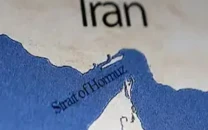
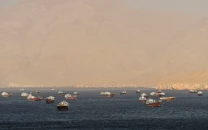
Three, SoH Governance and Status. As mentioned last week, the ongoing hot and cold conflict will decide if Iran or the US can impose its will on the other in keeping the SoH to its pre-war or blocked status. With the US bombing returning, and the maritime blockade of Iranian posts, shipping and coastal areas reinstated, and with Iran/IRGC in no 'apparent' mood to relent and reconcile, the future of world economy would be stressful, especially for Asia. Both sides may 'ultimately' be amenable to proposals, such as temporary maritime task forces involving trusted intermediaries like Pakistan and Türkiye, given the fact that Iran cannot blockade the Strait indefinitely and US/Allies cannot keep it open without diminishing yet persistent Iranian threats to the shipping.
Moreover, the region would do whatever it takes to bypass Hormuz, either through laying more pipelines, enhancing outside oil storages and/or overland transportation of petroleum products to Syrian ports on the Mediterranean Sea, for example.
Four, the 'Diversified Global Alliances'. The Arab Gulf, except for Abraham Accords signatories, today recognises the inconsistency of US security umbrella. The billions they spent purchasing the US-manufactured defence products and allied security were unable to shield them from low-cost, low tech Iranian drone and missile warfare. The psychological scars of these attacks, more than physical damage, are telling. Assuming the US as an inconsistent security guarantor, the Arab Gulf, as cited, would be encouraged to build alternative technical, security and defence frameworks with Russia and China, especially around drone warfare, cyber defence and missile technology.
Structural impediments to peace and security in the Middle East would primarily hinge upon the Israel-Palestine conflict, especially the formal recognition of Palestinian statehood based on the 1967 borders; the intra-Arab rifts within the GCC itself, e.g. the reported Saudi-UAE geostrategic chasm; and the lack of multilateral institutions in the region. Unfortunately, ME is the only sizeable and volatile region globally which does not have any inclusive forum like ASEAN, SAARC, etc to navigate crises, resolve conflicts and promote stability.
To change that, expansion of the 'Quartet' would be a better start!











This material may not be published, broadcast, rewritten, redistributed or derived from. Unless otherwise stated, all content is copyrighted © 2026 The Express Tribune.


COMMENTS
Comments are moderated and generally will be posted if they are on-topic and not abusive.
For more information, please see our Comments FAQ