Swift revisits memories, creative risks
Updated 10 hours ago

Singer opens up about rejecting a corporate career, raising local concert standards and plans for rock-inspired album
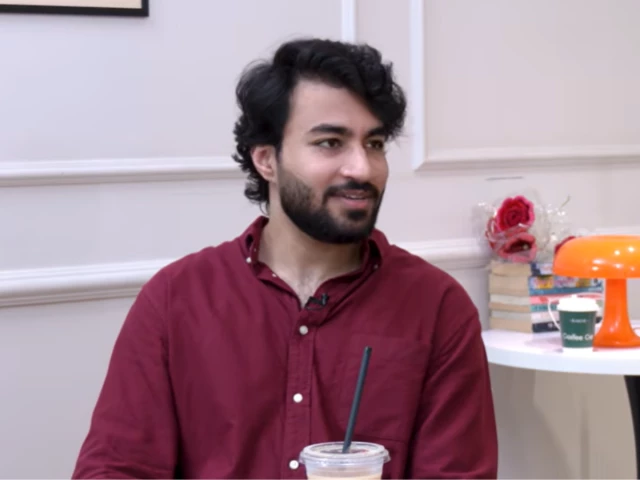
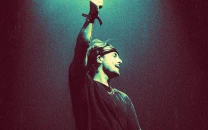
Pakistani pop sensation Abdul Hannan has reflected on his journey from an engineering student secretly writing songs to becoming one of the country's most recognisable voices behind hits such as Iraaday, Bikhra and the Coke Studio favourite O Yaara with Kaavish.
Speaking during a recent podcast appearance, the singer-songwriter recalled turning down a corporate engineering job in Berlin, Germany, after graduating during the Covid-19 pandemic—a decision that ultimately set him on the path to a full-time music career.
Describing the internal conflict between pursuing a secure, well-paying career abroad and taking a chance on music in Pakistan, Hannan admitted the corporate route never truly felt like his own. "I was observing; I was looking at that from afar, and it didn't feel like it was me."
Explaining what ultimately guided his decision, he added: "Work only on the things you can do with your whole heart; otherwise, don't do them."
From engineering to music
Hannan said music had always been an escape rather than a career plan. He spent his school and university years singing covers, competing in music competitions and teaching himself guitar whenever he had spare time.
Despite his passion, his primary focus remained academics, with the goal of securing a stable corporate career.
The pandemic, however, became a turning point. Graduating under unusual circumstances and spending months at home gave him the opportunity to experiment creatively, eventually leading to the release of Iraaday, the viral breakthrough that transformed his career.
The heartbreak behind Khasara
The singer also revisited the emotional inspiration behind Khasara, describing the song as an exploration of heartbreak, loss and the uncertainty that follows the end of a relationship. "Sometimes things happen in your life, and you don't understand why, but slowly it becomes clear that going through it was necessary for your art."
Discussing his songwriting process, Hannan said he intentionally leaves room for listeners to interpret his music in their own way. "I try to make sure that the song is open to interpretation, so that every person can associate their own meaning with it."
He added that songs often reveal themselves naturally rather than through careful planning. "Sometimes the melody itself dictates what the song is about."
For him, songwriting is both deeply personal and therapeutic. "If even two people are getting therapy from my song, it's a vent for me as well."
He also noted that the meaning behind his work sometimes becomes clear only after a song is complete. "Sometimes you do things without realising their meaning, and then the visuals trigger new ideas in others' minds."
Raising the bar for live shows
Beyond songwriting, Hannan spoke about his ambition to improve Pakistan's live music scene, expressing frustration with the country's conventional concert formats, which he believes often suffer from weak sound production and uninspired staging.
Through what he calls "The Abdul Hannan Experience," he hopes to create concerts that prioritise both sound and visual storytelling.
Drawing inspiration from international acts such as Coldplay, he said he wants to introduce interactive LED wristbands, immersive stage production and higher technical standards for local audiences. "I am a live music enthusiast. I want to control and contain the experience to make it a nice sonic and visual one."
He believes meaningful change requires challenging existing industry standards. "You always have to challenge the system to improve standards."
Hannan stressed that his vision extends beyond simply performing on stage. "It's not just about me performing; it's about making sure everything is in order."
He attributed that attention to detail to his personality, describing himself as naturally disciplined and something of a perfectionist.
Although widely associated with pop and indie-pop, Hannan revealed that his musical influences are rooted in rock and power ballads.
He said he hopes to incorporate heavier rock elements into a future album, while emphasising that any artistic evolution must happen organically. "Art should dictate all of that."
As his career continues to grow, Hannan admitted his greatest competition is no longer other artists but himself. "Nowadays, my battle is with myself. You create something, and then you want to top that."
The singer also reflected on the importance of gratitude and humility in navigating success. "Before any show or any major milestone, I remind myself where I started, to just be grateful and not let it go to my head," he said.
Looking back on his rapid rise, Hannan acknowledged that success can easily feed one's ego if left unchecked. "It is very easy for ego to creep in, but you have to manage that. Being humble is very important."
He added that staying grounded requires constant self-reflection. "You need to give your mind a reminder to just be grateful for the work you are doing."
Friendship and collaboration
Hannan credited his close circle of friends for helping him remain grounded throughout his career, saying they have played an essential role in shaping his decisions. "If friends weren't in my life, I would probably be making my own decisions, and I wouldn't be here."
Reflecting on Pakistan's music industry, he said collaboration has become far more common than in previous years. "Overall, the insecurity and jealousy have decreased; we have realised that we are important for each other."
According to him, genuine friendships have translated into stronger creative partnerships. "The friendships and collaborations are based on pure intentions, and that projects onto the music."
At the same time, he acknowledged that fame makes it difficult to distinguish genuine relationships from opportunistic ones. "It is very hard to tell who is really your friend and who just wants to be there because of the fame."
Speaking about his recent collaboration with singer and actor Samar Jafri, Hannan said allowing both artists to write and compose their own sections created a more authentic emotional dialogue within the song, with Jafri's verse serving as a response to Hannan's opening lyrics.
As the conversation concluded, Hannan said he has no intention of rushing the next phase of his personal life, believing the right opportunities will arrive naturally. "I don't want to rush it or force it. I believe that when life naturally provides the opportunity, it will happen."
Professionally, however, his focus is firmly on creating a full-length album while continuing to experiment with heavier, rock-inspired sounds. "My focus is now on an album; I want to build a collective."
The project, he suggested, marks the beginning of a new creative chapter—one that balances the introspective songwriting that made him a household name with the rock influences he has long wanted to explore.









This material may not be published, broadcast, rewritten, redistributed or derived from. Unless otherwise stated, all content is copyrighted © 2026 The Express Tribune.



COMMENTS
Comments are moderated and generally will be posted if they are on-topic and not abusive.
For more information, please see our Comments FAQ