Cambridge announces AS, A-Level results for June 2026 examinations
Updated 2 hours ago

Petrol up Rs13.18, diesel Rs13.80 per litre as global oil rally returns
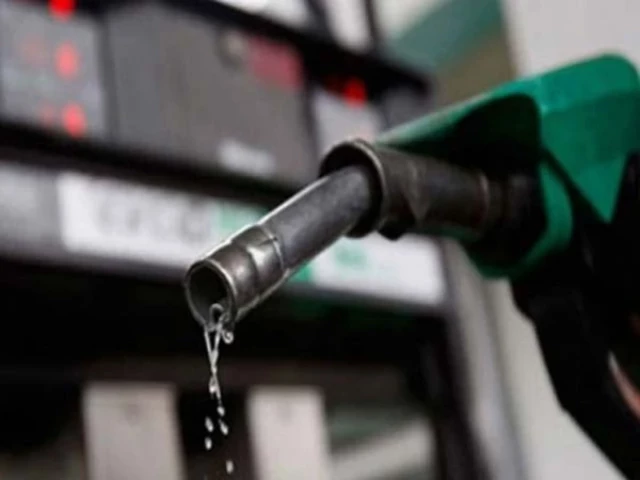
Just a week after consumers received relief at the pump, the federal government has sharply increased petroleum prices, raising petrol by Rs13.18 per litre and high-speed diesel by Rs13.80 per litre amid a renewed surge in international crude oil prices triggered by escalating tensions between Iran and the United States.
The increase follows a fresh spike in global oil prices after renewed US strikes on Iran and a breach of ceasefire agreements on July 7-8. Brent crude climbed to around $77-$78 per barrel, while US West Texas Intermediate (WTI) traded at $73.60 per barrel, prompting the government to pass on the higher import cost to domestic consumers.
According to a notification issued by the Petroleum Division, the price of high-speed diesel (HSD) has been increased by Rs13.80 per litre, from Rs309.50 to Rs323.30 per litre.
Similarly, the price of petrol has been raised by Rs13.18 per litre, from Rs297.53 to Rs310.71 per litre.
The government has also increased the petroleum levy on petrol from Rs70.36 to Rs80 per litre for retail outlets and from Rs79 to Rs88.64 for direct sales. The levy on premium HOBC/MS (95 RON) has been increased from Rs95.36 to Rs105 per litre for retail outlets and from Rs97.51 to Rs107.15 for direct sales.
The petroleum levy on kerosene oil remains unchanged at Rs20.36 per litre, while light diesel oil (LDO) continues to attract a levy of Rs15.84 per litre. The levy on furnace oil also remains unchanged at Rs77 per litre, equivalent to Rs82,077 per metric tonne.
The latest increase comes after the federal government last Friday reduced the prices of petrol and high-speed diesel by up to Rs1.97 per litre for one week.
High-speed diesel is widely consumed by the transport and agriculture sectors, and changes in its price have a significant impact on freight charges and inflation.
Petrol is primarily used by motorcycles and passenger vehicles. Demand for petrol has also increased following restrictions on the use of indigenous gas in Punjab.
Kerosene oil remains an important fuel in remote areas, particularly in the country's northern regions where liquefied petroleum gas (LPG) is not readily available for cooking. It is also a key fuel used by the Pakistan Army. Light diesel oil is mainly consumed by industry.
Meanwhile, Pakistan's oil industry witnessed a significant decline of up to 20% in sales during June. Industry representatives attributed the drop largely to the growing smuggling of petroleum products from Iran.
General sales tax (GST) on petroleum products remains zero, resulting in revenue losses for the provinces.
Sindh has now taken up the issue of the federal government's reliance on the petroleum levy, arguing that, unlike GST, which is shared with the provinces, the levy is retained entirely by the federal government.












This material may not be published, broadcast, rewritten, redistributed or derived from. Unless otherwise stated, all content is copyrighted © 2026 The Express Tribune.






COMMENTS
Comments are moderated and generally will be posted if they are on-topic and not abusive.
For more information, please see our Comments FAQ