Oil set for second weekly gain as US ramps up pressure on Iran
Updated 3 hours ago

Dispatches hit multi-year highs as domestic demand surges in FY26
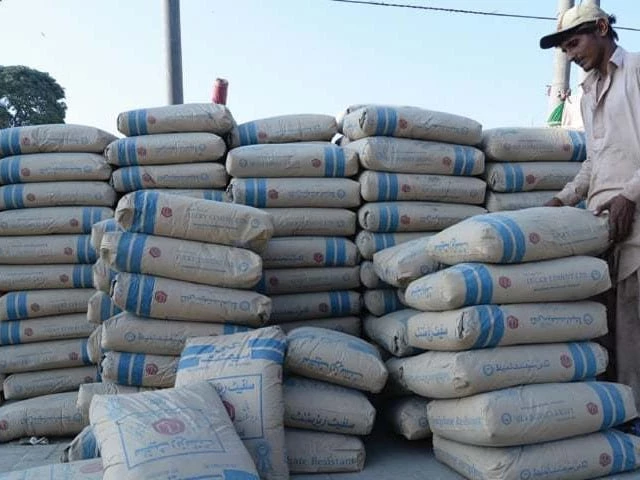
Cement demand in Pakistan rebounded strongly in FY26 on the back of construction revival and lower policy rates, with dispatches rising to multi-year highs. Total cement dispatches reached 50.58 million tons in FY26, up approximately 8% year-on-year, driven primarily by robust local demand.
"The improvement was led by domestic demand, where sales grew 9% YoY to 41.5 million tons amid the recovery in construction activity and lower average policy rates," highlighted Usama Rauf of AKD Securities. Domestic (local) dispatches surged 27% year-on-year to 3.54 million tons in June, while cumulative FY26 local sales stood at 41.57 million tons, up 10%, as per an AKD Securities' report.
In June 2026 alone, overall sales increased 18.4% year-on-year to 4.33 million tons, "driven by a low base effect from Eid holidays in the same period of the previous year," noted Arif Habib Limited (AHL).
Northern region dispatches rose 16% to 3.01 million tons in June, and southern region volumes increased 23% to 1.31 million tons. Industry-wide capacity utilisation stood at 59% in FY26, up from 56% in FY25, reflecting the pickup in domestic offtake, according to AKD. Region-wise, utilisation in the North increased to 53% in FY26 from 49% in the previous year, mainly on the back of higher domestic demand. Similarly, utilisation by southern mills surged to 84% in FY26 from 79% last year, due to a 9% spike in sea-based exports.
The FY27 federal budget is expected to provide further impetus through higher Public Sector Development Programme (PSDP) spending, property tax relief, and expansion of the Prime Minister's Apna Ghar housing scheme. A major positive is the government's approval to include Non-Banking Finance Companies (NBFCs) in the programme, significantly widening access to subsidised housing finance.
NBFCs will now play a larger role following a proposal by the Securities and Exchange Commission of Pakistan (SECP). Housing and investment finance companies can extend loans up to Rs10 million, while microfinance companies can offer up to Rs5 million. Loans carry a subsidised 5% mark-up for the initial 10 years out of the maximum 20-year tenure, with government support for mark-up subsidy and risk coverage.
This initiative targets the underserved middle and lower-income segments, where NBFCs have strong outreach through flexible financing. Combined with the abolition of Section 7E and other property incentives, it is likely to accelerate home ownership and cement consumption.
Company-wise performance
Several major players posted a healthy growth. Lucky Cement's (LUCK) total dispatches rose 31% year-on-year to 0.91 million tons in June, driven by a 40% jump in local sales. For FY26, LUCK recorded sales of 9.668 million tons, up 4%. Fauji Cement (FCCL) saw June dispatches increase 11% to 0.48 million tons. DG Khan Cement's (DGKC) volumes grew 12% to 0.39 million tons. Kohinoor Cement (KOHC) and Pioneer Cement (PIOC) also reported a strong double-digit growth.
Power Cement (POWER) stood out with a 60% year-on-year rise in June dispatches to 0.28 million tons. Maple Leaf Cement's (MLCF) volumes were slightly down in June but still showed 5% growth for the full year. Both AKD and AHL maintain a constructive outlook. AHL expects the momentum to strengthen on recovering economic activity, the FY27 budgetary relief for construction, and potential improvement in export demand.
AKD projected the local cement offtake to grow around 8% in FY27, driven by lower financing rates, easing construction costs following the de-escalation of Middle East tensions, and a favourable fiscal policy. In addition, falling coal prices post-US-Iran ceasefire will support sector margins. However, "a re-ignition of the conflict and a renewed spike in oil and coal prices remain key risks to our demand and margin outlook."
The sector benefits from demand recovery, stable margins, and deleveraging, though risks from geopolitical tensions affecting oil and coal prices remain.
Cement prices have shown a gradual recovery in both the North and South regions. With monetary easing, fiscal support, and expanded housing finance, the industry is well-placed to sustain its upward trajectory in the coming months, contributing to broader economic recovery through construction and allied sectors.















This material may not be published, broadcast, rewritten, redistributed or derived from. Unless otherwise stated, all content is copyrighted © 2026 The Express Tribune.










COMMENTS
Comments are moderated and generally will be posted if they are on-topic and not abusive.
For more information, please see our Comments FAQ