Balochistan CM urges militants to lay down weapons, reintegrate into mainstream
Updated 1 hour ago

.
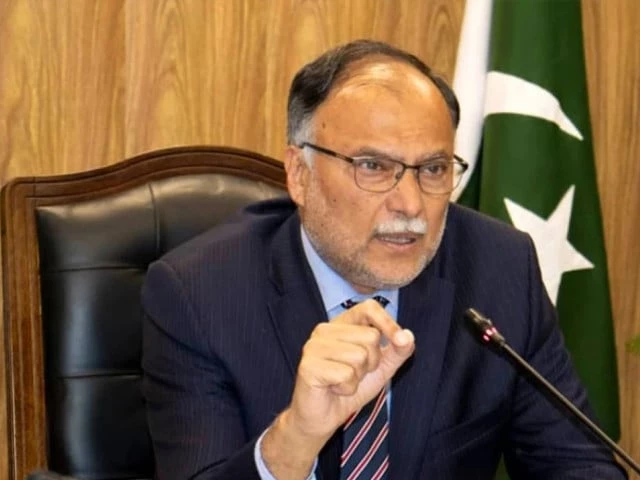
Minister for Planning, Development and Special Initiatives Ahsan Iqbal on Monday warned that unchecked population growth remained Pakistan's most critical structural challenge, undermining economic progress and human development, and called for urgent national-level reforms to address the issue.
Addressing the launching ceremony of a book on "Impact of Population Growth on Human Security in Pakistan," based on a study by the Islamabad Policy Research Institute (IPRI), the minister said that without controlling population growth, the country would struggle to achieve sustainable development and improved living standards.
He noted that while Pakistan's economic indicators were approaching those of middle-income countries, its social indicators lagged far behind, resembling those of least developed nations.
"This contradiction in our development model must be resolved if we are to move forward," he said, adding that rapid population growth was at the heart of this imbalance.
Iqbal highlighted that although Pakistan had reduced its population growth rate from 3.4 per cent in 1990 to 2.4 per cent by 2017, the latest census showed a reversal, with the rate increasing to 2.55 per cent.
"No country in history has achieved sustained progress with such a high population growth rate," he remarked, stressing that successful nations had brought their growth rates down to around 1 to 1.5 per cent or lower. He explained that high population growth effectively dilutes economic gains. "If the economy grows at three per cent while the population increases by 2.5 per cent, the real progress is only half a per cent," he said, terming it a major impediment to national prosperity.
The minister pointed out structural flaws in the resource distribution mechanism, particularly the linkage between population size and allocation of resources and political representation. He observed that the current system discouraged provinces from effectively implementing population control measures, as reducing population could lead to a decline in their share of resources and representation.












This material may not be published, broadcast, rewritten, redistributed or derived from. Unless otherwise stated, all content is copyrighted © 2026 The Express Tribune.






COMMENTS
Comments are moderated and generally will be posted if they are on-topic and not abusive.
For more information, please see our Comments FAQ