FX reserves edge up to $22.5b
Updated 6 hours ago

Growth that does not reduce poverty or create jobs is a vanity measure
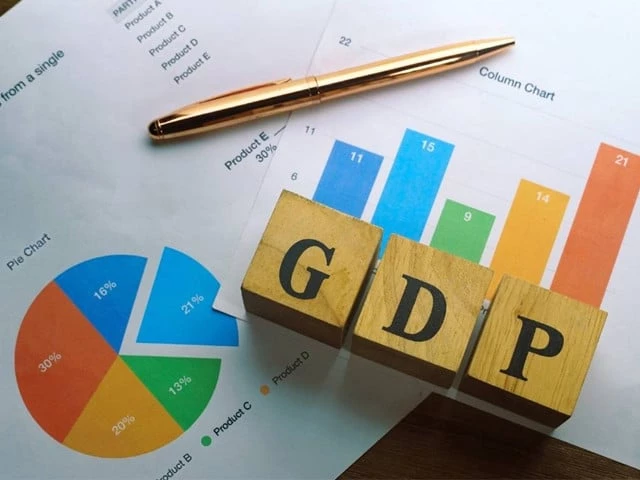
For the past few years, we have been celebrating this so-called period of "stabilisation", characterised by the temporary compression of current account deficits, primary fiscal surpluses and corrections of inflationary pressures under multilateral adjustment programmes.
This stabilisation, which remains highly vulnerable to geopolitical shocks, global commodity spikes and climate catastrophes, has been achieved after years of stagflation and at the cost of development. If it is not translated into sustained and inclusive growth, it will result in stagnation we can no longer afford.
But low growth is not the sole culprit. Even during years of decent economic growth, like the post-Covid recovery phase when the economy expanded by 6% for two years, the jobless rate stayed flat and poverty increased. This represents a fundamental breakdown of Okun's Law, which states that rising growth should suppress unemployment.
In Pakistan's case, not only has the economy failed to grow at the required rate for the last two decades, but it has also been unable to ensure that growth translates into lower unemployment and poverty.
The unemployment rate is rotating in a narrow band of 5.6% and 6.9%. Similarly, there has been a 36% rise in the poverty rate from its 2019 level. Pakistan's real per capita growth rate is a paltry 1.4% on average. A country that is growing its economic pie by just more than 1% per person per year simply does not have the ability to absorb millions of young entrants into the formal workforce.
In contemporary economic discourse, the GDP growth is often seen as a teleological objective. But this exclusive focus on aggregates needs to be seriously reconsidered.
Growth that does not lead to human well-being is a vanity measure. Robert and Edward Skidelsky argue that progress in society should be measured in terms of the following criteria: health, security, respect, personality, harmony with nature, friendship and leisure. GDP growth and per capita income alone are incomplete indicators to assess actual human development. A complete analysis requires that along with GDP growth, we also analyse how unemployment, poverty and human development evolve in tandem.
In a formalised economy, macroeconomic fluctuations directly translate into visible volatility in employment. The stickiness of the unemployment band in Pakistan suggests that there is no noticeable change in structural employment amid fluctuations in aggregate GDP, owing to which Pakistan has one of the lowest employment elasticity of growth.
The impact of GDP growth on poverty reduction is also minimal, as growth has failed to have a trickle-down effect. The informal or unregistered sector employs approximately 72% of the Pakistani workforce, the main reason being that growth does not lead to employment. Moreover, the poor are pushed into "vulnerable employment" like daily-wage earners and own-account workers who lack stable and protected livelihoods.
The gains in poverty reduction in the 2010s were on shaky ground, as most had been based on a shift from farm work to informal, low-paying service work. But low productivity in all sectors reduced the income gain for those who stayed in agriculture and those who left it, thus stalling income growth.
Real wage growth in sectors employing the poor remained minimal at just 2-3% between 2011 and 2021, and the poor were not well equipped to turn economic growth into income-generating opportunities. These diminishing impacts of labour incomes and poor public service provision over time prevented resilience, creating a large pool of the population just above the poverty line and highly vulnerable to macroeconomic shocks.
Economic theory illustrates that poverty reduction is a combination of growth in output and income distribution. In Pakistan, the adverse distributional dynamics are often severe enough to neutralise the impacts of positive growth. Because growth remains structurally weak and non-inclusive, it fails to meaningfully lift the population out of poverty.
Moreover, the current economic regime is structurally incapable of sustained growth because its growth periods are consumption-oriented, import-dependent and debt-financed, leading to frequent balance-of-payments crises that necessitate immediate macroeconomic contraction.
The dilemma is that the government is aggressively cutting its development expenditures to achieve fiscal surpluses – a tool through which it can stimulate the economy – and relying on the private sector to achieve growth. But it is consistently struggling to attract investments and build investor confidence.
The Overseas Investors Chamber of Commerce and Industry (OICCI) Business Confidence Index (BCI) dropped from 22% to 13%, and the investment-to-GDP ratio stands at a mere 14.38%. Pakistan requires sustained and inclusive growth of 5.5% to 6.0% annually to absorb its youth bulge. The current average growth of 3.5% will not help, and the labour market will remain underutilised.
True development requires a model that prioritises structural transformation, increased productivity of labour, closing of deep human-capital gaps, and building resilience of the most vulnerable people. This structural pivot will not be achieved merely through superficial fiscal corrections or consumption-driven growth.
Genuine human uplift will not be realised until the country moves from an elite-led consumption to an equitable, productivity-based model; and until then, headline growth will continue to be a misleading figure.
THE WRITER IS A JUNIOR RESEARCH FELLOW AT THE IBA ECONOMIC GROWTH & FORECASTING LAB









This material may not be published, broadcast, rewritten, redistributed or derived from. Unless otherwise stated, all content is copyrighted © 2026 The Express Tribune.





COMMENTS (2)
Comments are moderated and generally will be posted if they are on-topic and not abusive.
For more information, please see our Comments FAQ