Severe COVID may reactivate dormant viruses, study finds
Updated 1 hour ago

Tehran disputes Trump claims over nuclear inspections
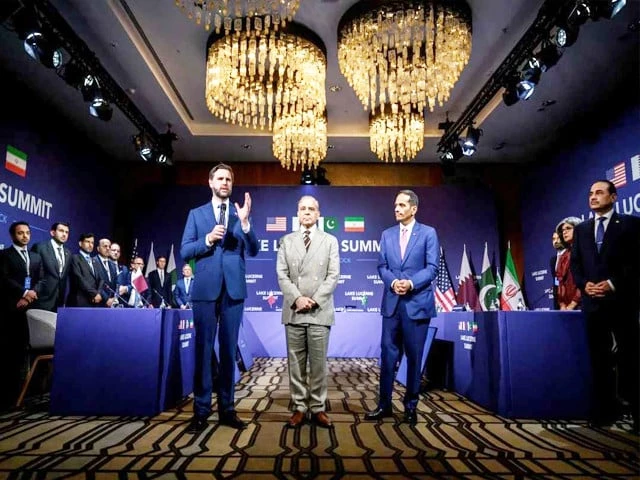
The US and Iran have agreed to establish four working groups on sanctions termination, nuclear issues, reconstruction and economic development for monitoring and implementation following their high-level technical talks in Switzerland.
According to Iran's semi-official Tasnim News Agency, Iran's Deputy Foreign Minister Kazem Gharibabadi, who led the Iranian delegation, said the parties had reached an agreement on the framework and arrangements for future negotiations.
The official said future discussions will be supervised by a High-Level Committee to track the two sides' memorandum of understanding, and involve US Vice President JD Vance, Iran's parliamentary speaker and foreign minister, and the prime ministers of Pakistan and Qatar as mediators.
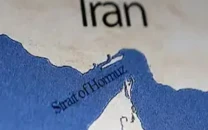
There was also an agreement to create "a contact point" to facilitate the safe passage of commercial vessels through the Strait of Hormuz, and "a deconfliction cell" regarding the situation in Lebanon.
Gharibabadi said arrangements were made for the "immediate" implementation of agreements concerning the release of $12 billion in blocked Iranian funds, and that the US issued a general license for Tehran's sale of oil, petrochemical, petroleum products and related services.
The development comes as the Republican-majority US Senate on Tuesday voted to halt American military action against Iran, marking a rare bipartisan challenge to President Donald Trump's approach to the conflict.
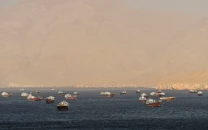
Earlier on Tuesday, Washington and Tehran issued sharply conflicting accounts of Iran's nuclear commitments even as the stranded vessels from the Gulf began to leave under a fragile post-war arrangement that also saw cautious moves to reopen the Strait of Hormuz.
The dispute over nuclear inspections intensified after US President Donald Trump said Iran had "fully and completely agreed" to allow International Atomic Energy Agency (IAEA) inspectors back into the country "long into the future (Infinity!!!)", calling it a breakthrough in ongoing negotiations for wider peace deal.
Iran rejected the claim, insisting there had been no agreement and no plans for inspectors to access nuclear facilities damaged during US and Israeli strikes in 2025, and saying the issue had not been formally discussed with the UN nuclear watchdog.
"We have not had a meeting with the director general of the IAEA, nor do we have any plans for the agency to inspect Iran's nuclear facilities damaged by the US and Zionist military aggression," foreign ministry spokesman Esmaeil Baqaei said in Tehran.
Iran's UN ambassador Ali Bahreini separately dismissed suggestions of any inspection arrangement, reinforcing Tehran's position that access to its nuclear sites remained off the table.
Trump, posting on Truth Social, rejected Iran's denial and insisted inspectors would eventually be deployed, while also linking diplomatic progress to developments in maritime security through the Strait of Hormuz.
"Iran has fully and completely agreed to highest level Nuclear inspections long into the future," he wrote, adding that US naval forces would not impose any blockade on the strategic waterway.
The Strait of Hormuz, through which a fifth of global oil and gas shipments normally pass, has been a central flashpoint since the war, with disruptions repeatedly raising global energy concerns.
Against that backdrop, the UN's International Maritime Organization said it had begun coordinating a large-scale evacuation of vessels stranded in the Gulf, affecting thousands of seafarers after months of restricted movement during the conflict.
The agency said it had started contacting ships to enable safe passage through Hormuz, with safety guarantees secured in coordination with Iran, Oman and other coastal states. IMO Secretary-General Arsenio Dominguez described the effort as a "large-scale operation" carried out with maritime industry coordination to restore navigation through the waterway.
Iran's top negotiator Mohammad Bagher Ghalibaf said the Strait of Hormuz would "never return to its pre-war conditions", signalling Tehran's intent to retain a direct role in its future administration despite ongoing talks on safe passage arrangements.
Diplomatic efforts also continued in parallel in Switzerland, where technical negotiations between the two sides were held under a Pakistan- and Qatar-mediated framework aimed at stabilising the region after more than three months of war.
Pakistan and Qatar have said that both sides had agreed on a 60-day roadmap covering nuclear issues, sanctions relief and wider security guarantees, even as deep mistrust persisted over verification mechanisms.







This material may not be published, broadcast, rewritten, redistributed or derived from. Unless otherwise stated, all content is copyrighted © 2026 The Express Tribune.






COMMENTS
Comments are moderated and generally will be posted if they are on-topic and not abusive.
For more information, please see our Comments FAQ